Early modern · state
Lan Xang
Its name means a million elephants, and for three and a half centuries this Lao kingdom was one of the largest in Southeast Asia.
Lao court histories say that Fa Ngum, a prince of Muang Sua who grew up in exile at the Khmer court, came back up the Mekong in 1349 with an army called the Ten Thousand. In 1353 he was crowned and named his kingdom Lan Xang Hom Khao, the Land of a Million Elephants and the White Parasol. His Khmer wife Keo Kang Ya brought from Angkor the Phra Bang, a standing Buddha image that became the palladium of the kingdom and gave Muang Sua its new name, Luang Prabang.
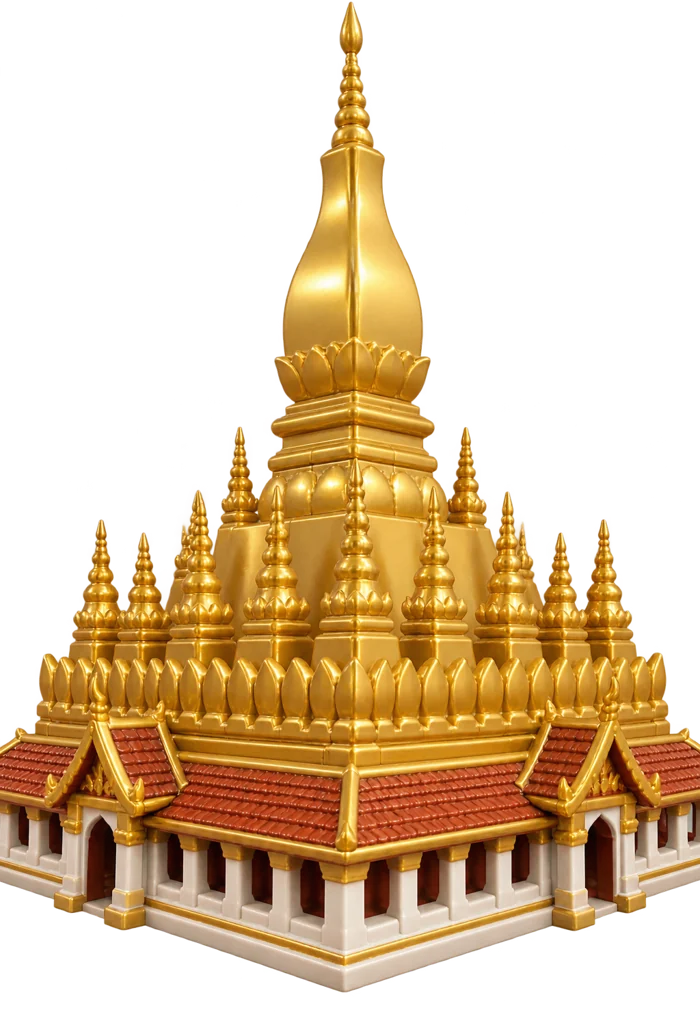
Lan Xang held most of present-day Laos. The Mekong carried its trade, and the king ruled through local lords bound to him personally. In 1547 Prince Setthathirath was crowned king of Lanna in Chiang Mai, where he took the Emerald Buddha. As King of Lan Xang he moved the capital to Vientiane in 1560, built a palace and the Haw Phra Kaew and rebuilt That Luang, while Burmese armies under Bayinnaung invaded.
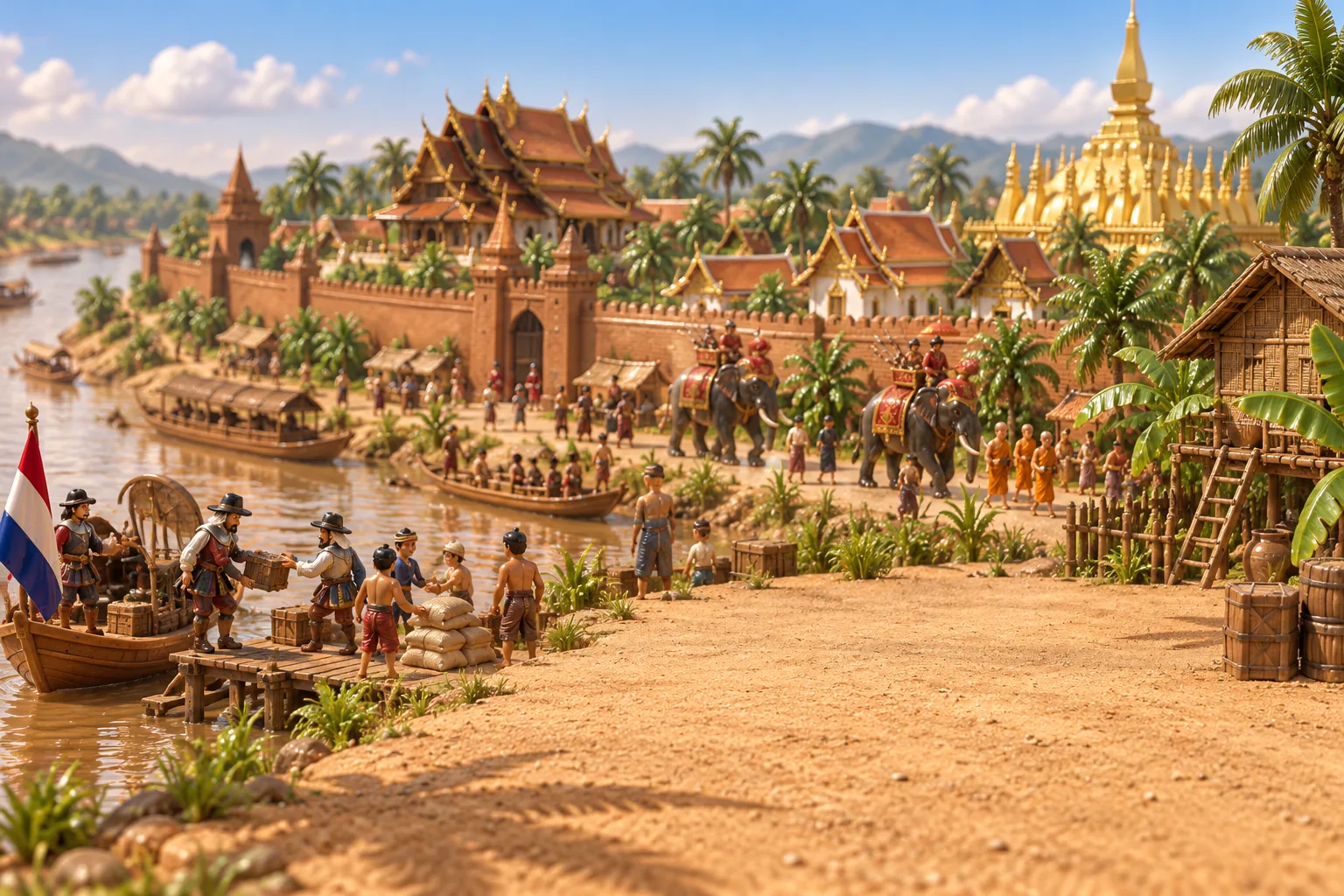
King Sourigna Vongsa, who reigned from 1637 to 1694, gave Lan Xang fifty-seven years of peace, new laws and courts. In 1641 the Dutch trader Gerrit van Wuysthoff reached Vientiane. After Sourigna Vongsa died, rival princes fought over the throne, and in 1707 the kingdom split into Luang Prabang and Vientiane, with Champasak breaking away in 1713.
Read more on Wikipedia
Sources: en.wikipedia.org/wiki/Lan Xang, en.wikipedia.org/wiki/Pha That Luang

