Middle Ages · person
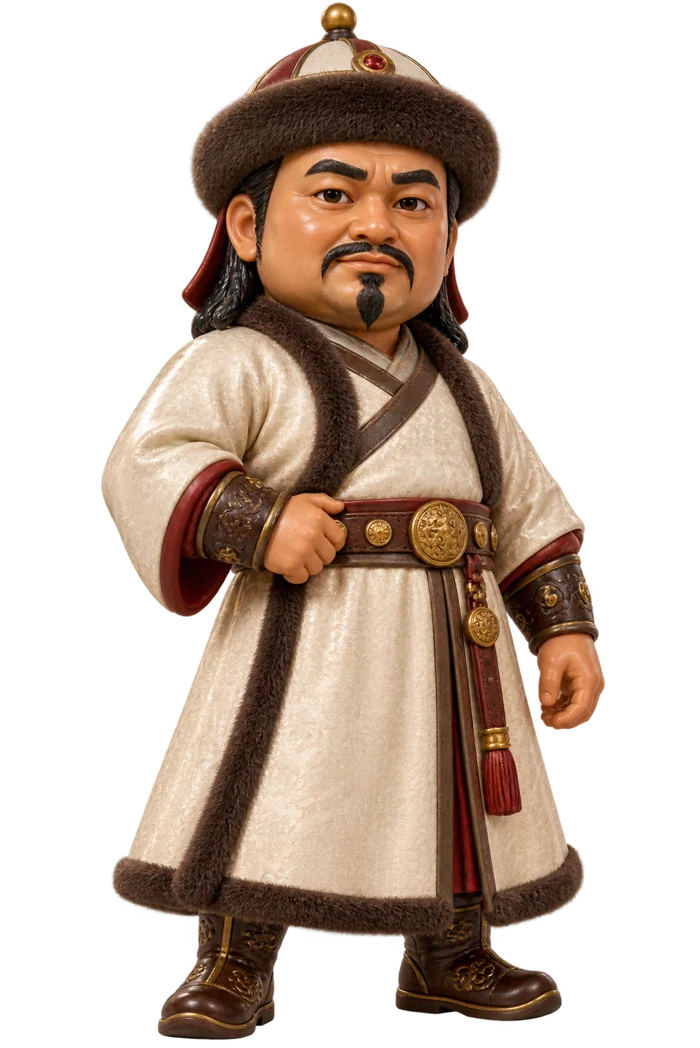
Kublai Khan
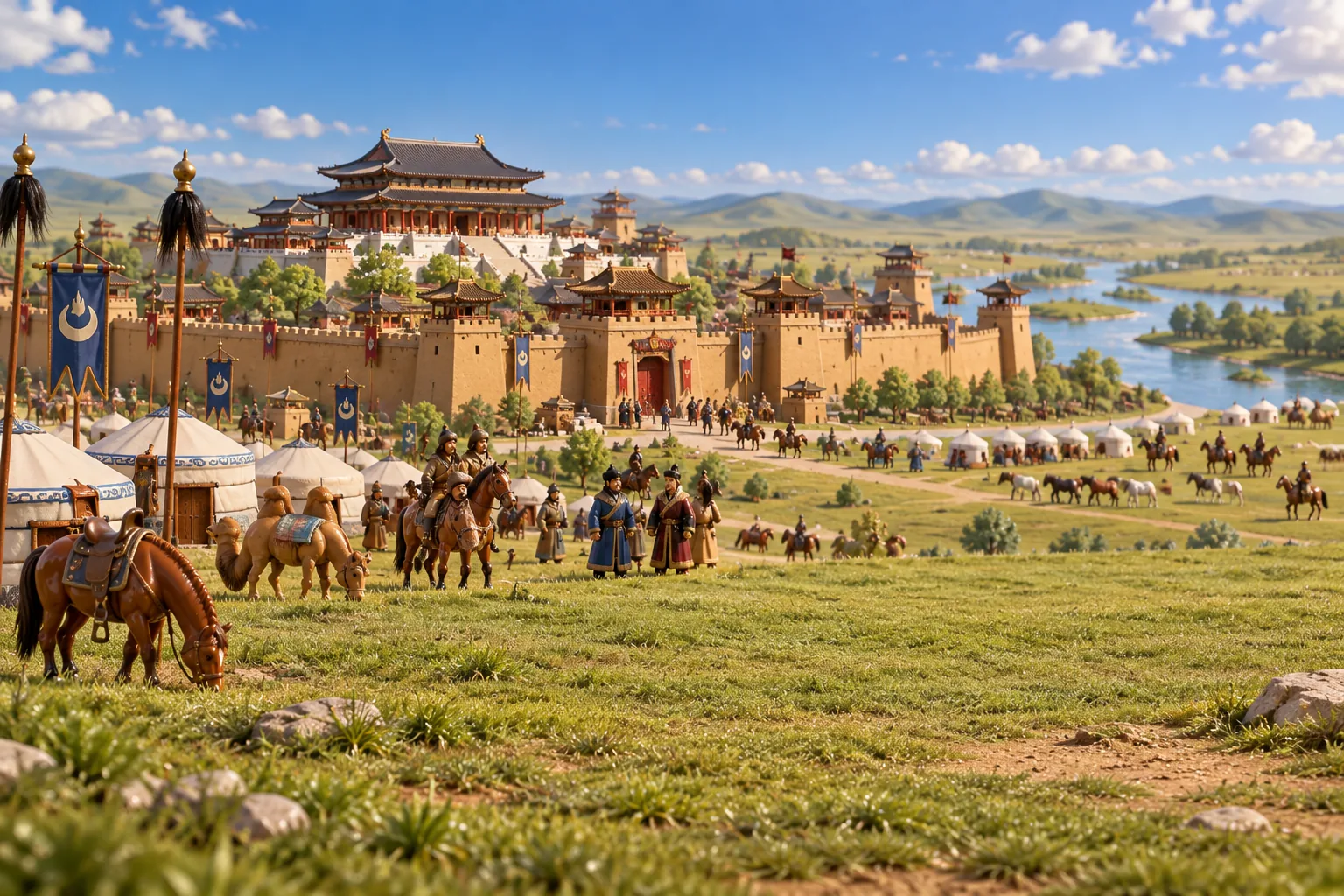
In 1260 a grandson of Genghis Khan was proclaimed Great Khan at his residence in Shangdu, the summer capital that the West would remember as Xanadu.
Kublai was born on 23 September 1215, the fourth son of Tolui and the second by his chief wife Sorghaghtani Beki, and a grandson of Genghis Khan. At nine, after his first hunt near the Ili River, his grandfather smeared fat from the kill on his middle finger, as Mongol custom required. Genghis died in 1227, when Kublai was 12. In 1253 Kublai took the Tibetan monk Phagpa of the Sakya school into his entourage.
His brother, the Great Khan Möngke, died in 1259 during a campaign against the Song. In 1260 Kublai's own kurultai proclaimed him Great Khan, while another council chose his younger brother Ariq Böke; the civil war ended when Ariq Böke surrendered at Xanadu on 21 August 1264. Kublai ruled from two capitals, Shangdu in the grasslands and Dadu, the Grand Capital on the site of modern Beijing. In 1271 he proclaimed the Great Yuan dynasty, and by 1279 the conquest of the Southern Song was complete: he was the first non-Han emperor to rule all of China proper.
Two fleets he sent against Japan, in 1274 and 1281, were destroyed, partly by bad weather, and his wars in Vietnam failed too. The Venetian Marco Polo arrived in the 1270s and served him as an emissary. After his beloved wife Chabi died in 1281 and his heir Zhenjin in 1286, Kublai sank into drink and depression and suffered from gout. He died on 18 February 1294, aged 78, and was carried to the burial ground of the khans in Mongolia.
Read more on Wikipedia
Sources: en.wikipedia.org/wiki/Kublai Khan


