
Industrial age · nature
1883 eruption of Krakatoa
A volcano between Java and Sumatra exploded so loudly that it was heard on an island near Mauritius, probably nearly four hours after the blast.
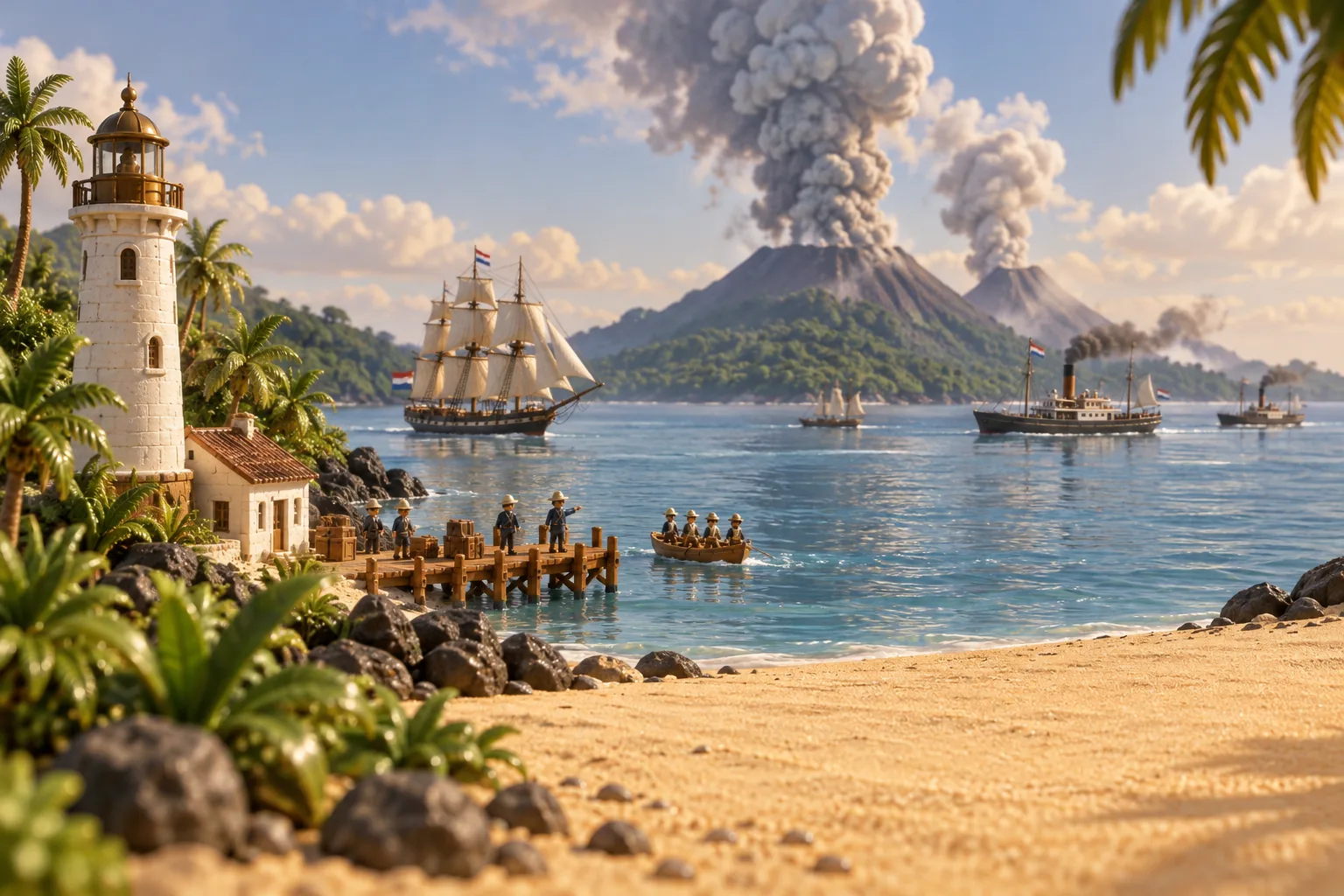
Krakatoa was a volcanic island in the Sunda Strait, between Java and Sumatra, then part of the Dutch East Indies. On 20 May 1883 it woke up, throwing ash 6 kilometres into the sky with explosions heard in Batavia, 160 kilometres away. Through June and July new vents opened, and in early August a Dutch engineer who landed there found ash half a metre deep and only stumps left of the forest. At about 1 p.m. on 26 August the eruption entered its climax, and by 2 p.m. a black ash cloud rose 27 kilometres high.
On 27 August a series of enormous explosions tore the island apart. The third, at 10:02 a.m., is the loudest sound known in history. It was heard 3,110 kilometres away in Perth and 4,800 kilometres away on Rodrigues near Mauritius, and barographs around the world recorded its pressure wave circling the globe more than three times. More than 70% of the island collapsed into the sea. Tsunamis swept the coasts of the strait; at Merak the wave was 46 metres high. The official death toll was 36,417.
Ash and sulfur dioxide spread through the high atmosphere. The next summer the Northern Hemisphere was on average 0.4 °C cooler, and for months the world saw blazing red sunsets and blue or green moons.
Read more on Wikipedia


