Industrial age · exploration
Klondike Gold Rush
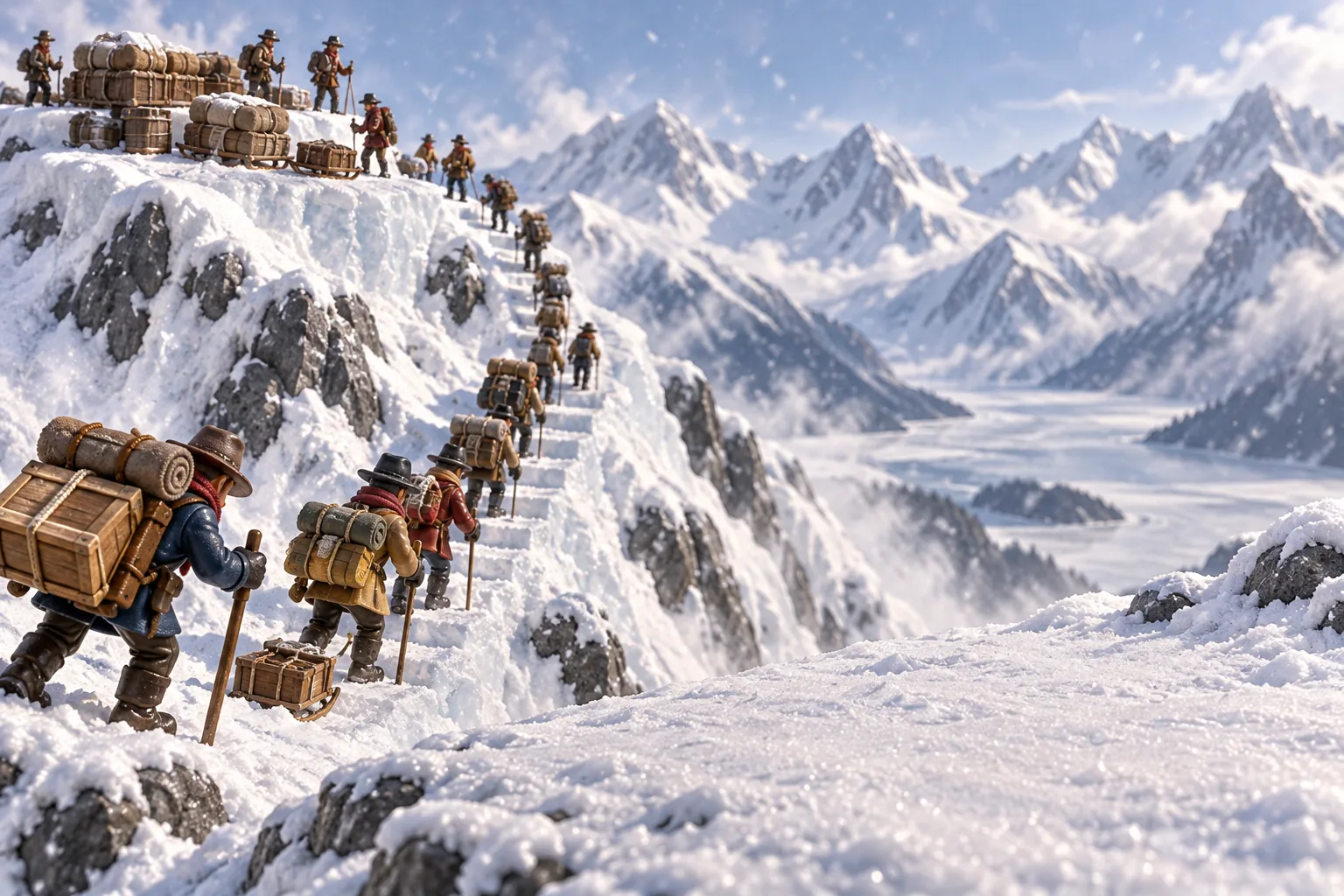
To be let into Canada, every gold-seeker had to bring a year's supply of food, nearly a ton of gear hauled over a frozen mountain pass.
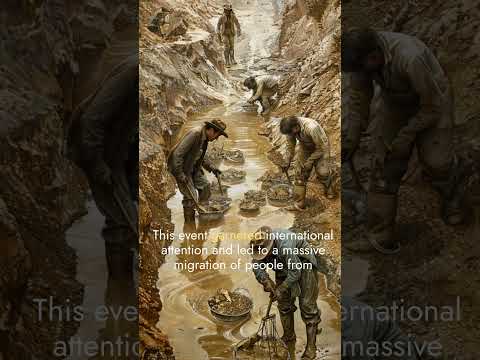
On 16 August 1896 an American prospector, George Carmack, and two Tagish men, Skookum Jim and Tagish Charlie, were looking for gold on Rabbit Creek, a small tributary of the Klondike River in Canada's Yukon, on the advice of the Canadian prospector Robert Henderson. They found it in rich deposits; the creek was renamed Bonanza. News took almost a year to reach the outside world. In July 1897 the steamers Excelsior and Portland docked in San Francisco and Seattle with returning miners carrying large amounts of gold, and a stampede began.
An estimated 100,000 people set out for the Klondike. Most sailed to the Alaskan ports of Dyea and Skagway and climbed the Chilkoot or White Pass trails to the headwaters of the Yukon River. The Canadian authorities demanded that each person bring a year's supply of food, so most hauled close to a ton of equipment up the mountains in stages, then sailed down the Yukon to the gold fields. Most did not arrive until the summer of 1898, and only 30,000 to 40,000 made it at all.
At the end of the trail, Dawson City grew from 500 people in 1896 to about 17,000 by the summer of 1898, a wooden town of saloons, fires, high prices and epidemics. The local Hän people were moved onto a reserve, and many died. In the summer of 1899 gold was found at Nome in Alaska, and the stampede moved on.
Read more on Wikipedia