Early modern · state
Kingdom of Portugal
A kingdom of about two million people sent Vasco da Gama to India and Cabral to Brazil, and built an empire across Africa, Asia and the Americas.
Afonso Henriques took the title King of Portugal in 1139. León recognised him by the Treaty of Zamora in 1143, and the pope in 1179. The Algarve was conquered from the Moors in 1249, the capital moved to Lisbon in 1255, and the border with Castile has hardly changed since. When Castile claimed the throne in 1383, John of Aviz and his general Nuno Álvares Pereira beat the Castilians at Aljubarrota, and the House of Aviz took the crown.
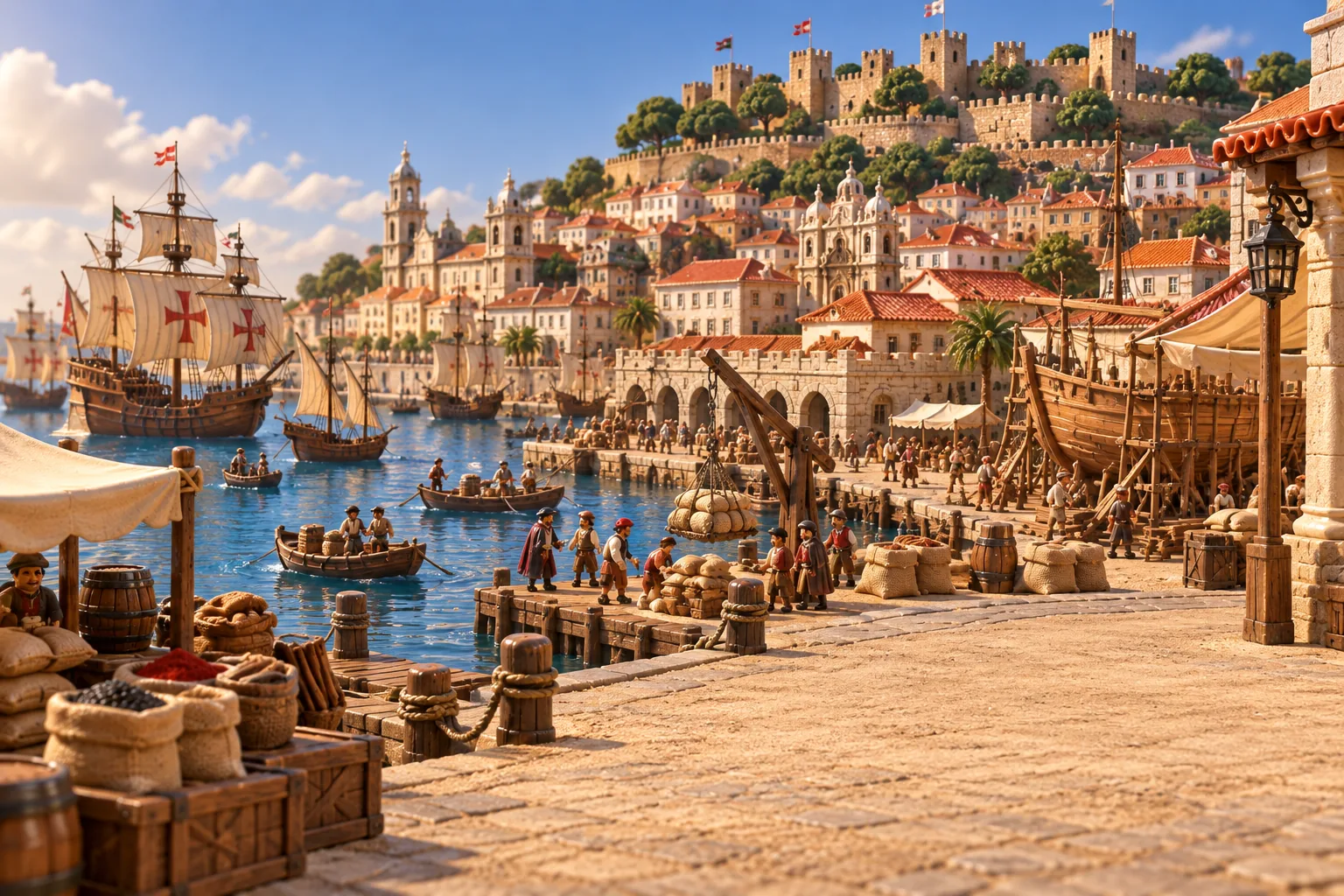
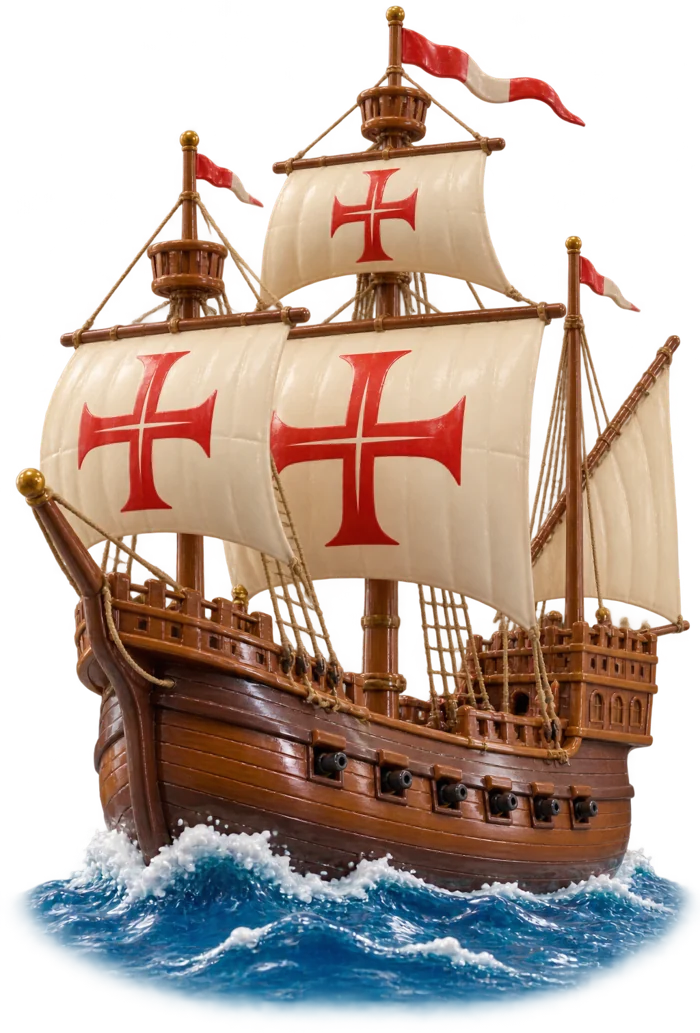
On 25 July 1415 a Portuguese fleet sailed to take Ceuta in North Africa. Prince Henry the Navigator sponsored voyages down the African coast, and Bartolomeu Dias sailed beyond the Cape of Good Hope. Vasco da Gama reached Calicut in India on 20 May 1498. Two years later Pedro Álvares Cabral, bound for India with 13 ships, sighted Brazil on 22 April 1500. Afonso de Albuquerque took Goa in 1510 and Malacca in 1511.
In 1578 young King Sebastian died in battle in Morocco without an heir, and from 1580 to 1640 Portugal shared its king with Spain. On 1 November 1755 an earthquake, tsunami and fires razed Lisbon, and the Marquis of Pombal rebuilt it. Napoleon's invasion in 1807 sent the court to Brazil, which became independent in 1822. King Charles was assassinated in Lisbon in 1908, and the revolution of 5 October 1910 ended the monarchy.
Read more on Wikipedia
Sources: en.wikipedia.org/wiki/Kingdom of Portugal, en.wikipedia.org/wiki/History of Portugal, en.wikipedia.org/wiki/Vasco da Gama, en.wikipedia.org/wiki/Pedro Álvares Cabral
