
Middle Ages · state
Kingdom of Naples
It lost the island of Sicily in 1282 yet went on calling itself the Kingdom of Sicily for more than five hundred years.
Until 1282 the island of Sicily and southern Italy formed one Kingdom of Sicily. That year the island rose against Charles of Anjou in the Sicilian Vespers and took Peter III of Aragon as king. Charles kept the mainland and ruled it from Naples. His heirs kept the old name, so the state was officially the Kingdom of Sicily 'on this side of the lighthouse', but historians call it the Kingdom of Naples. It covered today's Campania, Calabria, Apulia, Basilicata, Abruzzo and Molise.
The Angevins fought the Aragonese for the island until 1373, when Queen Joan I renounced it at Villeneuve. Her reign was troubled: Louis the Great of Hungary captured the kingdom several times between 1348 and 1352, and in 1382 her cousin, the Prince of Durazzo, had her murdered and took the throne as Charles III. Rival Angevin lines then fought over Naples for decades, until Alfonso V of Aragon conquered it in 1442.
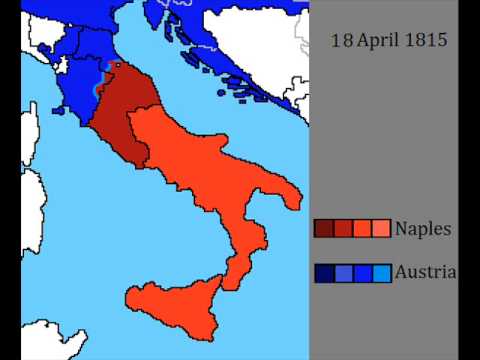
When Ferdinand I died in 1494, Charles VIII of France invaded and began the Italian Wars. By 1504 Ferdinand of Aragon held the whole kingdom, and for two centuries Spanish viceroys ruled it. Austria took it in 1714 and Charles of Bourbon in 1734. Napoleon gave it to his brother Joseph and then to Joachim Murat, and in 1816 Naples and Sicily were joined as the Kingdom of the Two Sicilies.
Read more on Wikipedia
Sources: en.wikipedia.org/wiki/Kingdom of Naples, en.wikipedia.org/wiki/Robert, King of Naples