Early modern · state
Kingdom of Kongo
Its Christian king Afonso I wrote to Portugal's king in 1526 to complain that slave traders were kidnapping his own free subjects.
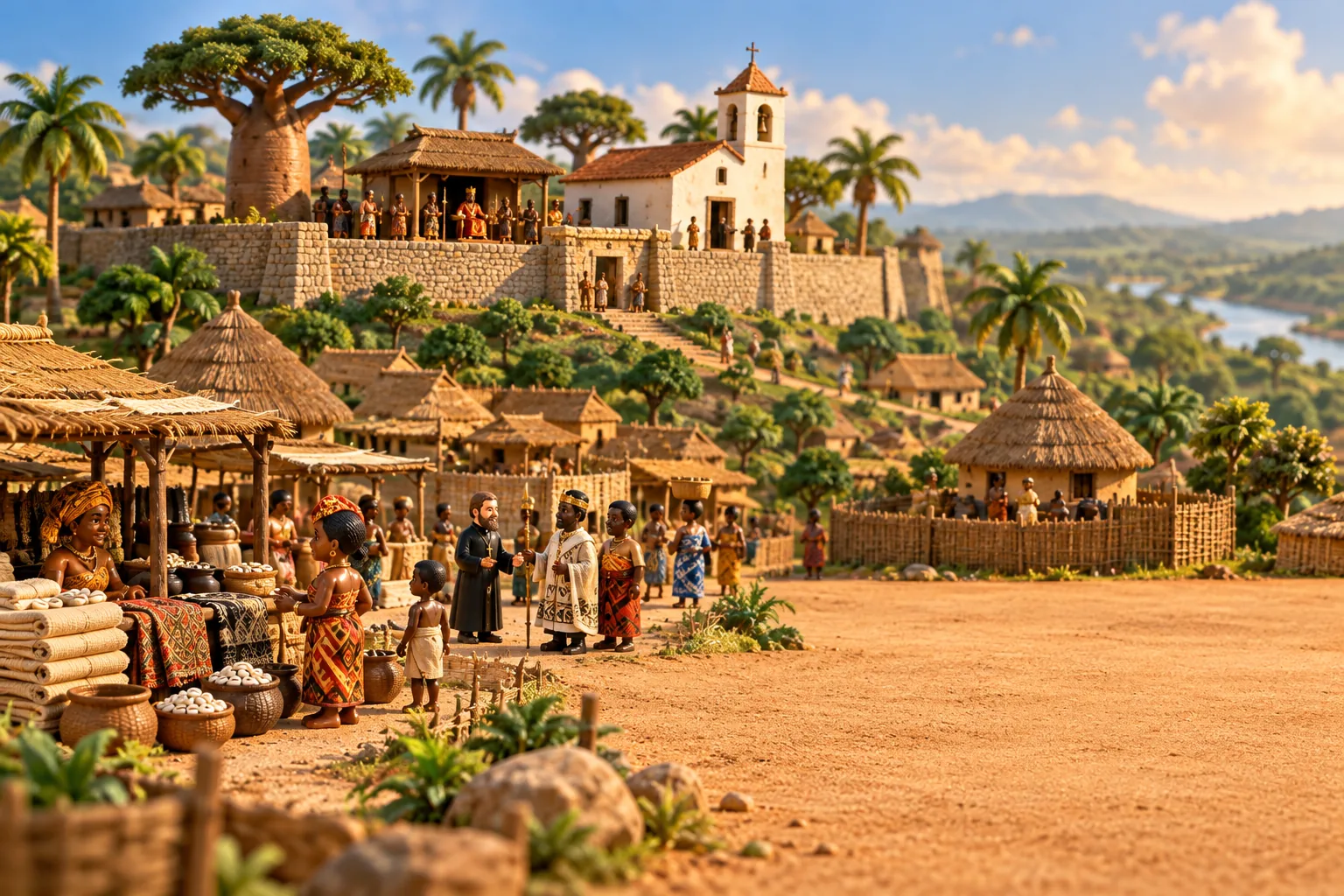
Kongo grew in the 14th century south of the lower Congo River, and at its height it stretched from the Atlantic to the Kwango River. Its ruler, the Mwene Kongo, governed from the hilltop capital of M'banza-Kongo. In 1483 the Portuguese navigator Diogo Cão reached the coast. King Nzinga a Nkuwu sent nobles to Lisbon to learn reading and Christianity, and in 1491 he was baptised as João I.
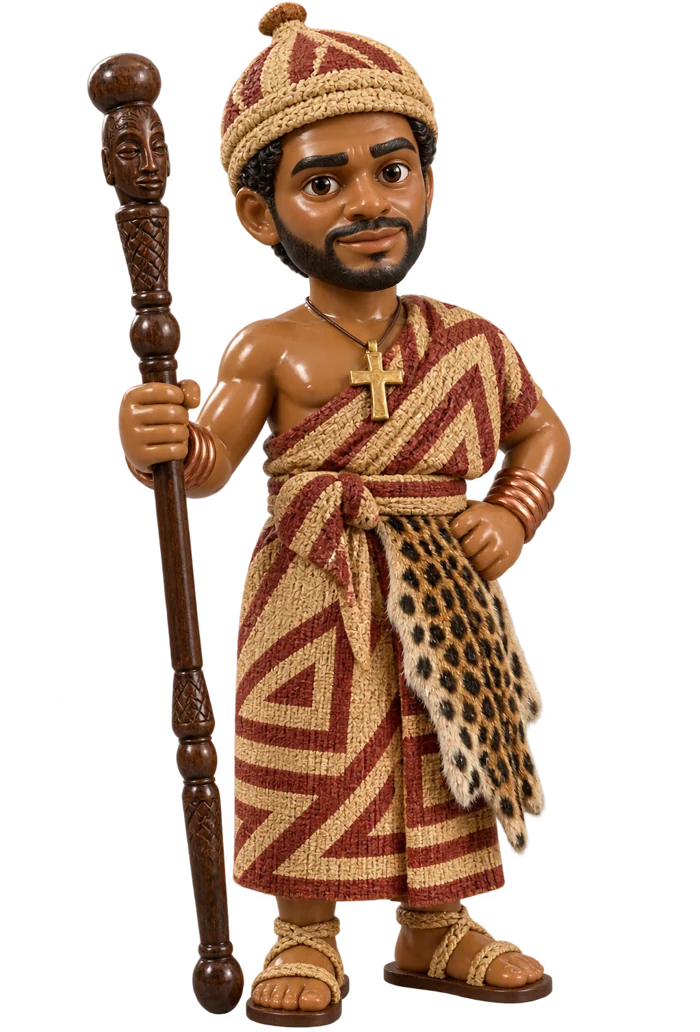
His son Afonso I, who took the throne in 1509, built a Kongo Catholic Church paid for by royal taxes, put up a stone palace and stone churches in the capital and sent his son Henrique to Europe, where he was named a titular bishop in 1518. The kingdom's money was nzimbu, the shells of a small sea snail gathered on the island of Luanda as a royal monopoly. As the slave trade grew, Portuguese merchants began buying captives outside the royal monopoly, and in 1526 Afonso complained to João III of Portugal and set up a board to check whether people being sold had been enslaved legally.
In 1665 the Portuguese from Angola defeated and killed King António I at Mbwila. Rival lineages then tore the kingdom apart and sacked São Salvador, the capital, in 1678. Kongo survived, increasingly a Portuguese vassal from 1862, until Portugal abolished the monarchy in 1914.
Read more on Wikipedia
Sources: en.wikipedia.org/wiki/Kingdom of Kongo, en.wikipedia.org/wiki/Afonso I of Kongo


