Industrial age · state
Kingdom of Italy
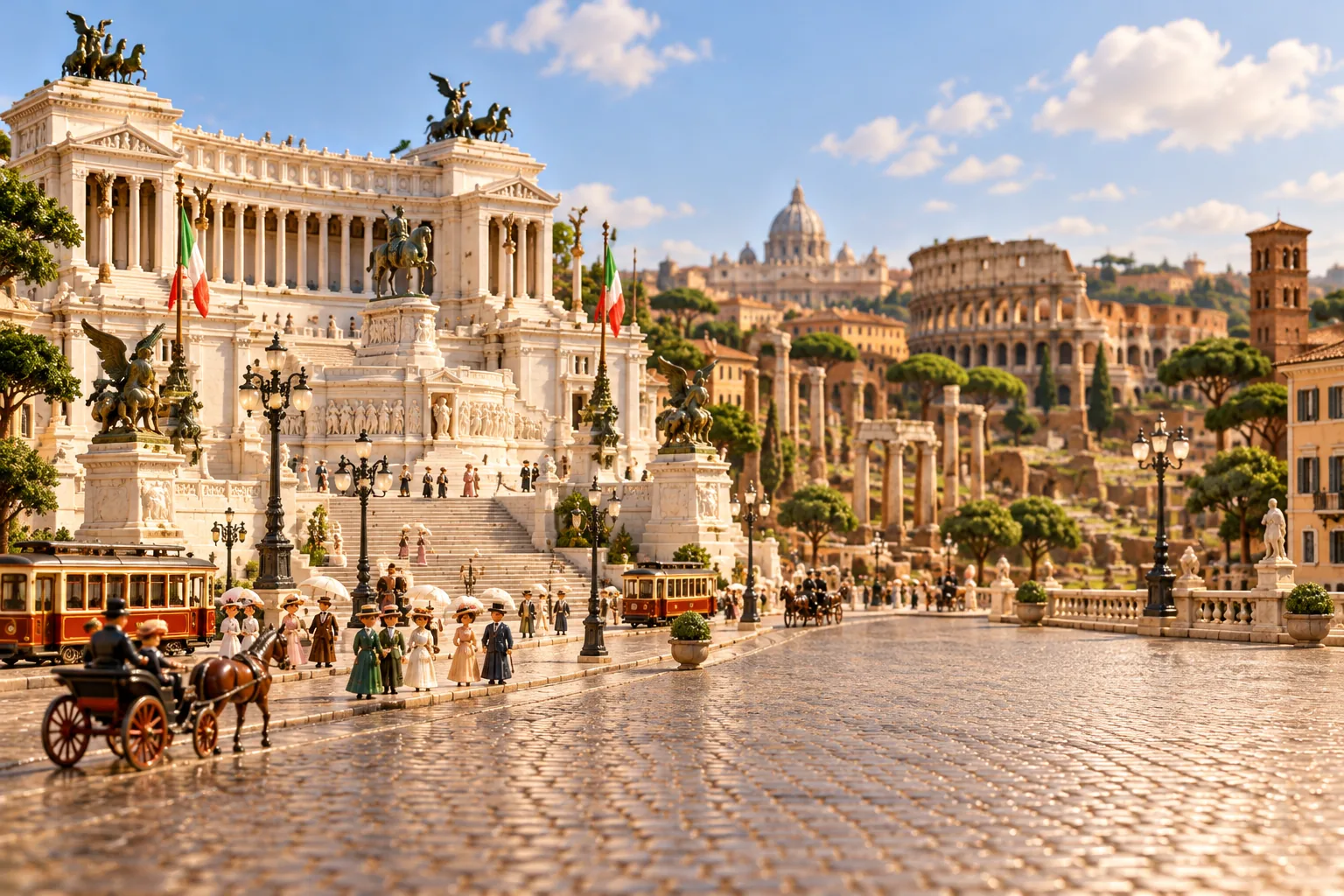
Unified under the House of Savoy in 1861, it took Rome only in 1870 and lost its king in a 1946 referendum.
In 1860 Giuseppe Garibaldi's Expedition of the Thousand took Sicily and Naples, while the troops of the Kingdom of Sardinia occupied central Italy. On 26 October 1860 at Teano Garibaldi shook the hand of Victor Emmanuel II and hailed him as king, and on 17 March 1861 Victor Emmanuel was proclaimed King of Italy. The capital moved from Turin to Florence. Venetia was won in 1866, in alliance with Prussia against Austria, and in 1870 Italian troops took Rome, ending more than a thousand years of papal rule over the city, which became the capital.
The new state was poor, above all in the south. From 1876 to 1915 more than 14 million Italians emigrated, mostly to North and South America. Giovanni Giolitti dominated politics in the early 1900s, Italy built colonies in Eritrea, Somalia and Libya, and in 1915 it joined the Allies in the First World War.
In 1922 Benito Mussolini became prime minister and the Fascists took control, and King Victor Emmanuel III let the dictatorship rule for two decades. In 1929 the Lateran Pacts finally made peace with the Pope and created Vatican City. After defeat in the Second World War, a referendum in June 1946 abolished the monarchy and Italy became a republic.
Read more on Wikipedia
Sources: en.wikipedia.org/wiki/Kingdom of Italy, en.wikipedia.org/wiki/Victor Emmanuel II Monument
