Early modern · state
Kingdom of England
For almost eight centuries England was its own kingdom, conquered by Danes and Normans, ruled by Tudors and Stuarts, until it voted itself into Great Britain.
In 886 Alfred the Great took London from the Danes and called himself King of the Anglo-Saxons. On 12 July 927 his grandson Æthelstan, having taken York, the last Viking kingdom, became the first ruler of all England. In 1016 England became part of Cnut the Great's North Sea Empire with Denmark and Norway. On 14 October 1066 William of Normandy defeated and killed Harold at Hastings, and the royal seat moved from Winchester to Westminster.
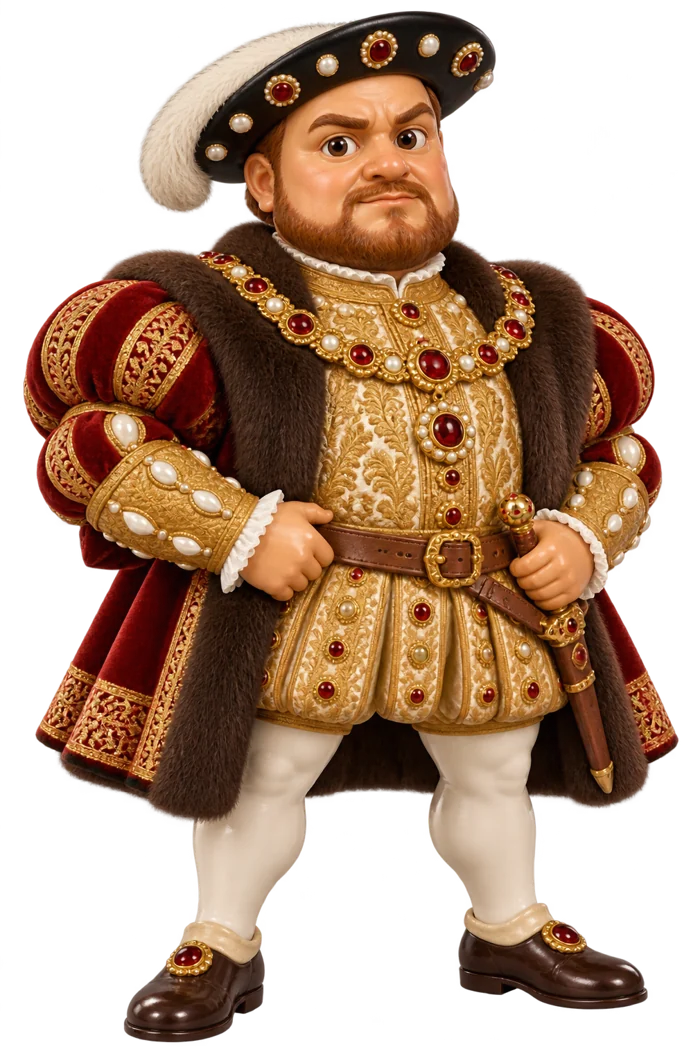
The Plantagenet kings claimed the French throne, and the Hundred Years' War of 1337 to 1453 pitted five English kings against five French kings of the house of Valois. After the Wars of the Roses the Tudors took over in 1485. Henry VIII led the English Reformation and joined Wales to England under the Laws in Wales Acts of 1535 to 1542. Calais, the last English town on the Continent, was lost in 1558, but in 1588 Elizabeth I's navy defeated the Spanish Armada.
In 1603 James VI of Scotland inherited the English crown. Charles I's taxes in defiance of Parliament led to civil war, and the monarchy was abolished from 1649 to 1660, with Oliver Cromwell as Lord Protector. The Glorious Revolution of 1688 overthrew James II, and on 1 May 1707 England and Scotland united as the Kingdom of Great Britain.
Read more on Wikipedia