Industrial age · state
Kingdom of Egypt
Britain declared Egypt independent in 1922 but kept its troops on the Suez Canal, and thirty years later army officers sent the last real king away on his yacht.
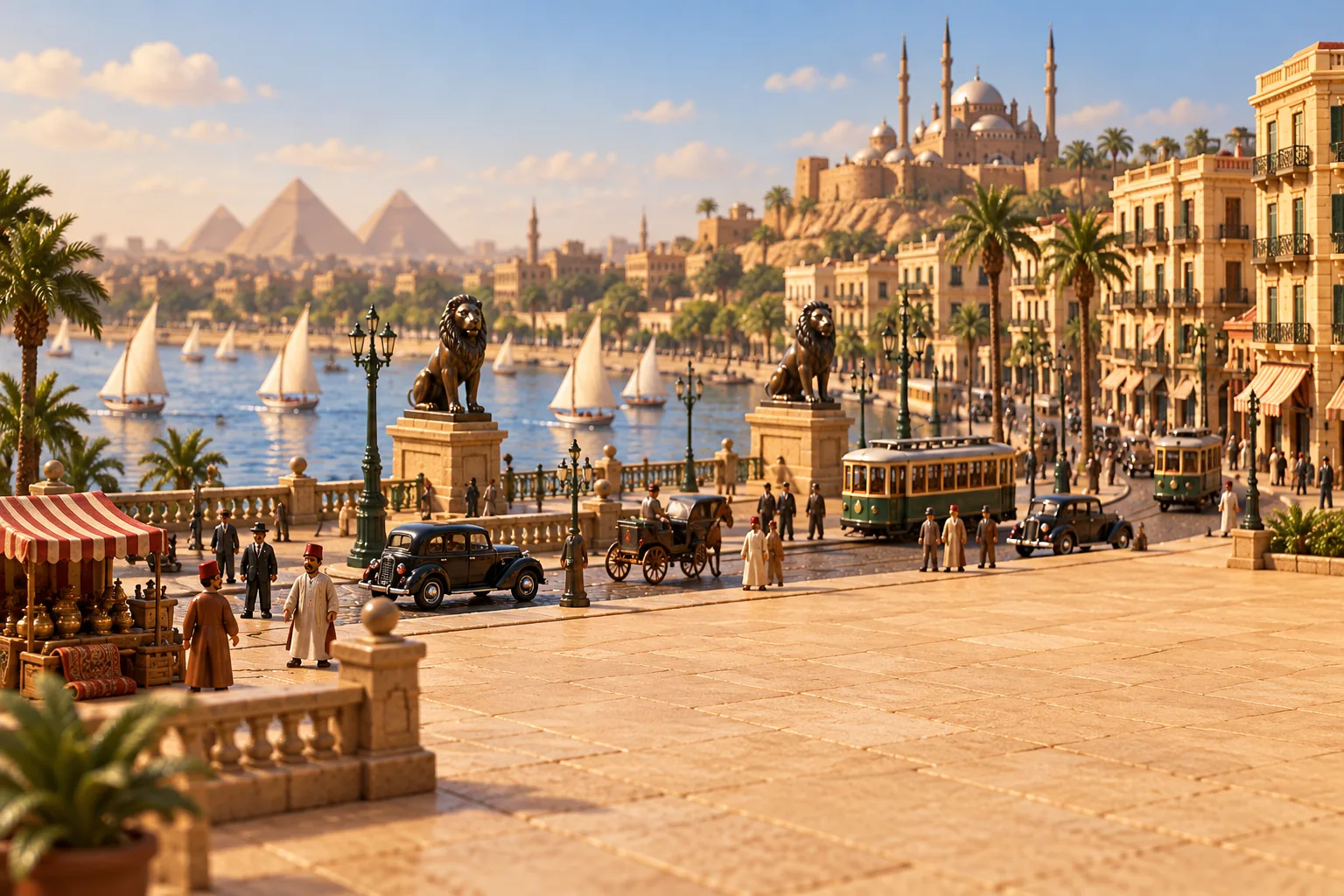
After the First World War the Wafd, a nationalist delegation led by Saad Zaghlul, demanded independence, and in 1919 mass demonstrations swept Egypt. In February 1922 Britain ended its protectorate and Sultan Fuad I became King of Egypt. Independence was only partial: Britain kept control of the Suez Canal Zone, the Sudan, defence and communications. Zaghlul's Wafd won the elections and he became prime minister in 1924.
Fuad died in 1936 and his 16-year-old son Farouk became king. The Anglo-Egyptian treaty of that year withdrew British troops from Egypt except the Canal Zone. In the Second World War Egypt stayed legally neutral while Britain fought Italy and Germany on its soil, and on the night of 4 February 1942 British tanks surrounded Abdeen Palace in Cairo to force Farouk to appoint a Wafd government. The humiliation turned many army officers against both the king and the British.
Defeat in the 1948 Arab–Israeli War and fighting around the British base on the canal weakened the monarchy further. On 23 July 1952 the Free Officers led by Mohamed Naguib and Gamal Abdel Nasser seized power. Farouk abdicated for his infant son Fuad II on 26 July and sailed away on the royal yacht, and Egypt became a republic on 18 June 1953.
Read more on Wikipedia
Sources: en.wikipedia.org/wiki/Kingdom of Egypt, en.wikipedia.org/wiki/KV62