Middle Ages · state
Kingdom of Denmark
Its red-and-white flag, said to have fallen from the sky during a battle in 1219, is the oldest national flag still in use.
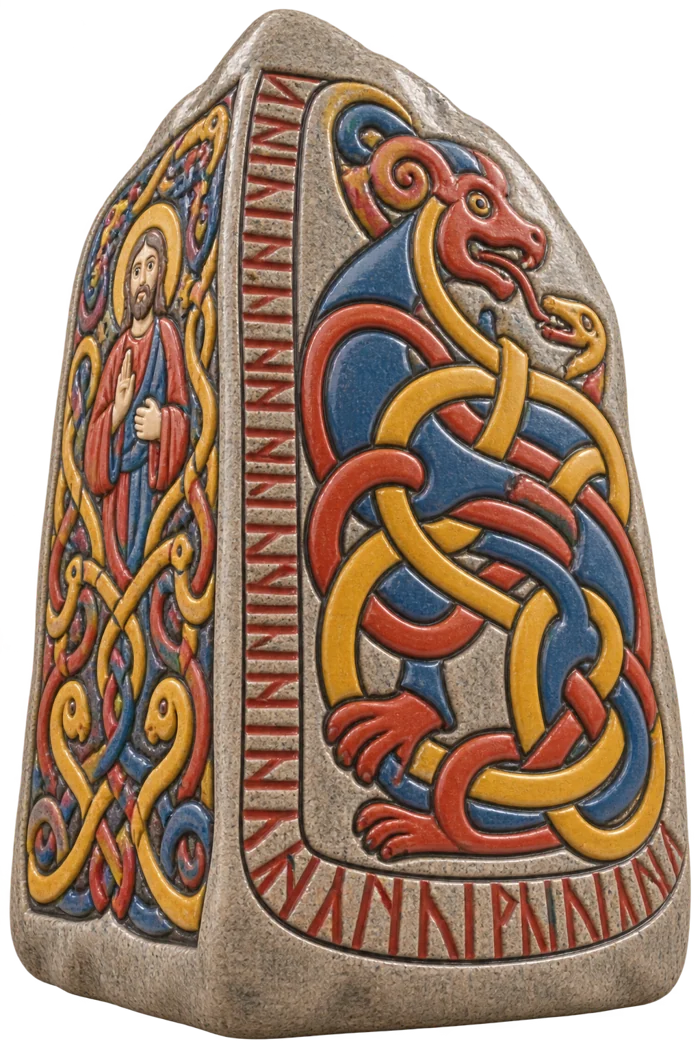
At Jelling in Jutland, King Gorm the Old raised a rune stone in memory of his wife Thyra. His son Harald Bluetooth raised a larger one in memory of his parents, celebrating that he had won Denmark and Norway and made the Danes Christian. Harald's grandson Cnut the Great won the throne of England in 1016, became king of Denmark in 1018 and of Norway in 1028; historians call his realm the North Sea Empire. He died in 1035.
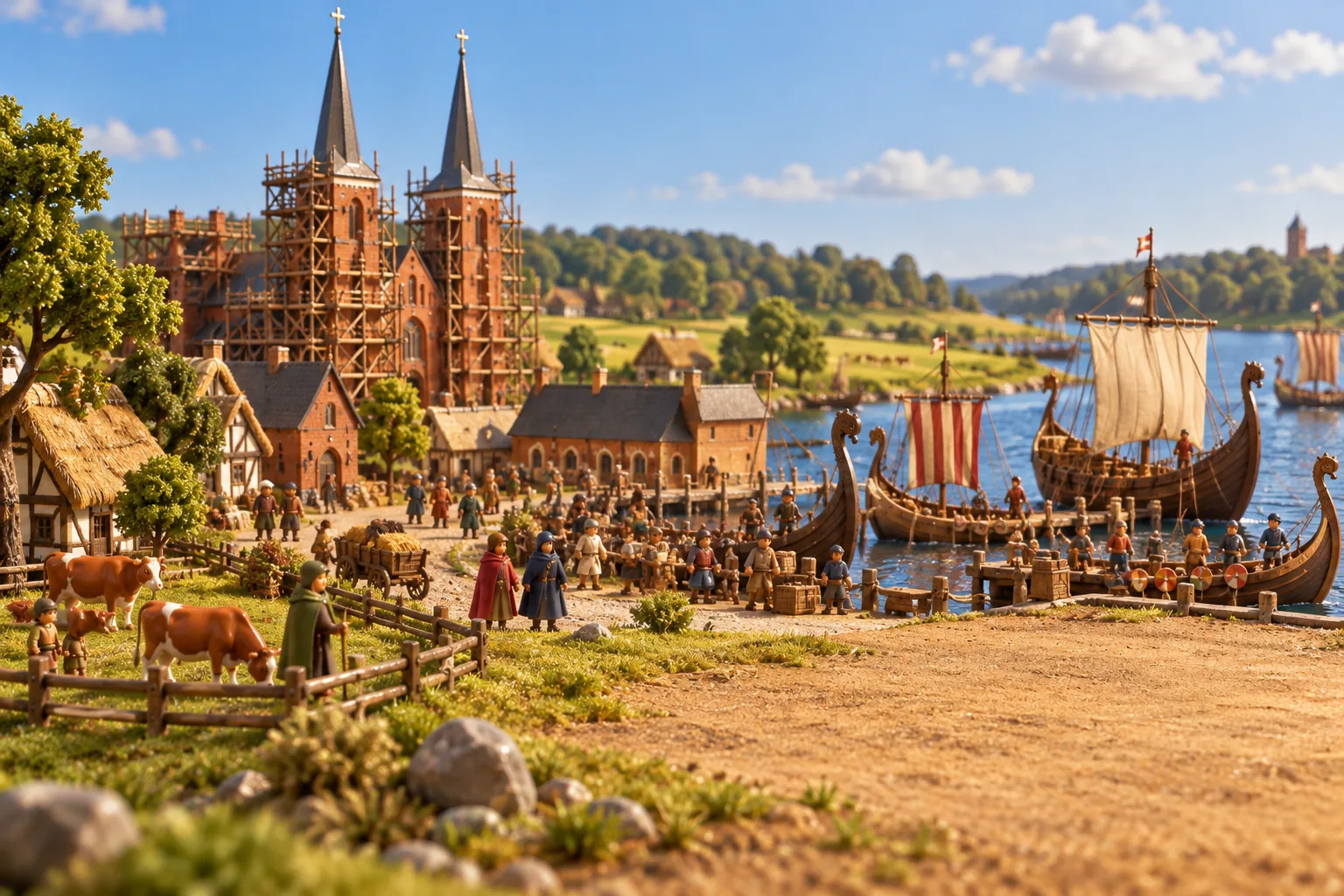
In the 12th century the kingdom was rebuilt by Valdemar I and Absalon, who grew up with him, became bishop of Roskilde and archbishop of Lund, and built the first fortification of what became Copenhagen. Valdemar II, later called the Victorious, king from 1202 to 1241, took Lübeck and Holstein and established Danish rule in Estonia in 1219. His reign brought a feudal system and the Code of Jutland, Denmark's law until 1683.
A tradition first written down in the 16th century says that during Valdemar's campaign in Estonia, at the Battle of Lindanise in 1219, a red banner with a white cross fell from the sky. In 1397 Queen Margaret I brought Denmark, Sweden and Norway together under one monarch in the Kalmar Union, which lasted until Sweden broke away in 1523.
Read more on Wikipedia
Sources: en.wikipedia.org/wiki/Danish Realm, en.wikipedia.org/wiki/Jelling stones, en.wikipedia.org/wiki/Cnut, en.wikipedia.org/wiki/Absalon, en.wikipedia.org/wiki/Valdemar II of Denmark, en.wikipedia.org/wiki/Flag of Denmark, en.wikipedia.org/wiki/Kalmar Union