Middle Ages · state
Kingdom of Castile
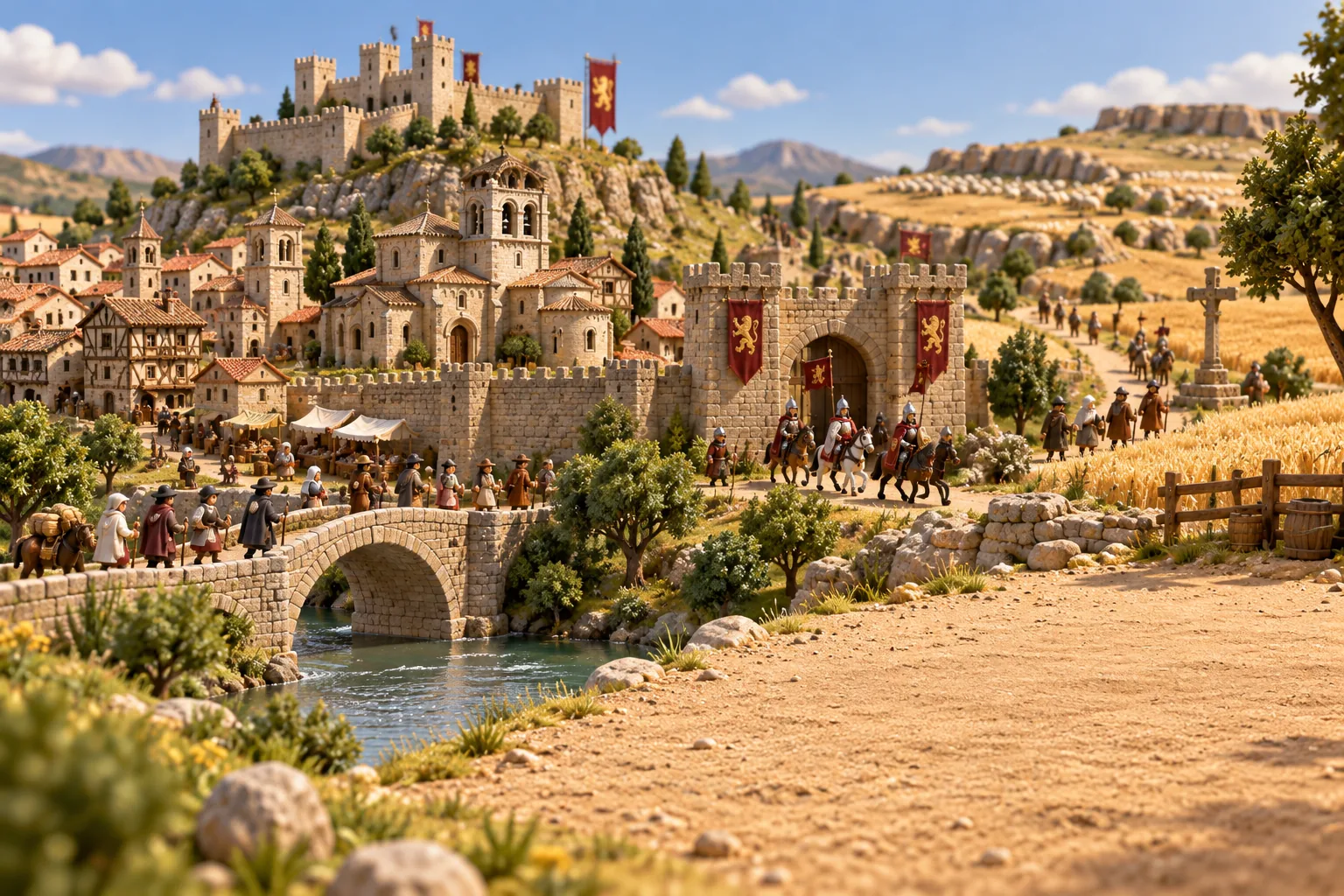
Named for its castles, it grew from a frontier county on the edge of al-Andalus into a kingdom that took Toledo in 1085 and gave Spain El Cid.
Castile began in the 9th century as a march on the eastern frontier of the Kingdom of Asturias, defended by castles and towers; Muslim chroniclers called it al-Qila, the castled land. Settlers from Cantabria, Asturias and the Basque coast moved onto its high plains and brought their own Romance dialect and customary laws. In 931 Count Fernán González reunited the county and made it hereditary in his family.
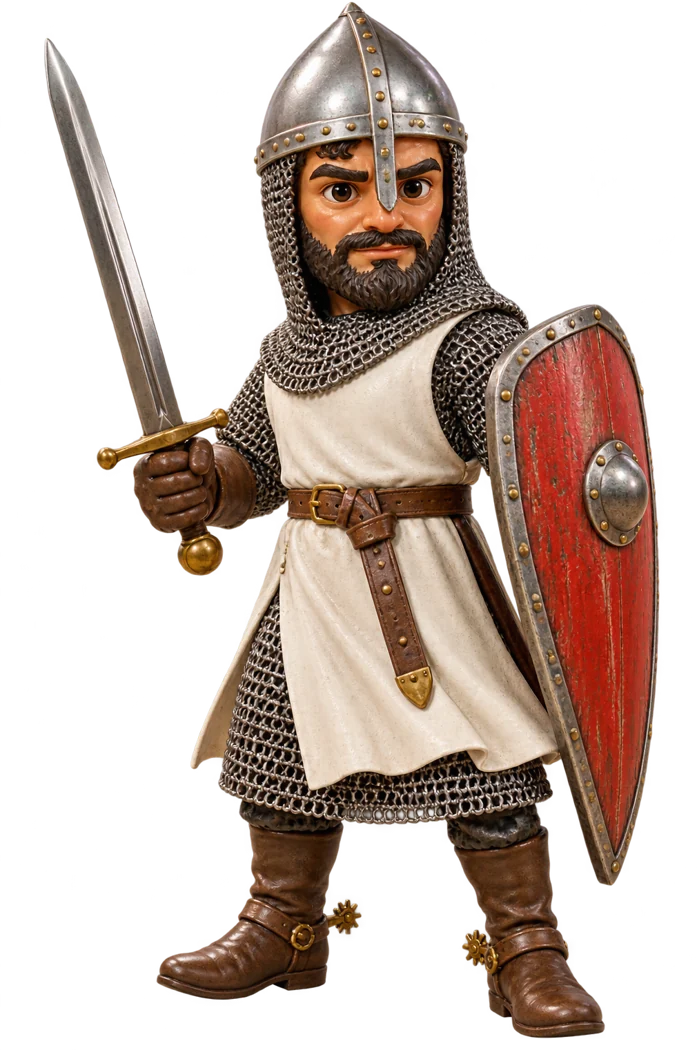
When King Ferdinand I died in 1065, his lands were divided and Castile became a kingdom for his son Sancho II. With the help of the knight Rodrigo Díaz, El Cid, Sancho drove his brother Alfonso VI of León into exile, but in 1072 he was murdered while besieging Zamora. Alfonso then ruled León and Castile together, and in 1085 he took Toledo, a great centre of learning. Arabic classics found there fed a school of translators who put Greek and Islamic science into Latin.
In 1157 the kingdoms were divided again, and Castile went to Sancho III. Under Alfonso VIII the kings took up a golden castle as their arms. In 1230 Ferdinand III, king of Castile since 1217, inherited León from his father, and the two were joined for good in the Crown of Castile.
Read more on Wikipedia
Sources: en.wikipedia.org/wiki/Kingdom of Castile, en.wikipedia.org/wiki/El Cid