Antiquity · state
Kingdom of Armenia
Under Tigranes the Great it briefly stretched to the Mediterranean, and around 301 it became the first state to adopt Christianity.
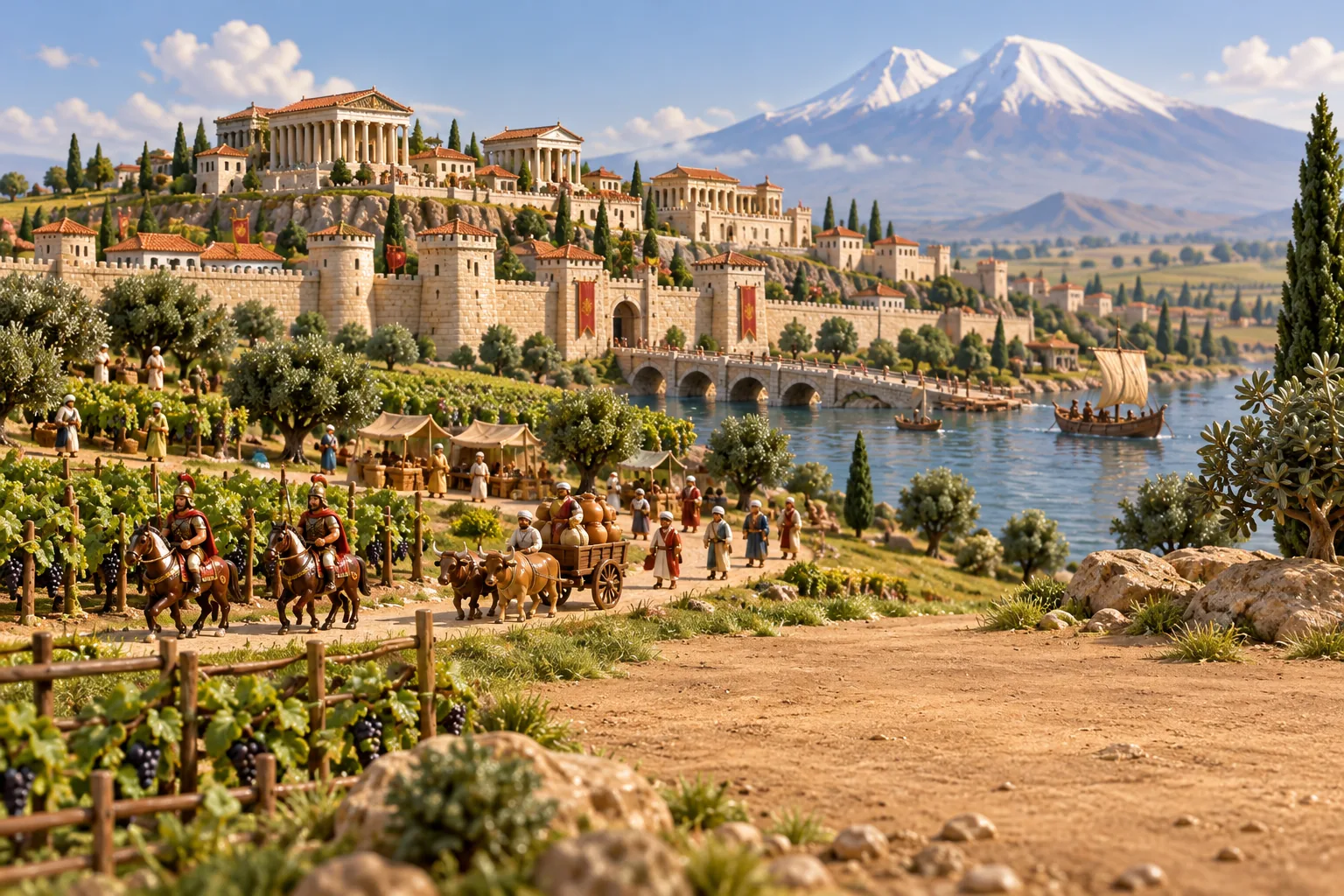
For three centuries Armenia was a satrapy of the Persian Achaemenids under the Orontid dynasty. After Alexander the Great's victory in 331 BC it became autonomous, and after 321 BC the Orontids ruled it as kings. Around 200 BC Artaxias I, a commander of the Seleucids, overthrew the last Orontid, and from 189 BC he ruled Greater Armenia. Plutarch and Strabo say he chose the site of his new capital, Artaxata, on the advice of Hannibal, who had found refuge at his court.
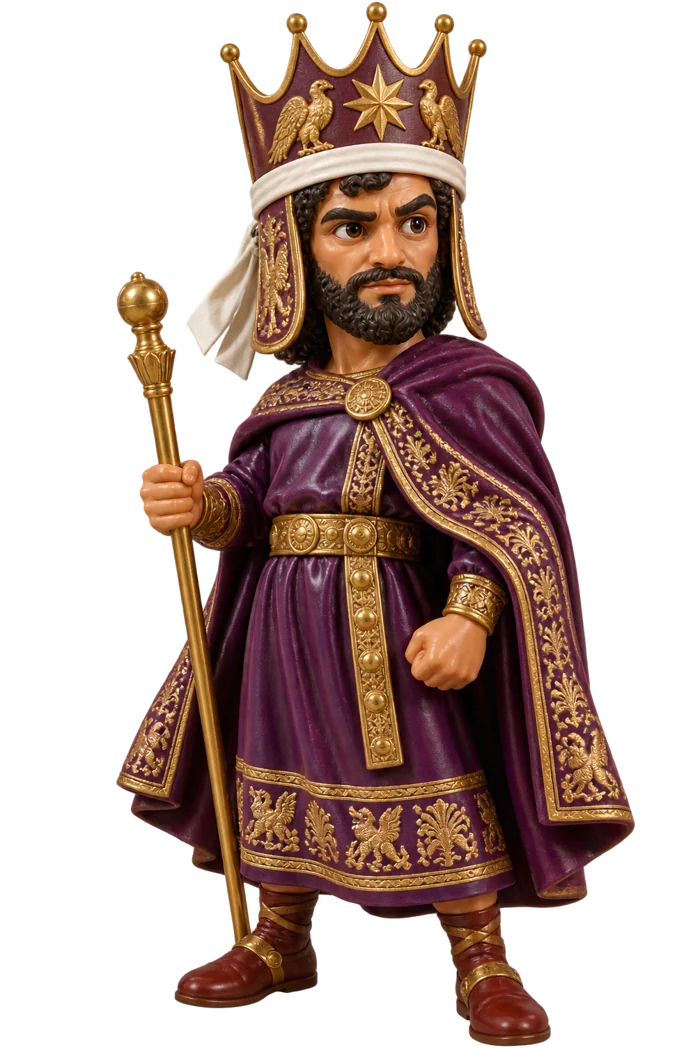
Under Tigranes the Great the kingdom reached its peak between 83 and 69 BC. As the Seleucid Empire collapsed, he spread Armenian rule beyond the Armenian Highland over parts of the Caucasus and today's south-eastern Turkey, Iran, Syria and Lebanon. He was an ally of Mithridates VI of Pontus, and after Pompey's final victory over Mithridates, Armenia became a Roman client kingdom in 66 BC.
For centuries Armenia stood between Rome and Persia. In 287 Roman armies put Tiridates III on the throne; converted by Gregory the Illuminator, he proclaimed Christianity the state religion in 301 or 314, making Armenia the first state in history to do so. In 405 Mesrop Mashtots and Isaac of Armenia created the Armenian alphabet to translate the Bible. In 428 the last Arsacid king was deposed, and the Sasanians put a governor in his place.
Read more on Wikipedia
Sources: en.wikipedia.org/wiki/Kingdom of Armenia (antiquity)