Early modern · state
Khanate of Kazan
Russian armies besieged Kazan at least ten times before Ivan the Terrible took it in 1552 and built Saint Basil's Cathedral in Moscow to celebrate.
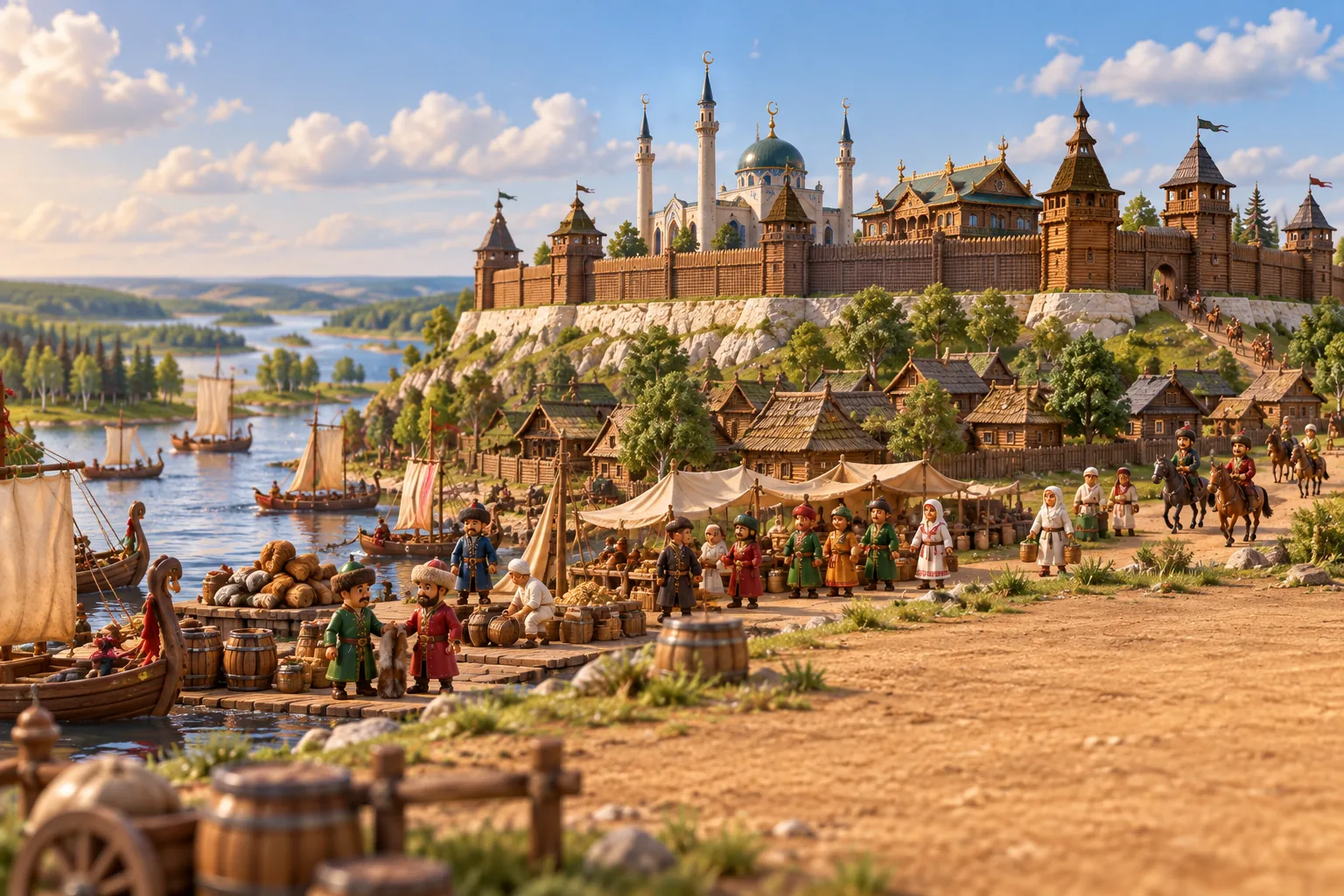
The khanate grew on the lands of old Volga Bulgaria as the Golden Horde fell apart. Historians date its start either to 1437 or 1438, when the former Horde khan Ulugh Muhammad took power in Kazan, or to 1445, when his son Maxmud ruled there. That year Maxmud and his brother Yakub defeated Grand Prince Vasily II of Moscow near Suzdal and captured him. Tatars formed the ruling class over Chuvash, Mari, Mordvins, Udmurts and Bashkirs.
Kazan's towns lived by crafts and trade. They sold furs, leather, honey and grain and bought luxury goods, fine weapons, textiles and spices, and the Taşayaq fair at Kazan was the main fair of the Volga. In July 1487 Ivan III of Moscow occupied the city and made it in effect a Muscovite protectorate. In 1521 the Crimean prince Sahib Giray took the throne and led a successful campaign against Moscow, and for thirty years Kazan swung between Crimean and Muscovite candidates.
In 1549 Khan Safa Giray died in an accident, leaving a two-year-old son, and his widow Söyembikä ruled as regent. In 1551 the Russians built the fortress of Sviyazhsk nearby. On 22 August 1552 Ivan IV laid siege to Kazan with some 150,000 men, and on 2 October his sappers blew up the walls and the city fell.
Read more on Wikipedia
Sources: en.wikipedia.org/wiki/Khanate of Kazan, en.wikipedia.org/wiki/Siege of Kazan