Ancient world · politics
Kadesh and the first peace treaty
Two captured nomads told Pharaoh the Hittite army was 200 km away. They were spies, and the Hittites were waiting just behind the city.
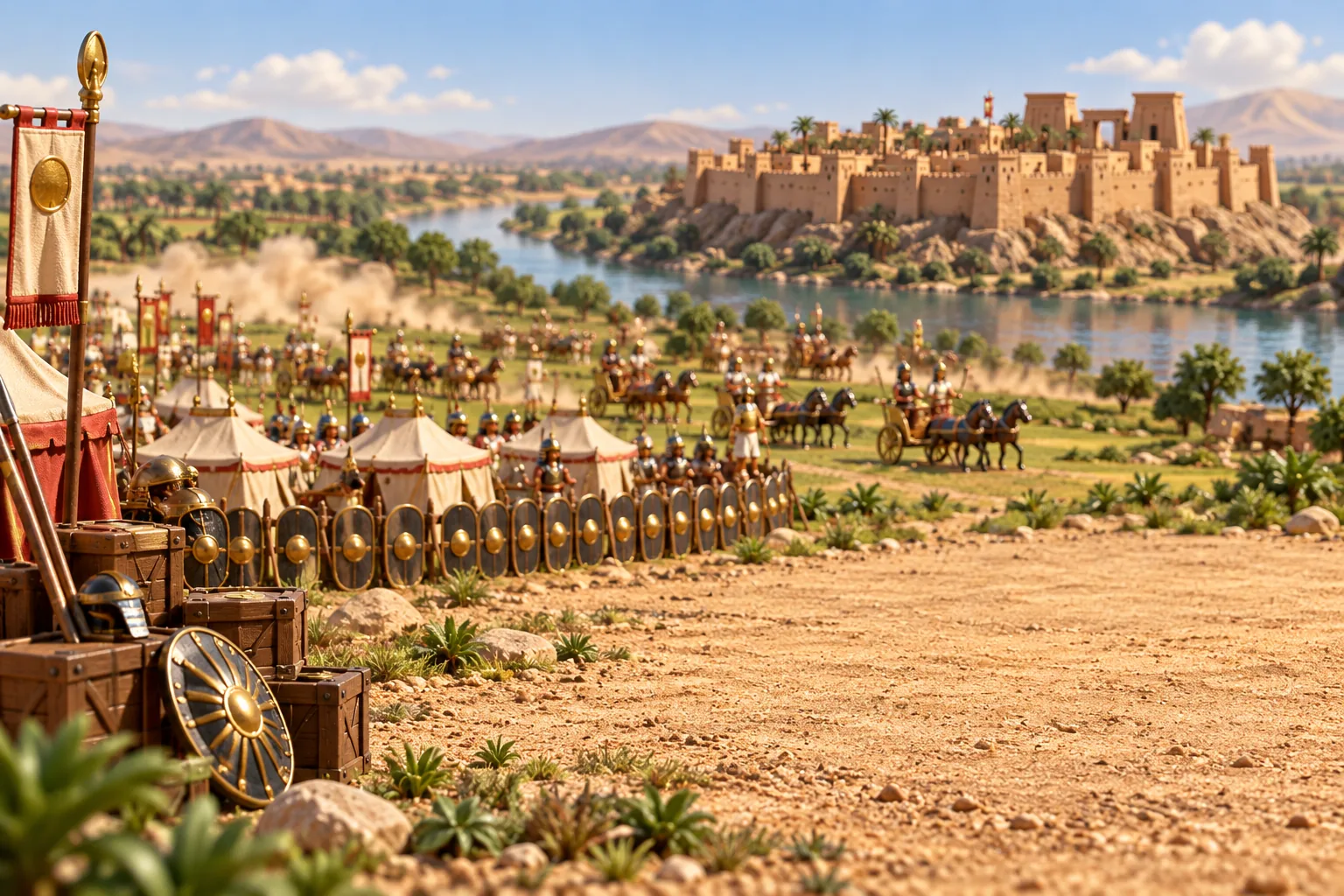
In the spring of 1274 BC, by the standard chronology, Pharaoh Ramesses II marched north with four army divisions to win back Syria from the Hittite Empire. Near Kadesh, on the Orontes River, his men caught two Shasu nomads who said the Hittite king Muwatalli II was far away near Aleppo. They were Hittite spies. Ramesses set up camp, and Hittite chariots, hidden behind the city, smashed into one division on the march and then broke into the Egyptian camp.
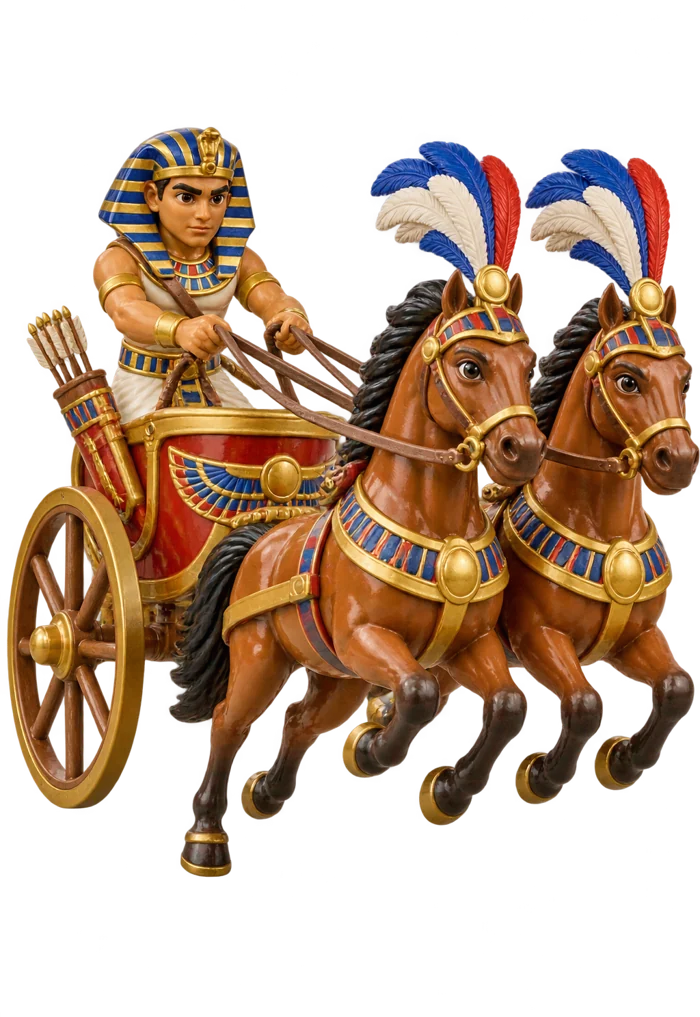
It is the earliest pitched battle in history whose tactics and formations are known in detail, and probably the largest chariot battle ever fought, with 5,000 to 6,000 chariots in total. By his own account Ramesses, nearly surrounded, led charge after charge with his bodyguard. The Hittites stopped to plunder the camp, and Egyptian reinforcements arrived and drove them back to the river, where many drowned trying to swim across. Ramesses then went home without taking Kadesh. He had his victory carved in the temples of Abydos, Luxor, Karnak, Abu Simbel and the Ramesseum, while Hittite records describe an Egyptian retreat. Historians call it a draw.
The border war dragged on. Then, about 15 years after the battle, in the 21st year of Ramesses' reign, Egypt and the new Hittite king Hattusili III made peace. The treaty was inscribed on a silver tablet; a clay copy found in the Hittite capital Hattusa is now in the Istanbul Archaeology Museum, and an Egyptian version survives on papyrus.
Read more on Wikipedia


