Early modern · culture
Kabuki
Kabuki was started by a woman, yet for almost four centuries all of its roles, female ones included, have been played by men.
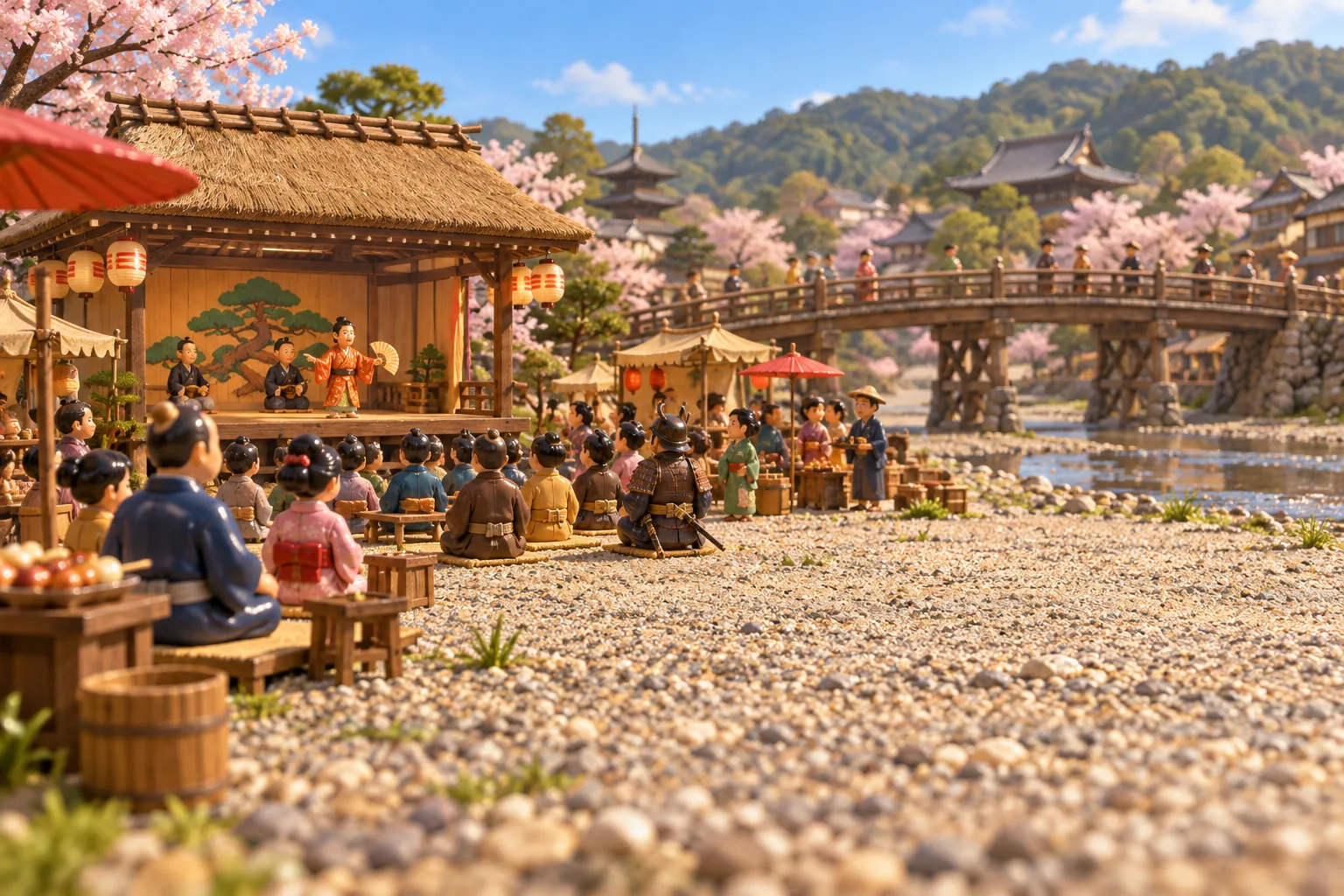
In 1603, at the very start of the Edo period, a former shrine maiden named Izumo no Okuni began performing a new, simple kind of dance drama with a troupe of young women, on a makeshift stage in the dry bed of the Kamo River in Kyoto. The word kabuki is believed to come from the verb kabuku, "to lean" or "to be out of the ordinary", so it can mean something like "avant-garde" or "bizarre" theatre.
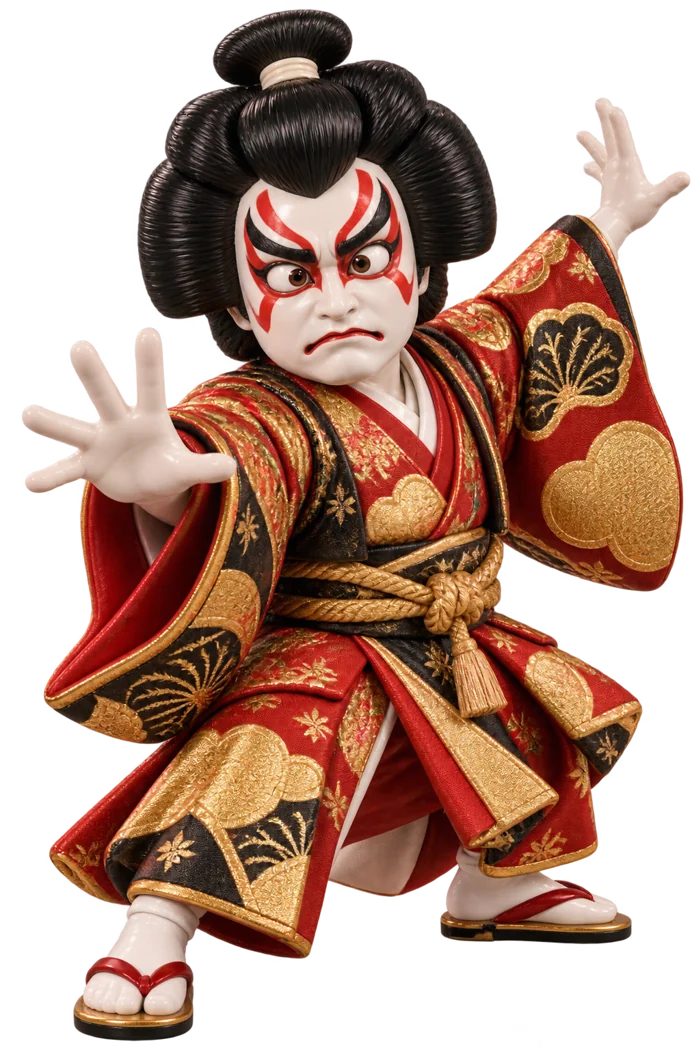
In 1629 women were banned from performing in kabuki, and the art became all-male. Men called onnagata, "woman role", took over the female parts. In the Genroku period from the late 17th century kabuki flourished: plays took on the structure they still have today, the actor Ichikawa Danjūrō I is credited with the dramatic frozen pose called the mie, and actors began to wear the mask-like kumadori make-up. Playwrights such as Chikamatsu Monzaemon wrote for the stage, and in the 18th century theatres added revolving stages and trap doors. A walkway called the hanamichi, "flower path", runs out through the audience for grand entrances and exits.
After the Second World War the American occupation briefly banned kabuki, which had supported Japan's war effort, but the ban was lifted by 1947. In 2005 UNESCO proclaimed kabuki an intangible heritage of outstanding universal value, and in 2008 it was inscribed on its Representative List.
Read more on Wikipedia
Sources: en.wikipedia.org/wiki/Kabuki

