Antiquity · state
Judea
A revolt of priests' sons against a Greek king gave Judea a century of its own kings, and an Idumean client of Rome gave it its greatest Temple.
In 168 to 167 BC the Seleucid king Antiochus IV sacked Jerusalem and banned Jewish worship at the Temple. The Maccabean Revolt followed, and in 164 BC Judah Maccabee entered Jerusalem and restored the Temple service. His brother Simon became High Priest and Ethnarch in 142 BC, and in 141 BC an assembly of priests, people and elders confirmed him as leader, founding the Hasmonean dynasty.
As the Seleucid Empire fell apart, the Hasmoneans took Perea, Samaria, Idumea, Galilee and Iturea, and took the Greek title of king. Alexander Jannaeus reigned as king and High Priest from 103 to 76 BC, and his widow Salome Alexandra ruled after him. Then her sons Hyrcanus II and Aristobulus II fought each other, and in 63 BC Pompey intervened and made Judea a Roman client state.
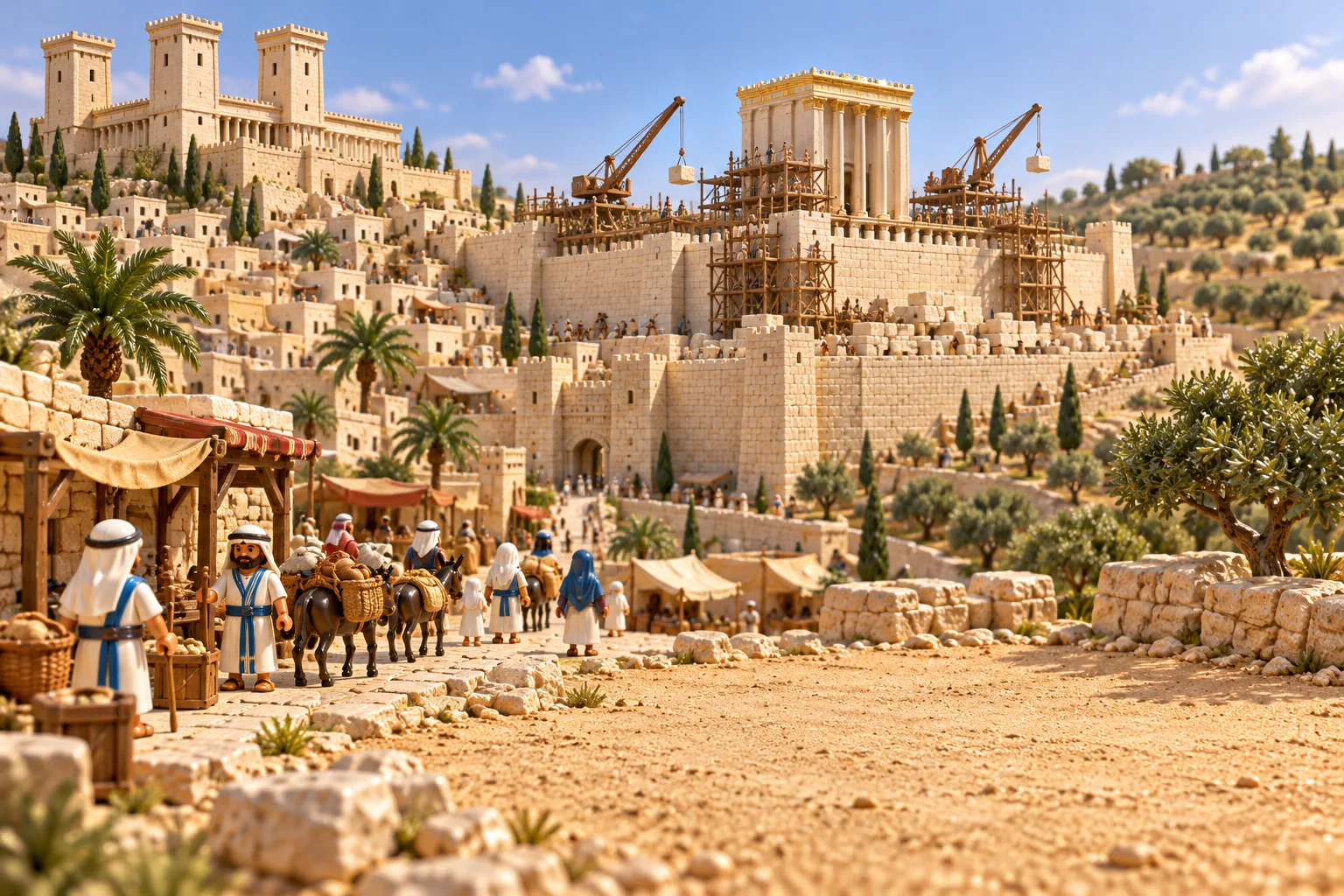
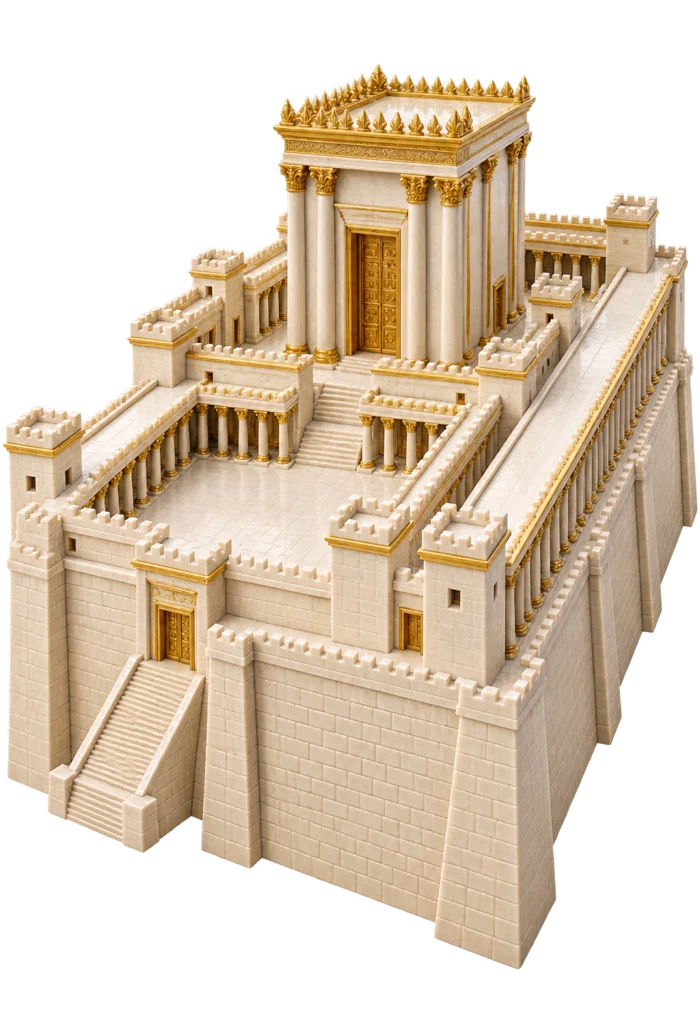
In 37 BC Herod, son of an Idumean official, overthrew the last Hasmonean king, Antigonus, and ruled as Rome's client king. He built the fortresses of Masada and Herodium and the port city of Caesarea Maritima, and from about 20 BC rebuilt the Temple on a far grander scale. After his death his kingdom was divided among his sons, and in AD 6 Rome made Judea a province.
Read more on Wikipedia
Sources: en.wikipedia.org/wiki/Judea, en.wikipedia.org/wiki/Hasmonean dynasty, en.wikipedia.org/wiki/Herod the Great