Prehistory · culture
Jōmon period
Hunter-gatherers who never needed to farm made pottery thousands of years before the first cities, and their culture lasted longer than all of recorded history since.
The Jōmon period is named after its pottery: the name means "cord-marked", from the cords pressed into the wet clay. It began while Japan was still joined to the Asian mainland. As the ice melted after the last glacial period, the sea rose and cut the islands off, and forests of beech, chestnut and oak spread across them. Small fragments found at Odai Yamamoto I in northern Honshu in 1998 are dated to about 14,500 BC, among the oldest pottery in the world.
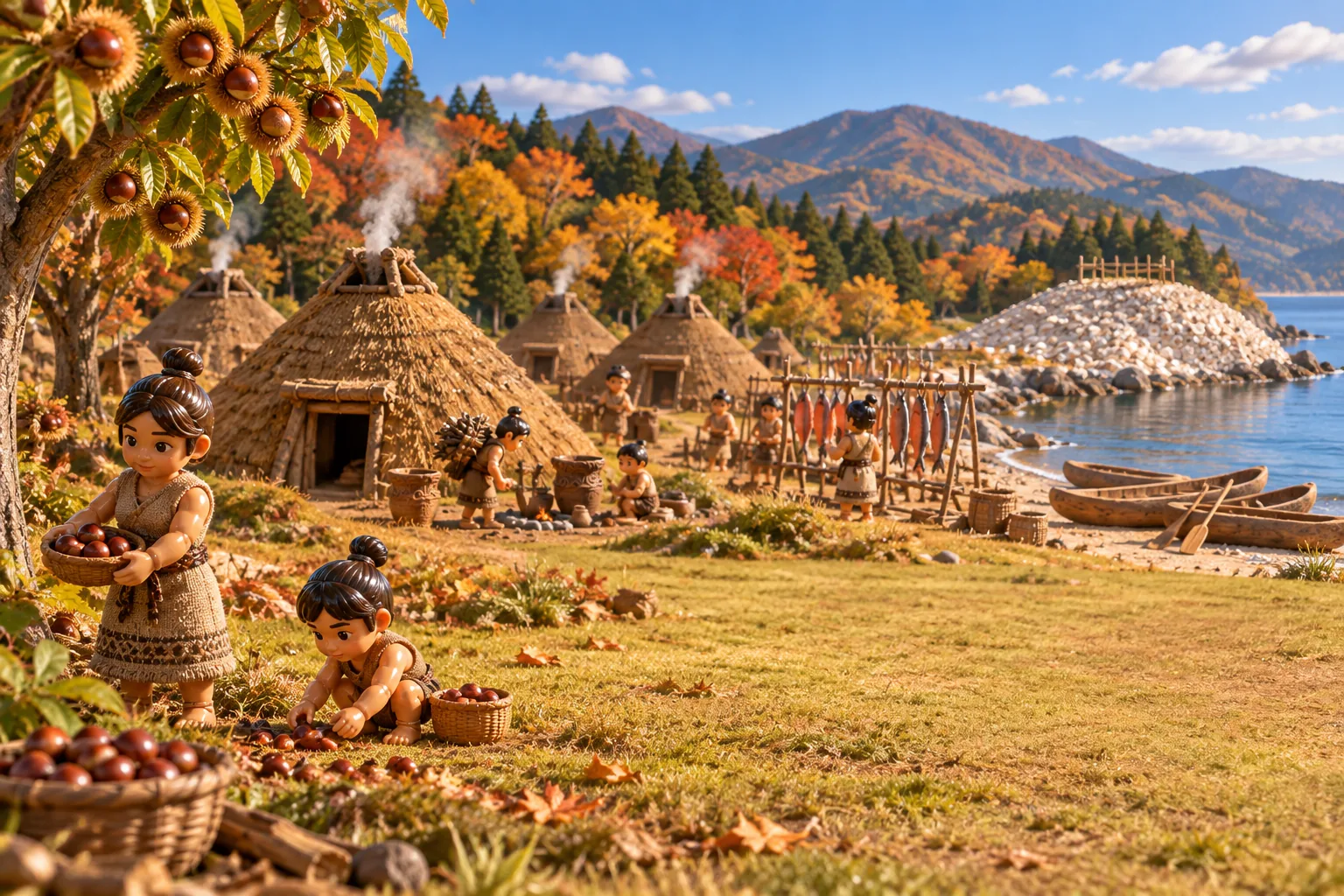
The Jōmon people lived from an unusually rich land and sea. They gathered nuts and stored them in pits for the winter, hunted sika deer and wild boar, caught salmon, and ate so many shellfish that their shell mounds are now treasure troves for archaeologists. Food was plentiful enough that many lived in settled villages of pit-houses. They tended chestnut and lacquer trees and grew plants such as soybeans and adzuki beans, so they were more than simple hunter-gatherers.
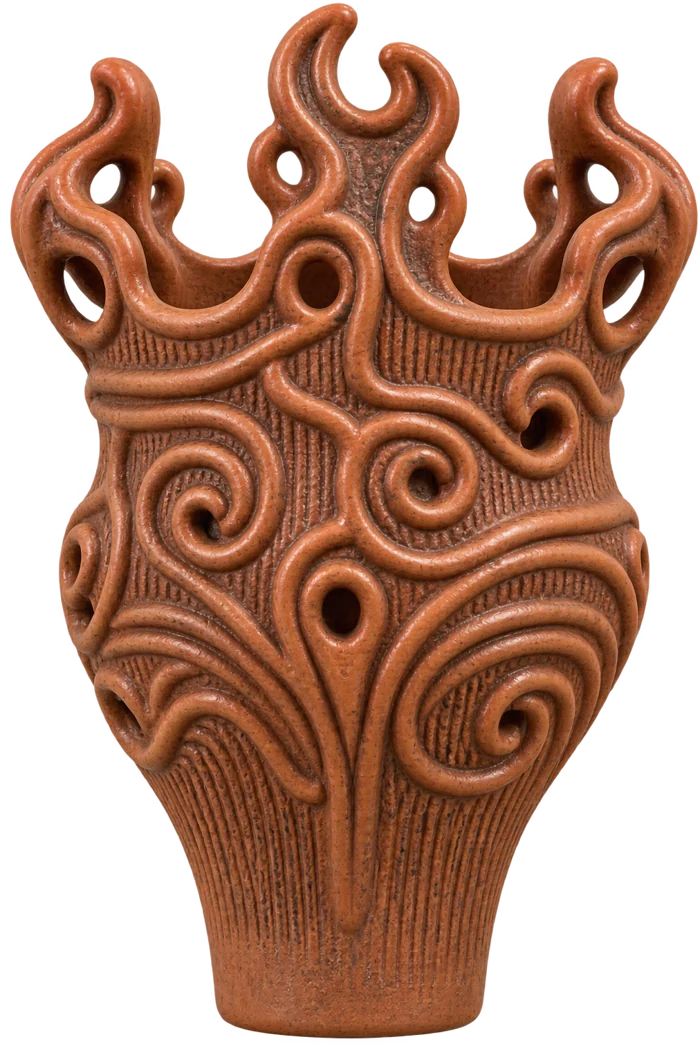
In the warm Middle Jōmon, from 3520 to 2470 BC, potters made wildly ornate "flame style" vessels and clay figurines called dogū. After about 1500 BC the climate cooled and the population fell. From around 900 BC settlers from the Korean Peninsula brought wet rice farming and metalworking to Kyushu, and the farming Yayoi culture slowly took over.
Read more on Wikipedia
Sources: en.wikipedia.org/wiki/Jōmon period