Industrial age · person
John Herschel
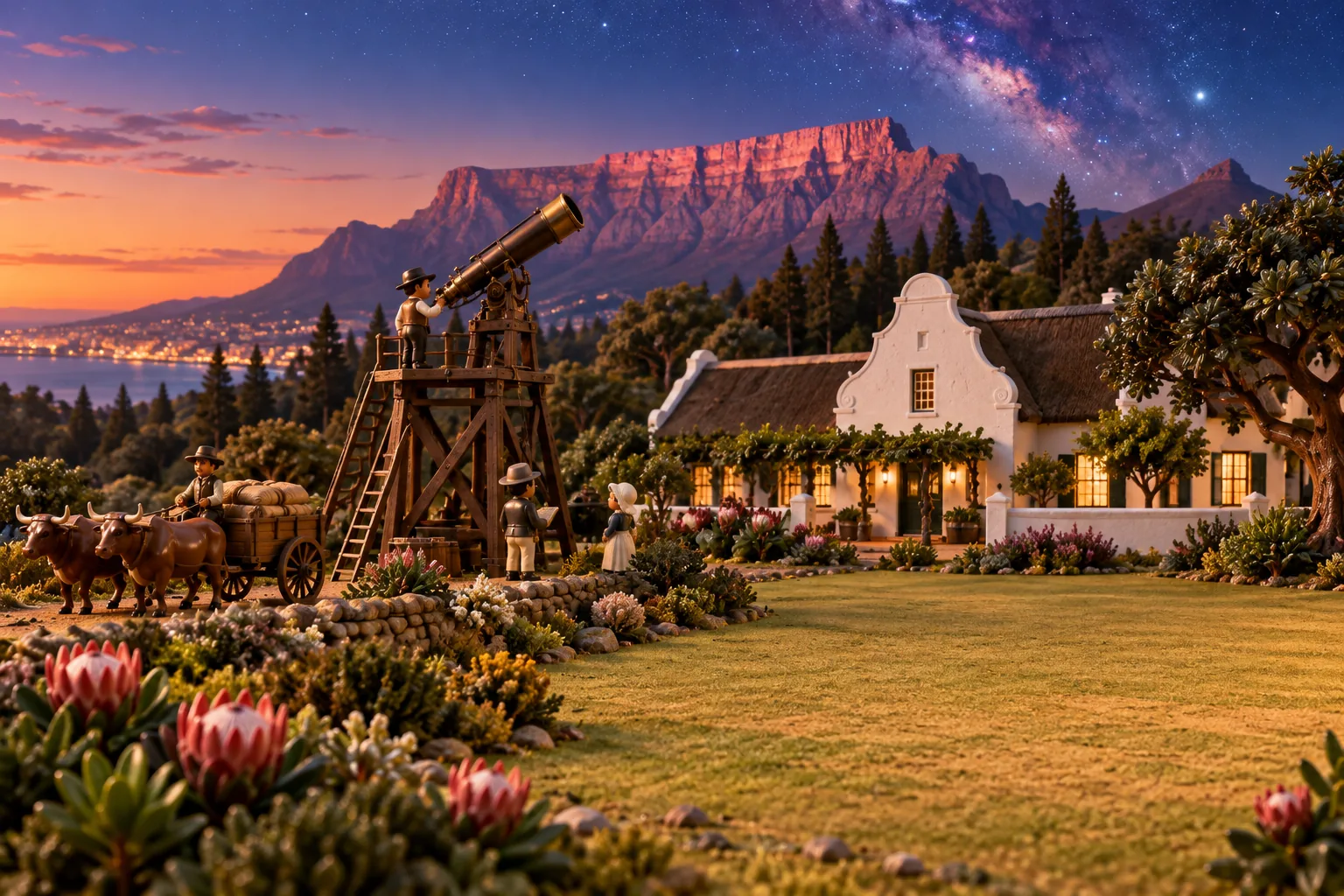
In January 1834 an English astronomer landed at the Cape with his wife, three children and a 20-inch telescope, to finish his father's map of the whole sky.
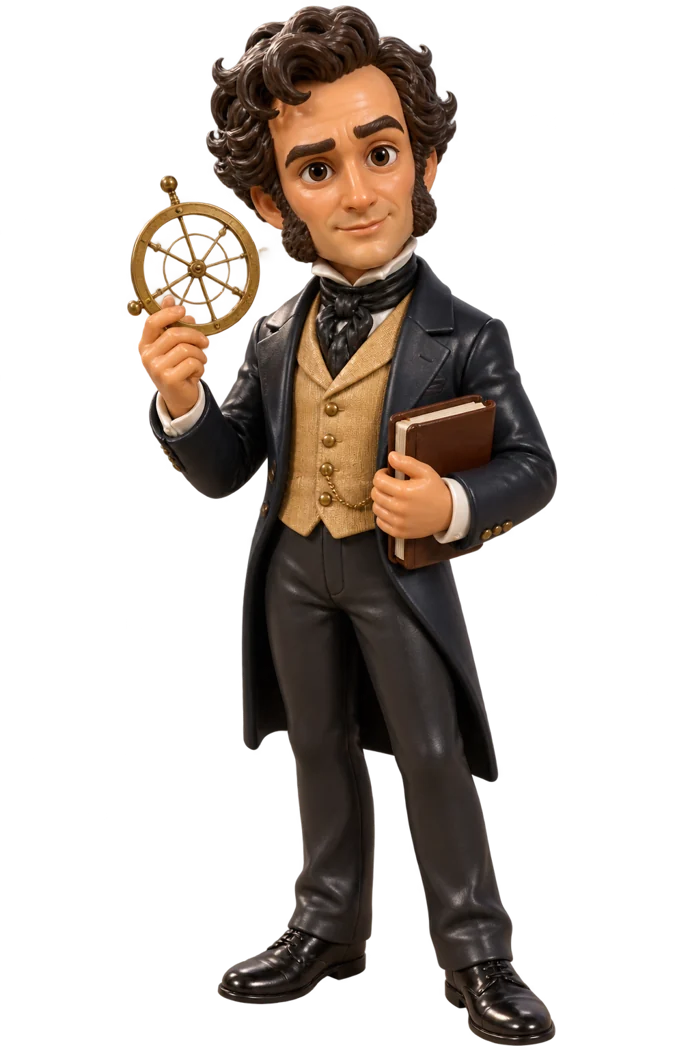
John Frederick William Herschel was born on 7 March 1792 in Slough, the son of the astronomer Sir William Herschel, discoverer of Uranus, and nephew of the astronomer Caroline Herschel. At St John's College, Cambridge, he became friends with Charles Babbage and George Peacock and graduated as Senior Wrangler in 1813. From 1816 he worked with his father, building a reflecting telescope with an 18-inch mirror, and in 1820 he was one of the founders of the Royal Astronomical Society. His Preliminary Discourse of 1831 on scientific method later inspired the student Charles Darwin.
To complete his father's survey of the heavens, he paid £500 for passage to the Cape of Good Hope and arrived in Cape Town on 15 January 1834. At Feldhausen, an old estate below Table Mountain, he set up his telescope and catalogued southern stars and nebulae, watched the return of Halley's Comet and saw the Great Eruption of Eta Carinae in 1837. With his wife Margaret he made 131 fine drawings of Cape flowers. Darwin and Captain FitzRoy of HMS Beagle visited him on 3 June 1836. He later called these years probably the happiest of his life.
Back in England in 1838 he was made a baronet. He gave the moons of Saturn and Uranus the names they still bear, coined the word photography in 1839 and invented the cyanotype, the blueprint. He died at his home near Hawkhurst on 11 May 1871 and was buried in Westminster Abbey.
Read more on Wikipedia
Sources: en.wikipedia.org/wiki/John Herschel
