
Middle Ages · person
John Cabot
Five years after Columbus, a Venetian in English service crossed the North Atlantic in a ship of 50 tons and stepped ashore on a coast no known European had explored since the Vikings.
Giovanni Caboto, known in English as John Cabot, was born around 1450 and became a full citizen of Venice in 1476, which let him trade in the eastern Mediterranean; he later claimed he had been to Mecca. By 1484 he was married to Mattea, with sons Ludovico, Sebastian and Sancto. In 1488 he fled Venice owing money, and in Valencia and Seville he proposed harbour works and a stone bridge, without success. Like Columbus, he dreamed of reaching Asia by sailing west, but by a northern route.
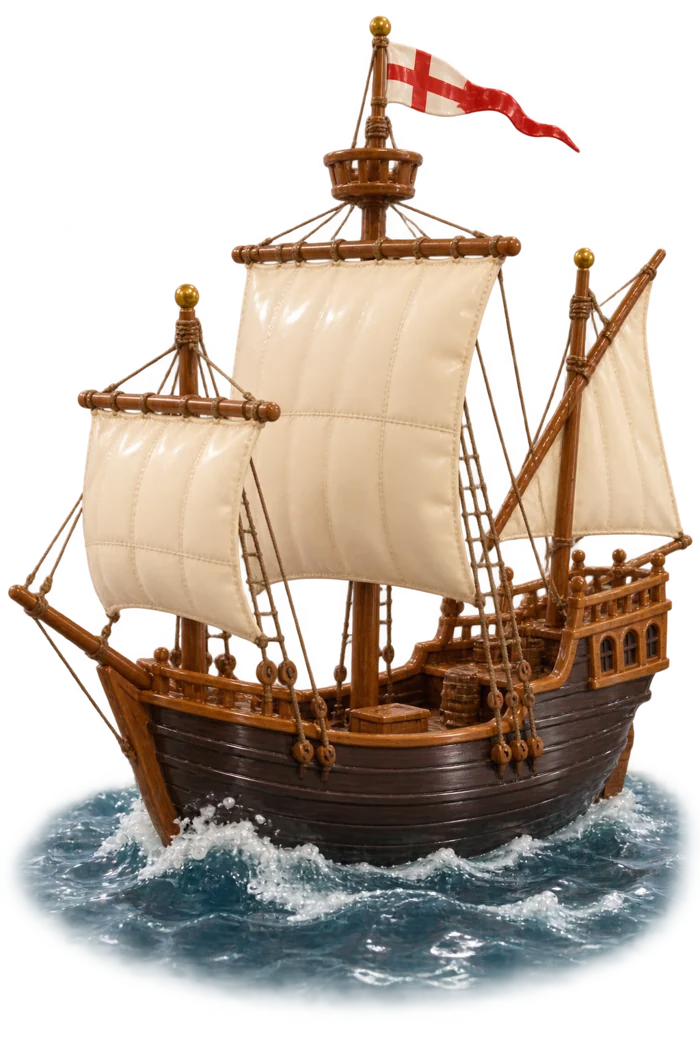
In England he found backers, and on 5 March 1496 Henry VII gave him and his sons letters patent to sail under English flags and find lands unknown to Christians, trading only through Bristol. A first voyage that year turned back. In May 1497 he left Bristol in the Matthew, a little ship of 50 tons with a crew of about 18 or 20, and on 24 June made landfall in North America, most likely on Newfoundland or Cape Breton Island. He landed only once, found the remains of a fire, a trail and nets, raised the Venetian and papal banners and claimed the land for the king.
Back in London he was fêted as the Great Admiral and given £10, and later a pension of £20 a year. In May 1498 he sailed again with five ships. One put into Ireland after a storm; of Cabot himself nothing certain is known again. The historian Alwyn Ruddock believed he came back in 1500.
Read more on Wikipedia
Sources: en.wikipedia.org/wiki/John Cabot

