Industrial age · person
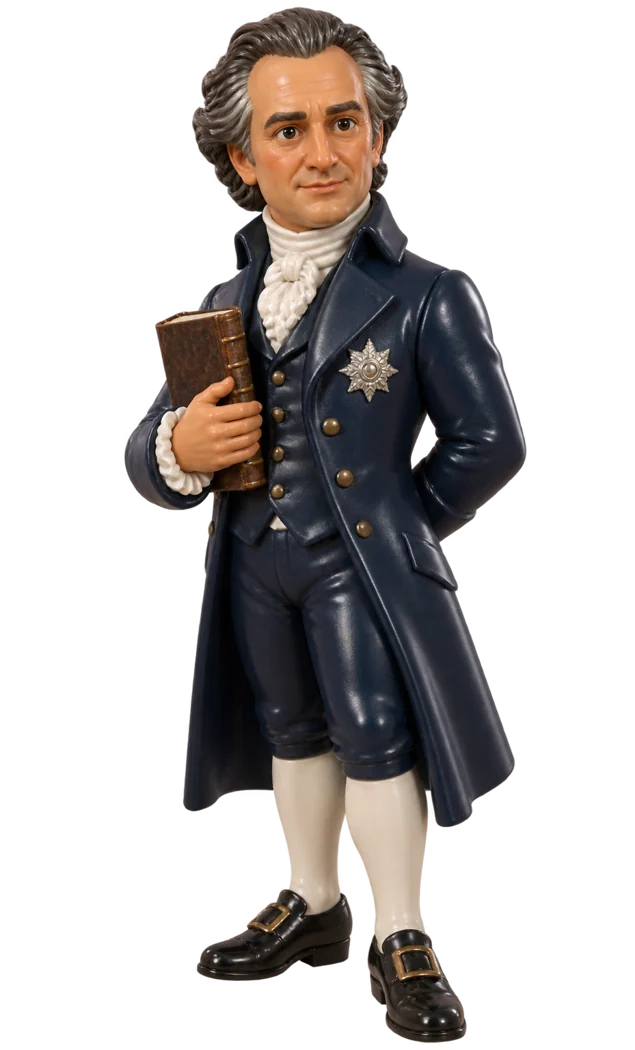
Johann Wolfgang von Goethe
He wrote Faust in stages over decades, and when the first part appeared in 1808 it caused a sensation; that same year Napoleon met him and exclaimed, "Voilà un homme!"
Johann Wolfgang Goethe was born in Frankfurt on 28 August 1749 into a wealthy family; his grandfather had been a tailor and innkeeper. He studied law in Leipzig and Strasbourg, where he met the thinker Johann Gottfried Herder, who opened his eyes to folk poetry and Shakespeare. His play Götz von Berlichingen (1773) brought him recognition, and his novel The Sorrows of Young Werther (1774), about a young man destroyed by hopeless love, made him famous across Europe; it is often called the first best-seller.
In 1775 the young Duke Karl August invited him to Weimar, where he stayed for the rest of his life, holding a string of offices as the Duke's friend and chief adviser. Restless, he left in 1786 for almost two years in Italy and Sicily, which changed his ideas about art. Back in Weimar he ran the court theatre, wrote on the metamorphosis of plants and, from 1794 until Schiller's death in 1805, worked in close friendship with the playwright Friedrich Schiller. In 1806 he married Christiane Vulpius, his companion of 18 years, days after she had held off marauding French soldiers in their house. Faust, Part One came out in 1808.
He published his Theory of Colours in 1810, which he thought his most important work, and in 1821 marvelled at the playing of the 12-year-old Felix Mendelssohn. He finished Faust, Part Two in the year he died, and it appeared after his death in Weimar on 22 March 1832, aged 82.
Read more on Wikipedia

