Early modern · person
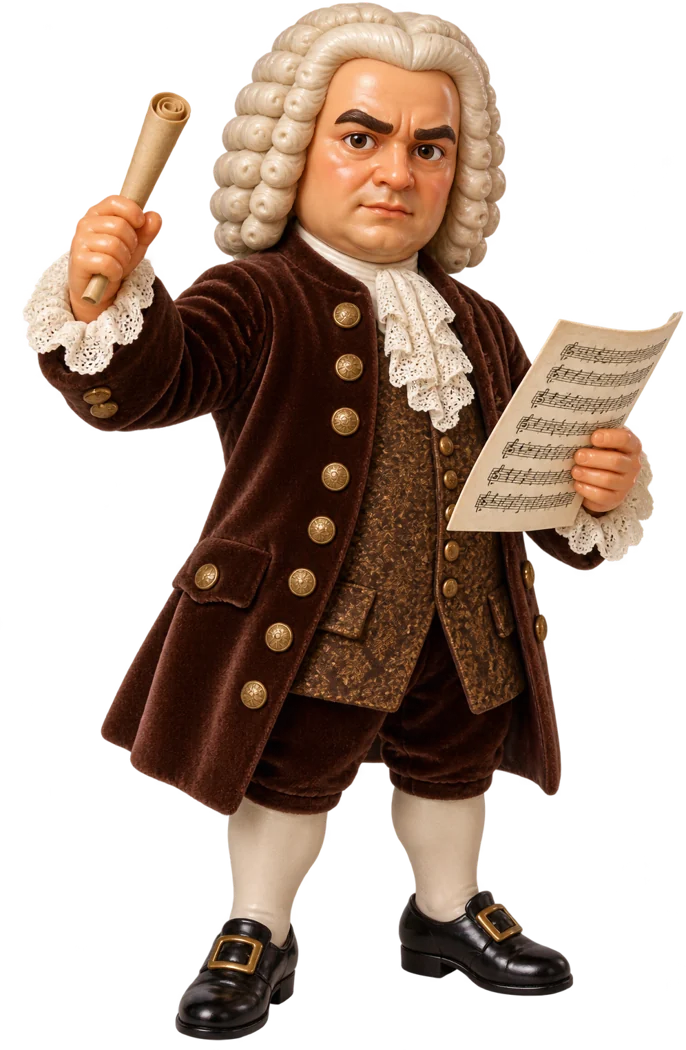
Johann Sebastian Bach
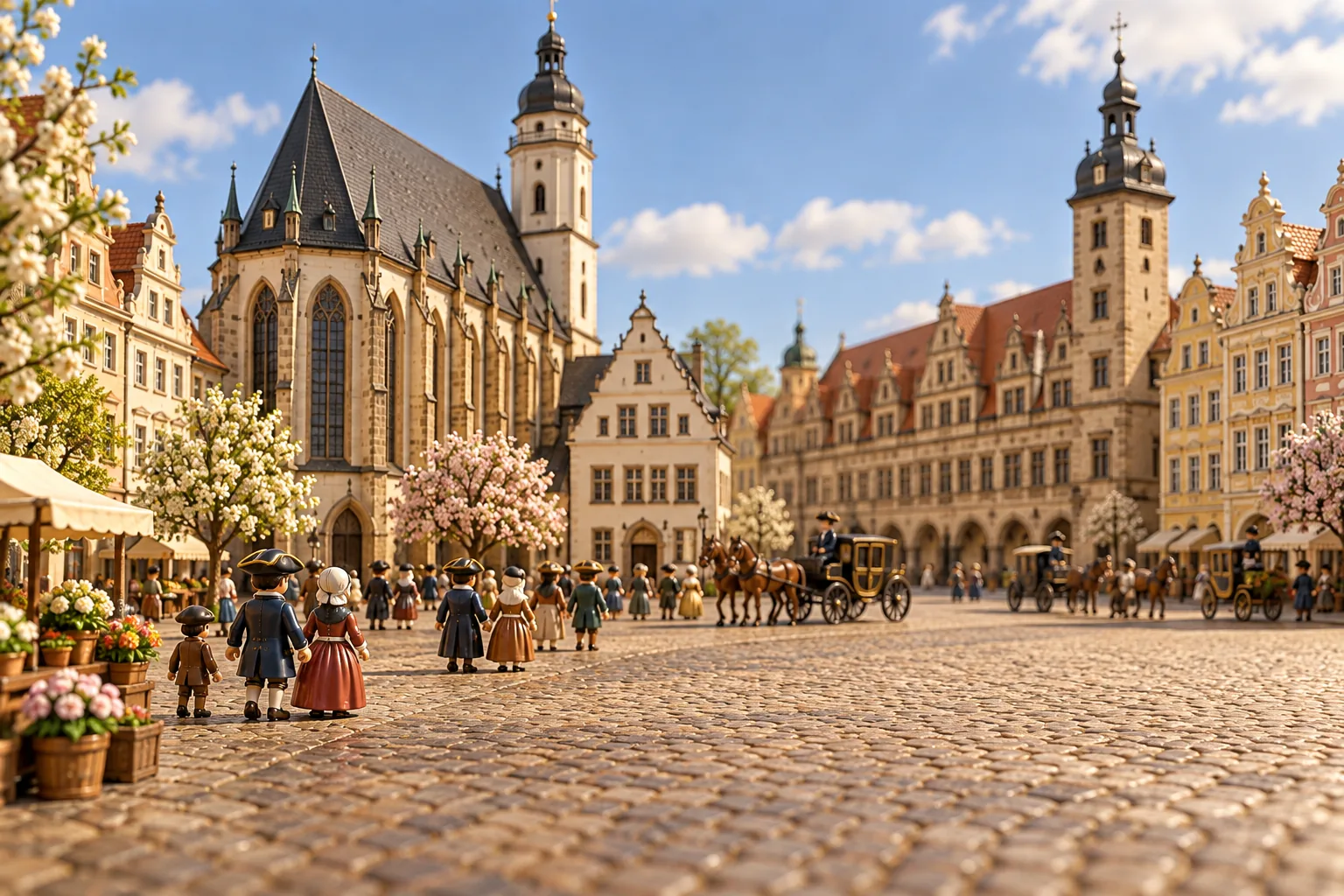
Leipzig's churches needed a cantata every Sunday, and their new cantor wrote whole yearly cycles of them; on Good Friday 1727 he gave the city the St Matthew Passion.
Johann Sebastian Bach was born in Eisenach on 31 March 1685, the youngest of eight children of the town's chief musician, in a family that had produced musicians for generations. Orphaned at ten, he lived with his eldest brother, an organist in Ohrdruf, then sang in the choir of St Michael's School in Lüneburg. His first posts were as an organist in Arnstadt and Mühlhausen, where in 1707 he married his second cousin Maria Barbara Bach.
From 1708 he served the dukes of Weimar as organist and concertmaster and began the preludes and fugues later gathered in The Well-Tempered Clavier. In 1717 Prince Leopold of Anhalt-Köthen made him his director of music, and there he wrote the Cello Suites, the solo violin sonatas and partitas and the Brandenburg Concertos. In 1723 he became Thomaskantor in Leipzig, in charge of the St Thomas School and the music of four churches. In his first years he composed new cantatas for almost every Sunday and feast day, and the St Matthew Passion was first performed on Good Friday, 11 April 1727.
In May 1747 he visited Frederick the Great in Potsdam and improvised a fugue on the king's theme, which became The Musical Offering. Late in life he worked on The Art of Fugue and the Mass in B minor. He died in Leipzig on 28 July 1750 after failed eye surgery. In his lifetime his music was known mostly to connoisseurs; since the Bach Revival of the 19th century he has been counted among the greatest composers in Western music.
Read more on Wikipedia


