
Industrial age · war
Japanese invasion of Manchuria
The explosion that started the war was so small that it did no real damage to the railway; it only had to be loud enough to serve as an excuse.
After its victory over Russia in 1905 Japan held a leased territory on the Liaodong peninsula and ran the South Manchuria Railway, and by the late 1920s Manchuria took almost 40 percent of its colonial investment. But in 1928 the Manchurian warlord Zhang Xueliang joined Chiang Kai-shek's Nationalist government, and Japan felt its influence slipping. With the Great Depression hurting Japan's economy, officers of the Kwantung Army, the force guarding the railway zone, decided to act without waiting for Tokyo. Colonel Seishirō Itagaki and Lieutenant Colonel Kanji Ishiwara planned a staged attack.
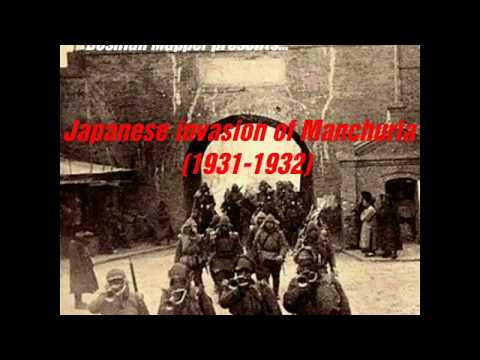
At about 10:20 p.m. on 18 September 1931 a small charge exploded beside the tracks near Mukden, today's Shenyang. Japan blamed Chinese soldiers, and fighting broke out at once. By the next morning the 29th Infantry Regiment held Mukden's walled city. The government in Tokyo wanted the incident kept local, but the army commander, General Shigeru Honjō, pushed on along the whole railway, and the government, shocked but powerless, sent more troops. Jilin fell on 21 September, Qiqihar in November, and Harbin on 4 February 1932.
In February 1932 Japan set up the puppet state of Manchukuo. In October 1932 a League of Nations commission led by Lord Lytton reported that Manchuria should return to China, and Japan walked out of the League.
Read more on Wikipedia
Sources: en.wikipedia.org/wiki/Japanese invasion of Manchuria