Early modern · person
Izumo no Okuni
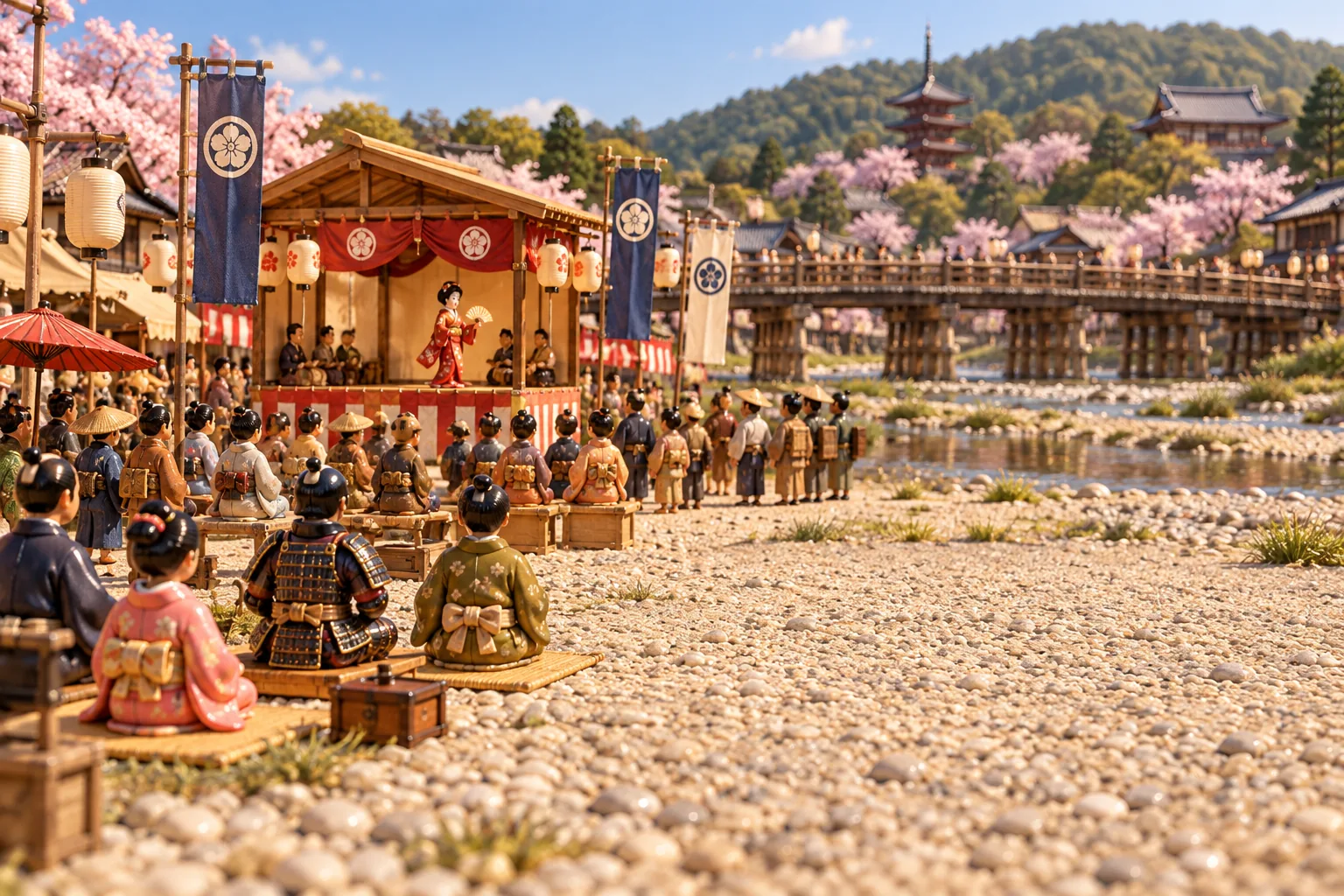
Around 1603 a dancer from a distant shrine set up on the dry riverbed in Kyoto, and crowds came to see a show so daring that people called it kabuki.
Few firm facts are known about Okuni's life. She was born around 1578 and grew up near the Izumo Grand Shrine, where her father, Nakamura Sanemon, worked as a blacksmith. She became a miko, a shrine maiden, known for her dancing, acting and beauty, and was sent to Kyoto to perform sacred songs and dances and raise money for the shrine. There she became famous for her version of the nembutsu odori, by then a largely secular folk dance, and for comic skits, and she drew large crowds. When the shrine called her home she ignored the summons, though she kept sending money back.
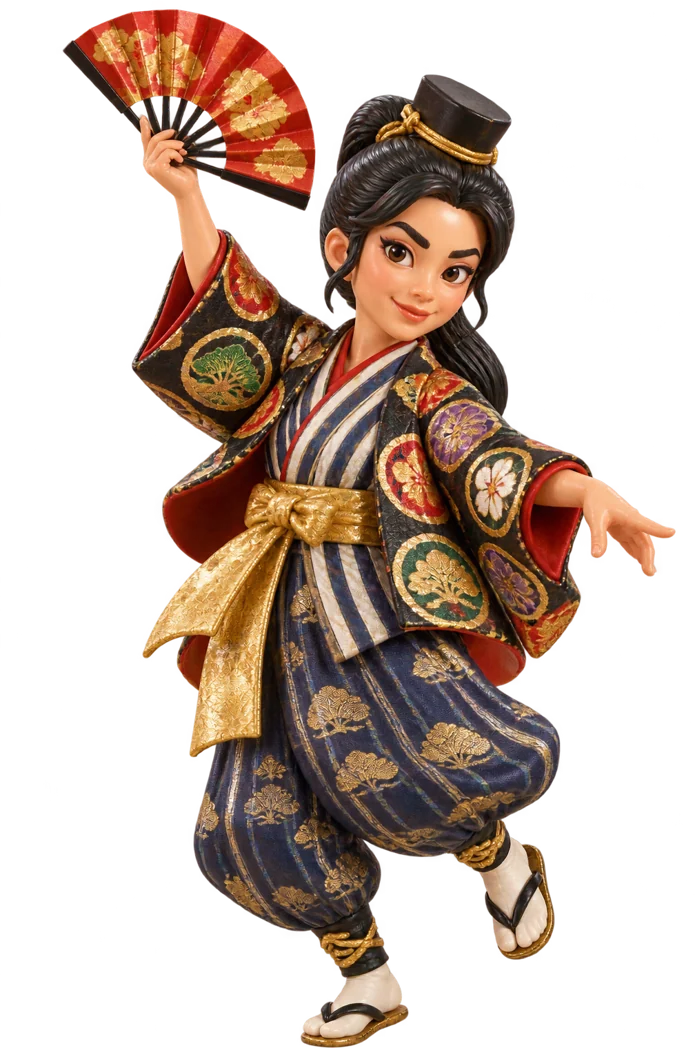
Around 1603 she began to perform on the dry riverbed of the Kamo River at Shijōgawara and at Kitano Shrine, and she danced for the ladies of the Imperial court. She gathered women on the margins of society and taught them to act, sing and dance, forming an all-female troupe whose members played both men and women. People called the shows kabuki, perhaps from kabukimono, the oddly dressed, swaggering youths of the streets. One favourite piece brought back the spirit of the dashing samurai Nagoya Sansaburō to dance with her on stage.
She retired around 1610 and vanished; she may have died around 1613. In 1629 the shogun banned women from kabuki. A statue of her stands by the Kamo River in Kyoto.
Read more on Wikipedia
Sources: en.wikipedia.org/wiki/Izumo no Okuni, en.wikipedia.org/wiki/Kabuki