Middle Ages · war
Italian Wars
The richest, most artistic land in Europe became its battlefield, and the wars that tore Renaissance Italy apart also gave birth to modern warfare.
For forty years after the Peace of Lodi in 1454, the Italian states kept a balance among themselves, but the death of Lorenzo de' Medici of Florence in 1492 broke it. Encouraged by Ludovico Sforza of Milan, King Charles VIII of France invaded in September 1494 to claim the Kingdom of Naples. His army, with its siege guns, marched almost unopposed through Pisa, Florence and Rome. A league of Venice, Milan, Spain and the Holy Roman Empire soon forced him out, but Italy had become the arena for the struggle between France and the Habsburgs.
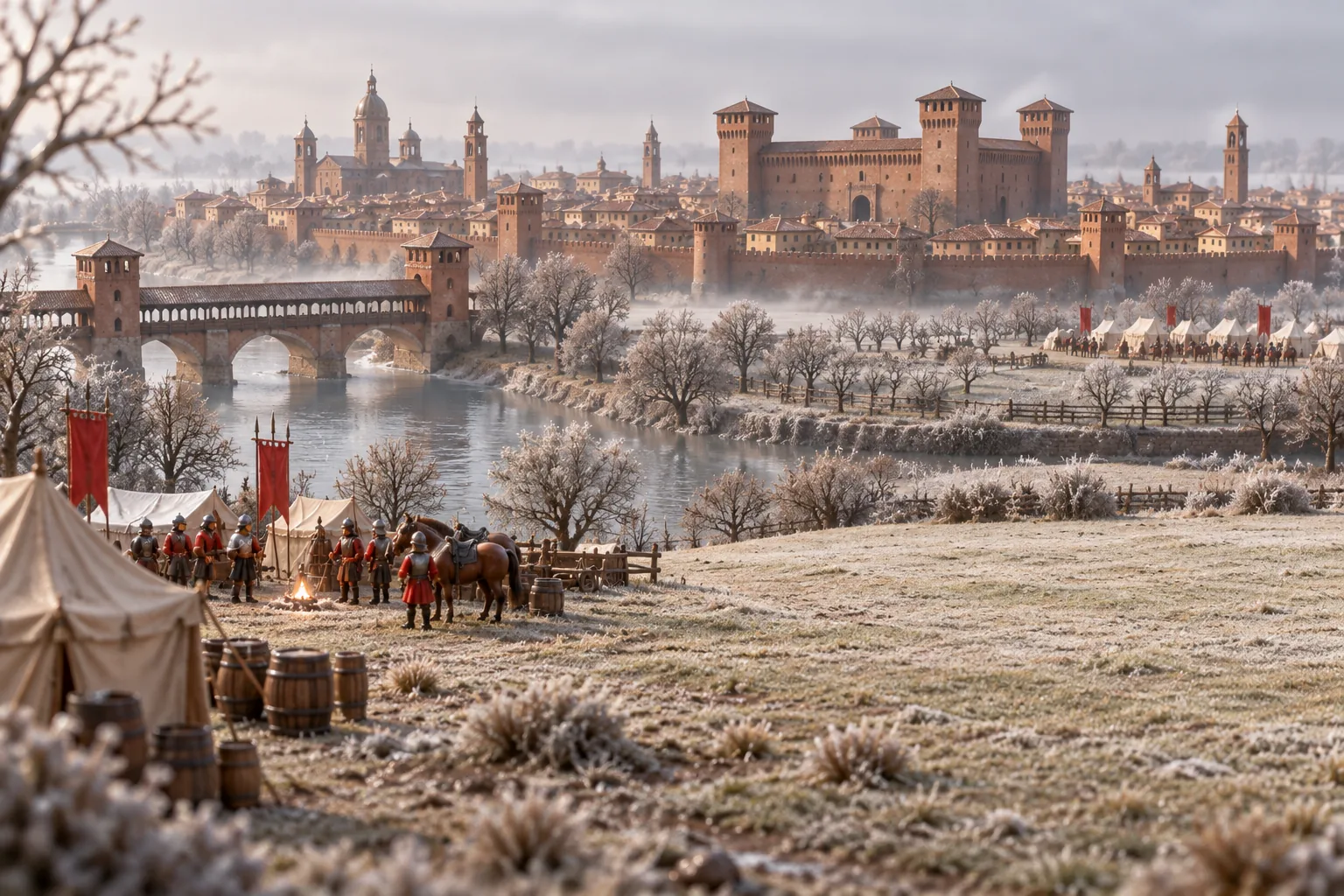
French kings returned again and again to Lombardy and Naples, and their conquests were reversed each time. After Charles of Spain became Emperor Charles V in 1519, the rivalry with Francis I of France became personal. On 24 February 1525 the French were crushed at Pavia, and Francis was captured and held in Spain. In May 1527 unpaid Imperial troops sacked Rome and besieged Pope Clement VII in the Castel Sant'Angelo.
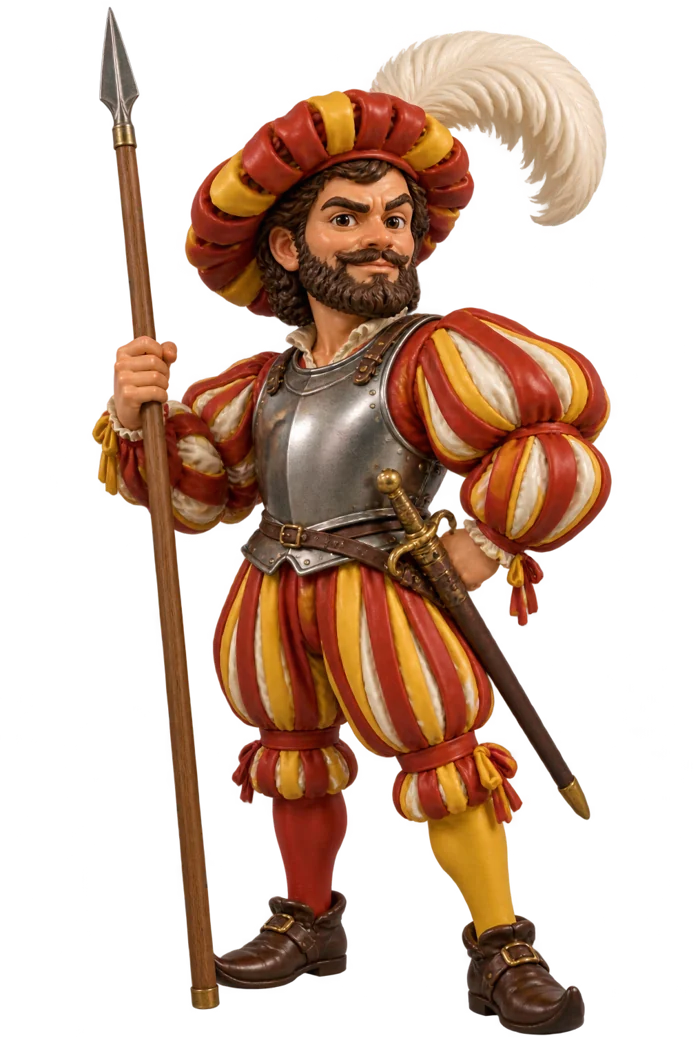
The wars ended with the Peace of Cateau-Cambrésis in 1559. France gave up Italy but kept Calais, taken from England the year before. Spain held Naples, Sicily, Sardinia and the Duchy of Milan, about half the peninsula. On the battlefield, pike squares learned to fight alongside massed arquebuses, and much better siege artillery changed how wars were fought.
Read more on Wikipedia
Sources: en.wikipedia.org/wiki/Italian Wars