Middle Ages · science
Islamic Golden Age
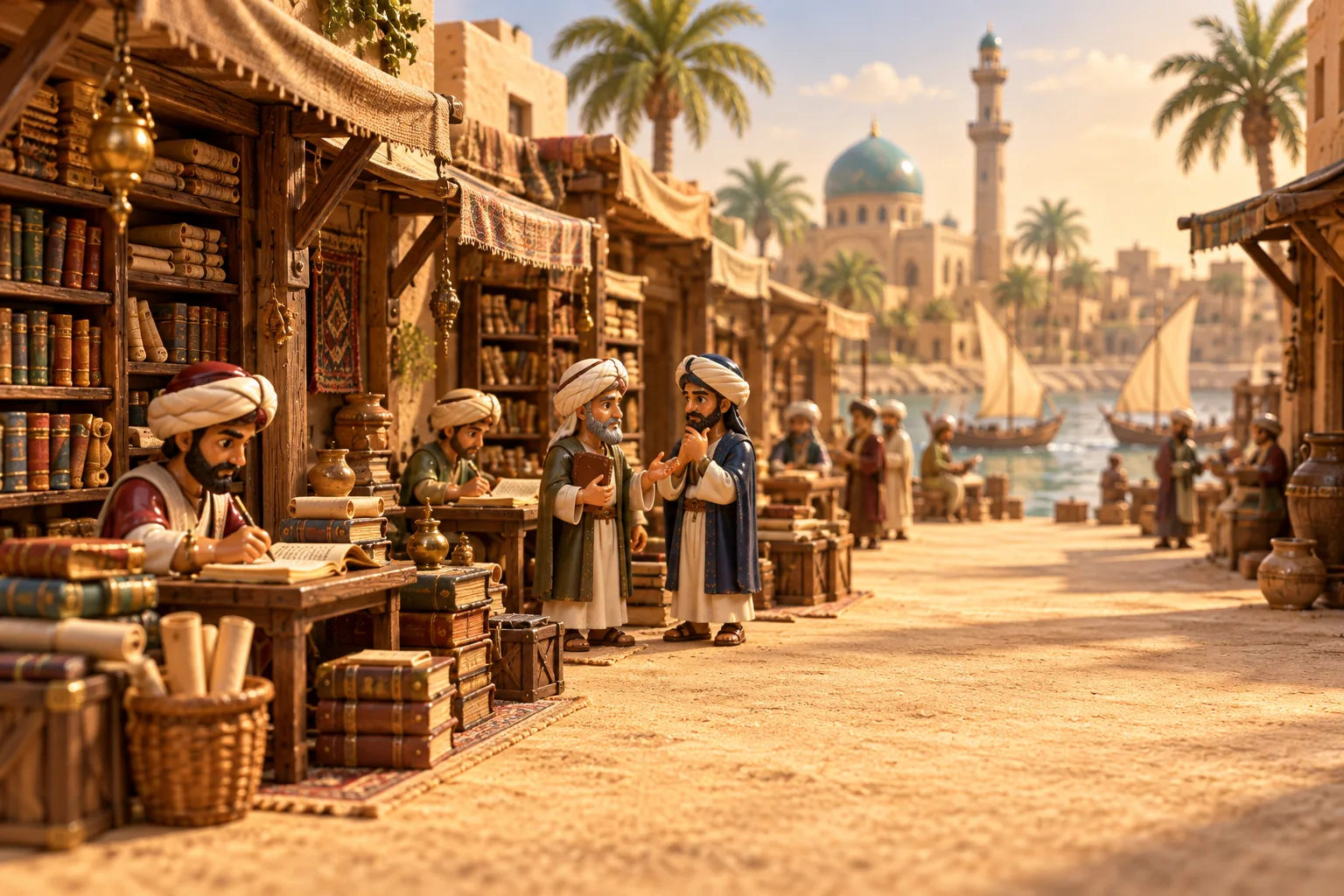
Thanks to paper, for perhaps the first time in history, a person could make a living just by writing and selling books.
The Islamic Golden Age is the name historians give to a long flowering of science and culture in the Muslim world. It is usually said to begin under the Abbasid caliph Harun al-Rashid (786–809), with the founding of the House of Wisdom in Baghdad, then one of the largest cities on earth. Scholars translated the classical knowledge of the known world from Greek, Syriac, Middle Persian and Sanskrit into Arabic, saving many works of antiquity that might otherwise have been lost. Paper, a new technology, made books cheaper and more common.
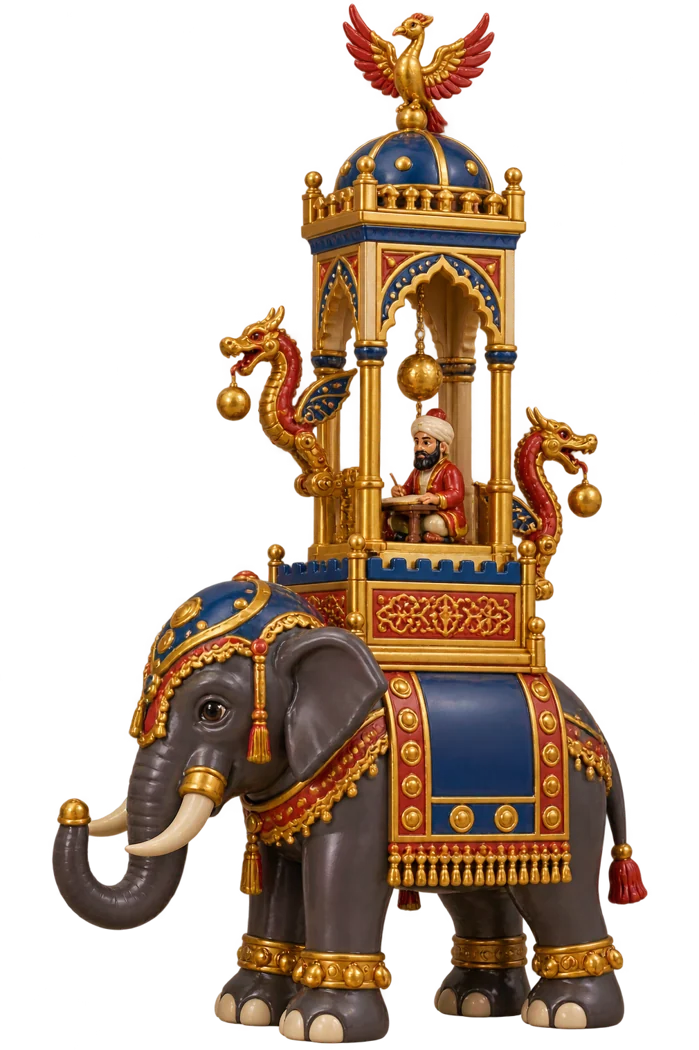
The work spread far beyond Baghdad, to Cairo, Damascus, Nishapur, Samarkand, Kairouan, Fez and Umayyad Córdoba. The Persian mathematician al-Khwarizmi helped develop algebra and spread the Hindu–Arabic numerals. Ibn al-Haytham, known in Europe as Alhazen, advanced optics. The physician Rhazes argued for experiments with controls, and Ibn Sina, or Avicenna, wrote The Canon of Medicine. In the 12th century the inventor al-Jazari described ingenious machines, among them his famous Elephant clock.
The period is usually said to end with the Mongol sack of Baghdad in 1258, which destroyed the Abbasid caliphate, though some historians stretch it to 1350 or later. Much of its learning reached Europe in Latin translations: Avicenna's Canon was printed more than thirty-five times in the 15th and 16th centuries alone.
Read more on Wikipedia