Industrial age · person
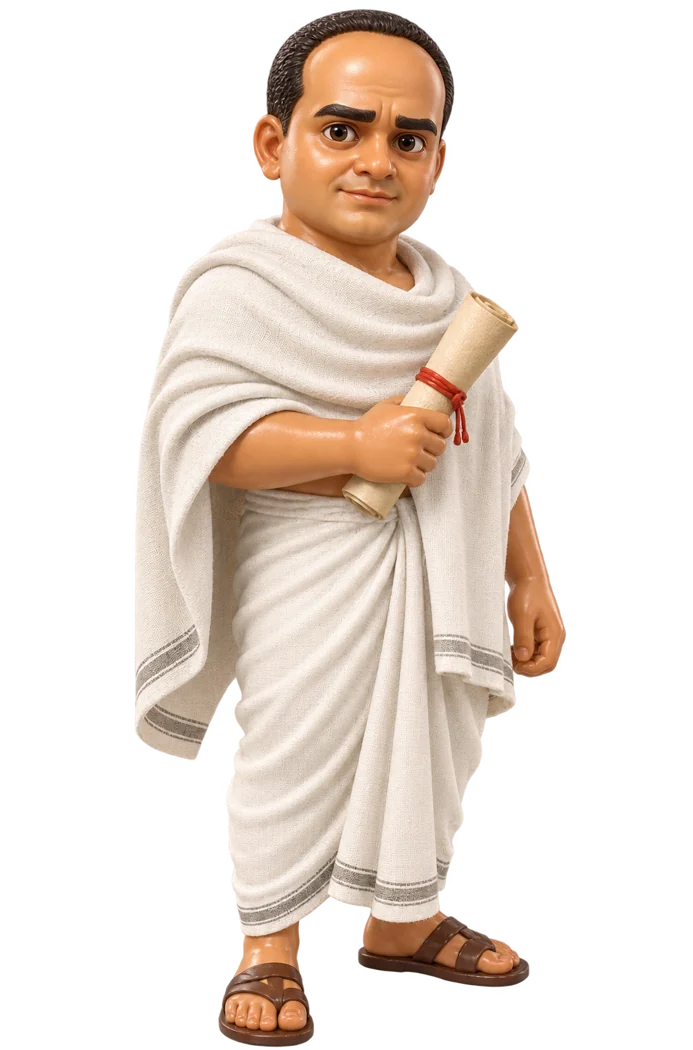
Ishwar Chandra Vidyasagar
His opponents gathered nearly four times as many signatures, but on 26 July 1856 a Sanskrit scholar won Hindu widows the legal right to marry again.
Ishwar Chandra Bandyopadhyay was born on 26 September 1820 in the village of Birsingha, in Bengal's Midnapore district, into a Brahmin family. At nine he went to Calcutta, where he spent twelve years at the Sanskrit College, studying grammar, literature, law and astronomy and passing exam after exam with scholarships. The college gave him the title Vidyasagar, "Ocean of Knowledge". As was the custom, he married at fourteen; his wife was Dinamayee Devi. In 1841, aged 21, he became head of the Sanskrit department at Fort William College.
He set out to change Bengali society from within. Many Hindu widows, some married as young girls, were barred from marrying again and made to shave their heads and wear white. Vidyasagar petitioned the Legislative Council for their right to remarry. A counter-petition led by Radhakanta Deb and the Dharma Sabha had nearly four times as many signatures, yet Lord Dalhousie personally finalised the bill, and the Hindu Widows' Remarriage Act was enacted on 26 July 1856. He also campaigned against child marriage and polygamy and was secretary of the Hindu Female School, later the Bethune school for girls.
In 1873 he settled at Karmatar, a hamlet in today's Jharkhand, and spent more than 18 years among the Santhal people. At his house, Nandan Kanan, he ran a girls' school, a night school for adults and a free homoeopathy clinic. He died on 29 July 1891. The Vidyasagar Setu bridge between Howrah and Kolkata is named after him.
Read more on Wikipedia
Sources: en.wikipedia.org/wiki/Ishwar Chandra Vidyasagar, en.wikipedia.org/wiki/Hindu Widows' Remarriage Act, 1856

