Early modern · state
Iroquois Confederacy
Five feuding nations accepted one Great Law of Peace, and for nearly two centuries their league held the balance between France and Britain in North America.
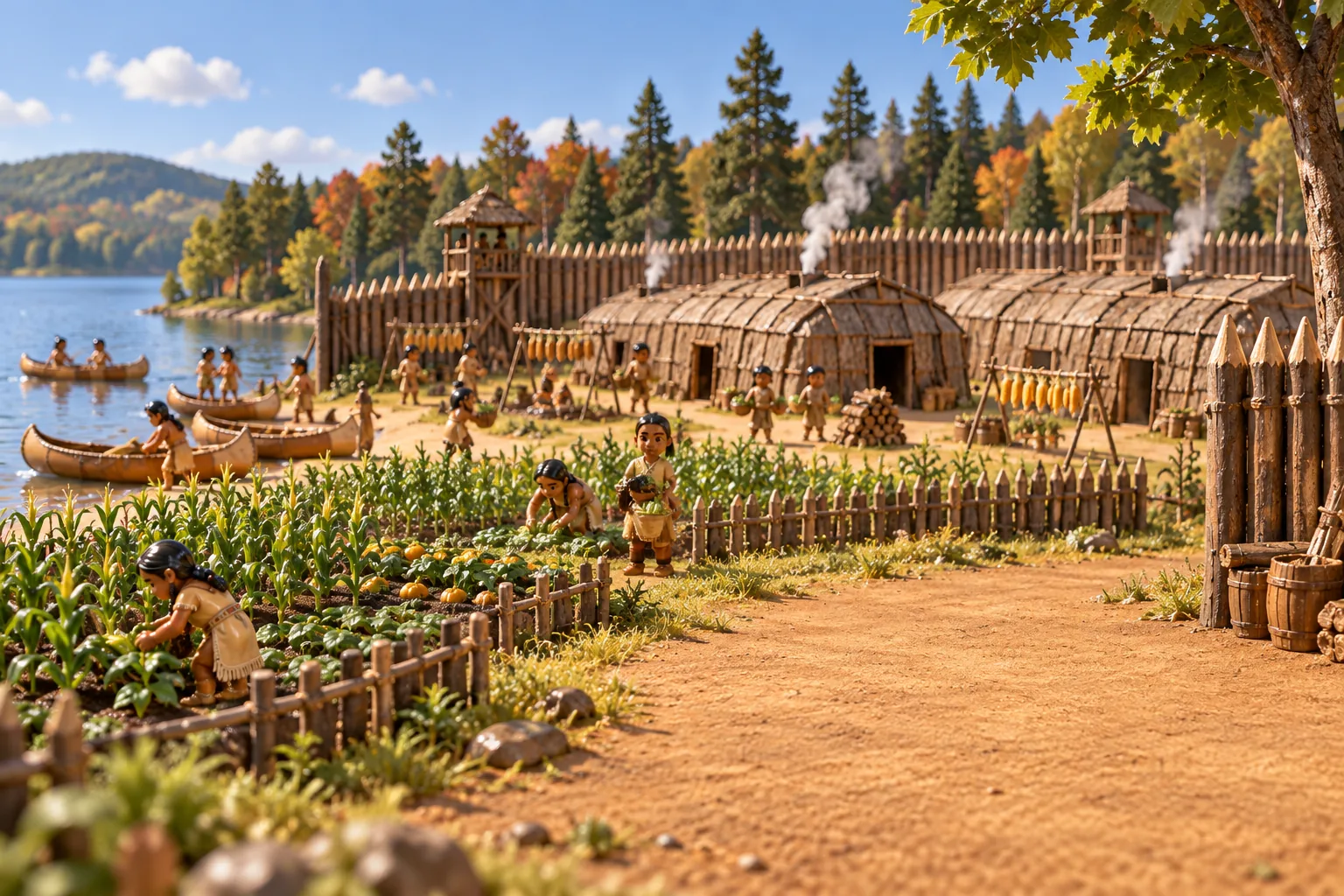
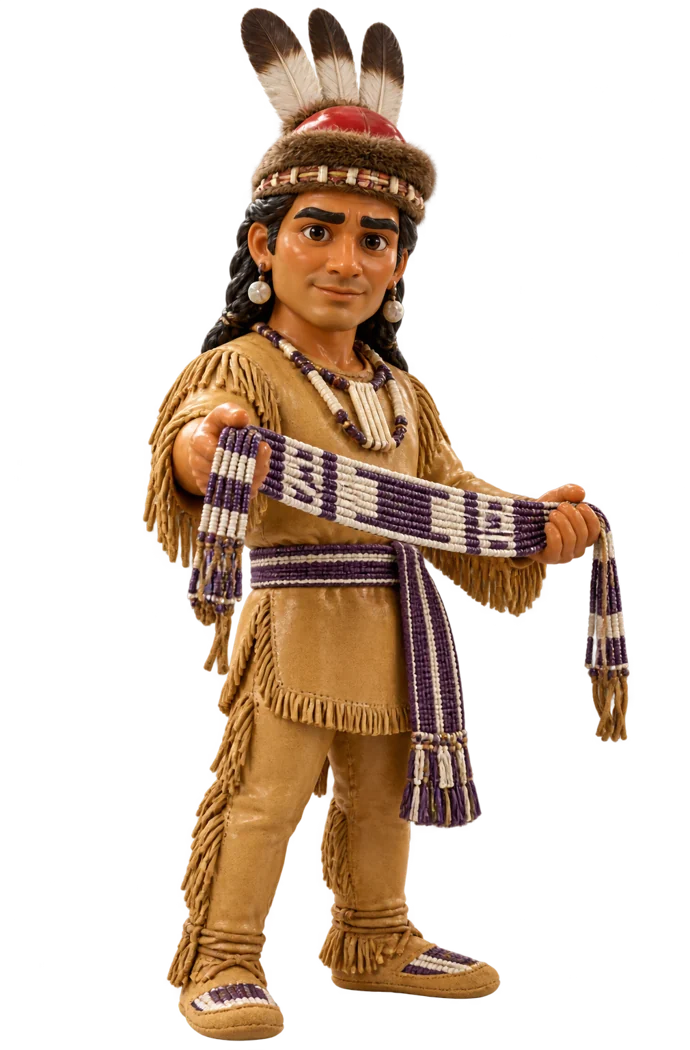
The Haudenosaunee, "people of the longhouse", are a league of Iroquoian peoples south of the Great Lakes. Their oral history says the Great Peacemaker, Hiawatha and Jigonhsasee brought the Great Law of Peace to five feuding nations: the Mohawk, Oneida, Onondaga, Cayuga and Seneca. Many archaeologists date the League to about 1450. Its Grand Council was an assembly of fifty chiefs, each representing a clan.
After Dutch traders arrived, the Haudenosaunee traded furs for muskets. From 1609 they fought the Beaver Wars over hunting grounds, defeating and absorbing most of the Wendat in 1649, the Erie in 1657 and the Susquehannock in 1680, and adopting thousands of captives to make up for deaths from epidemics. Around 1700 their power reached from New York into Ontario, Quebec and the Ohio Valley. In 1701 they made the Great Peace of Montreal with the French, and in 1722 the Tuscarora joined as the sixth nation.
The American Revolution split the League: the Oneida and Tuscarora backed the colonists, the other four nations the British. In 1779 the Sullivan Expedition destroyed between 40 and 60 Haudenosaunee towns, and the 1783 Treaty of Paris handed their lands in New York to the United States. More than 5,000 people fled to Canada, where the Six Nations of the Grand River reserve was founded. The Confederacy still exists, with its own Grand Council and passports.
Read more on Wikipedia
Sources: en.wikipedia.org/wiki/Haudenosaunee, en.wikipedia.org/wiki/Great Peacemaker


