Our time · war
Iraq War
The war was sold on the claim that Iraq had weapons of mass destruction; none of the stockpiles were ever found.
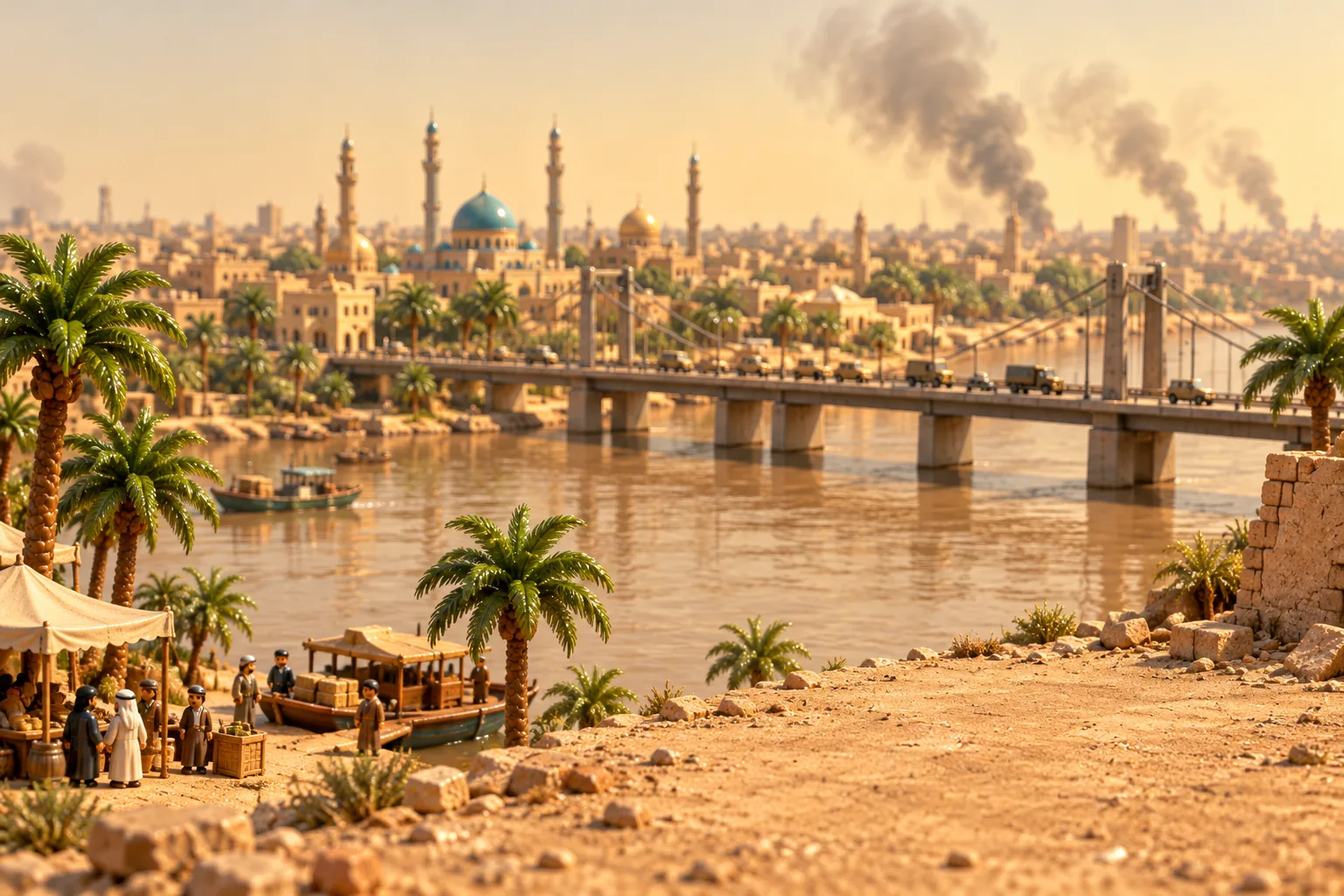
After the attacks of 11 September 2001, President George W. Bush's administration made Iraq part of its war on terror. Its main case for war was that Saddam Hussein had weapons of mass destruction and was supporting al-Qaeda. In October 2002 Congress authorised the use of force, and on 20 March 2003 the United States, joined by the United Kingdom, Australia and Poland, opened the war with a "shock and awe" bombing campaign followed by a ground invasion.
Iraqi forces were quickly defeated. Baghdad fell on 9 April 2003, ending Saddam's 24-year rule, and a huge statue of him was pulled down in the city. On 1 May Bush stood on the deck of the aircraft carrier USS Abraham Lincoln and declared an end to major combat operations. Saddam was captured on 13 December 2003 on a farm near Tikrit, and was executed in 2006. But the fall of the regime left a power vacuum. An insurgency rose against the coalition and the new government, and in 2004 photographs of prisoner abuse at Abu Ghraib shocked the world. A sectarian civil war broke out between Iraq's Shia majority and Sunni minority.
A troop surge in 2007 helped stabilise parts of the country. In 2008 Bush agreed to withdraw, and the last US combat troops left on 18 December 2011, under President Barack Obama. The war cost an estimated 150,000 to over a million lives, including more than 100,000 civilians.
Read more on Wikipedia
Sources: en.wikipedia.org/wiki/Iraq War