Our time · war
Iran–Iraq War
Eight years of trenches, gas and human-wave attacks ended with the border exactly where it had been.
In 1979 a revolution in Iran overthrew the Shah and brought Ruhollah Khomeini to power. Next door, Iraq's president Saddam Hussein feared that Iran's new Islamic state would rally Iraq's Shia majority against his Sunni-led Ba'athist government. He also wanted to retake the eastern bank of the Shatt al-Arab river, which Iraq had ceded to Iran in the 1975 Algiers Agreement, and to replace Iran as the leading power in the Persian Gulf. On 22 September 1980 Iraq launched a full-scale invasion.
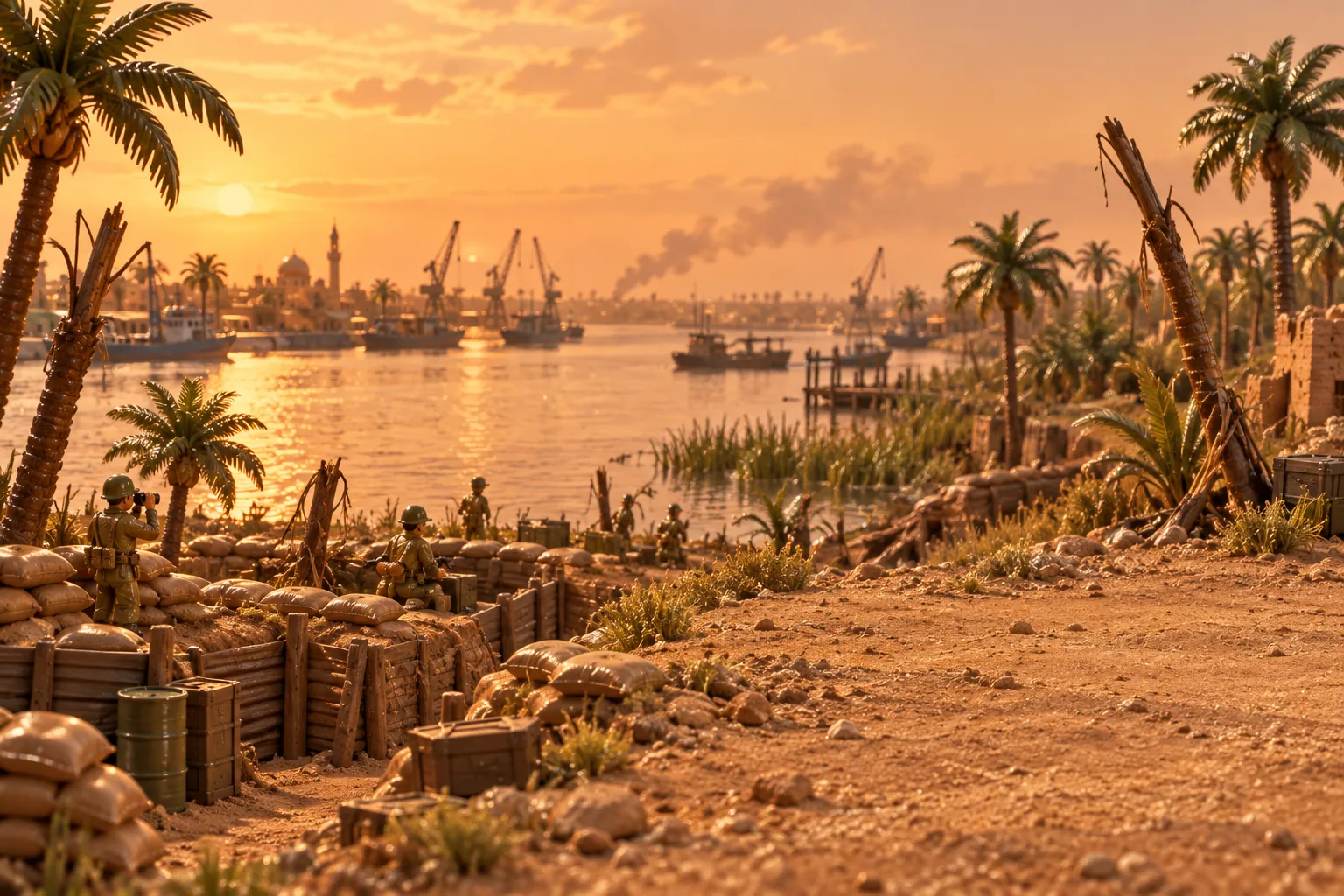
Saddam expected a quick victory over a country in post-revolutionary chaos, but his invasion had stalled by December 1980. Iran's army, the Revolutionary Guards and the new volunteer Basij fought back, retook the port of Khorramshahr in May 1982 and by June had recovered all their territory. Then Iran carried the war into Iraq. What followed looked like the First World War: trenches, barbed wire, minefields and human-wave assaults. Iraq used chemical weapons against Iranian troops and, in 1988, against Kurdish civilians in the town of Halabja. Both sides fired missiles at each other's cities, and in the "tanker war" they attacked oil shipping in the Gulf.
By 1988 Iran was exhausted and losing ground. On 20 July it accepted UN Security Council Resolution 598, and Khomeini said in a radio address that agreeing was like drinking from a poisoned chalice. The ceasefire took effect in August. The war killed around 500,000 people, the deadliest conventional war ever fought between the regular armies of developing countries, yet no border moved and neither side received reparations.
Read more on Wikipedia
Sources: en.wikipedia.org/wiki/Iran–Iraq War