Ancient world · state
Indus Valley Civilization
Four and a half thousand years ago its cities had covered drains under the streets, yet we still cannot read a single word they wrote.
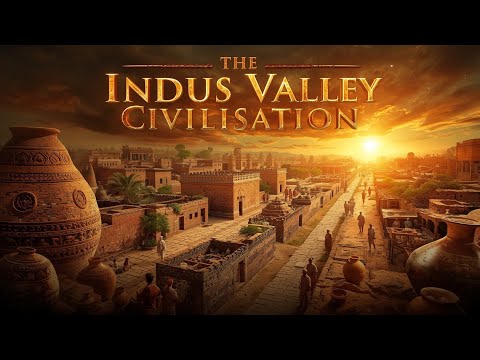
The Indus Valley Civilisation grew up along the Indus River and the monsoon-fed rivers near the Ghaggar-Hakra, in today's Pakistan and north-western India. It came out of older farming villages such as Mehrgarh in Balochistan, and its mature, urban phase lasted from about 2600 to 1900 BC. It covered more ground than ancient Egypt and Mesopotamia combined.
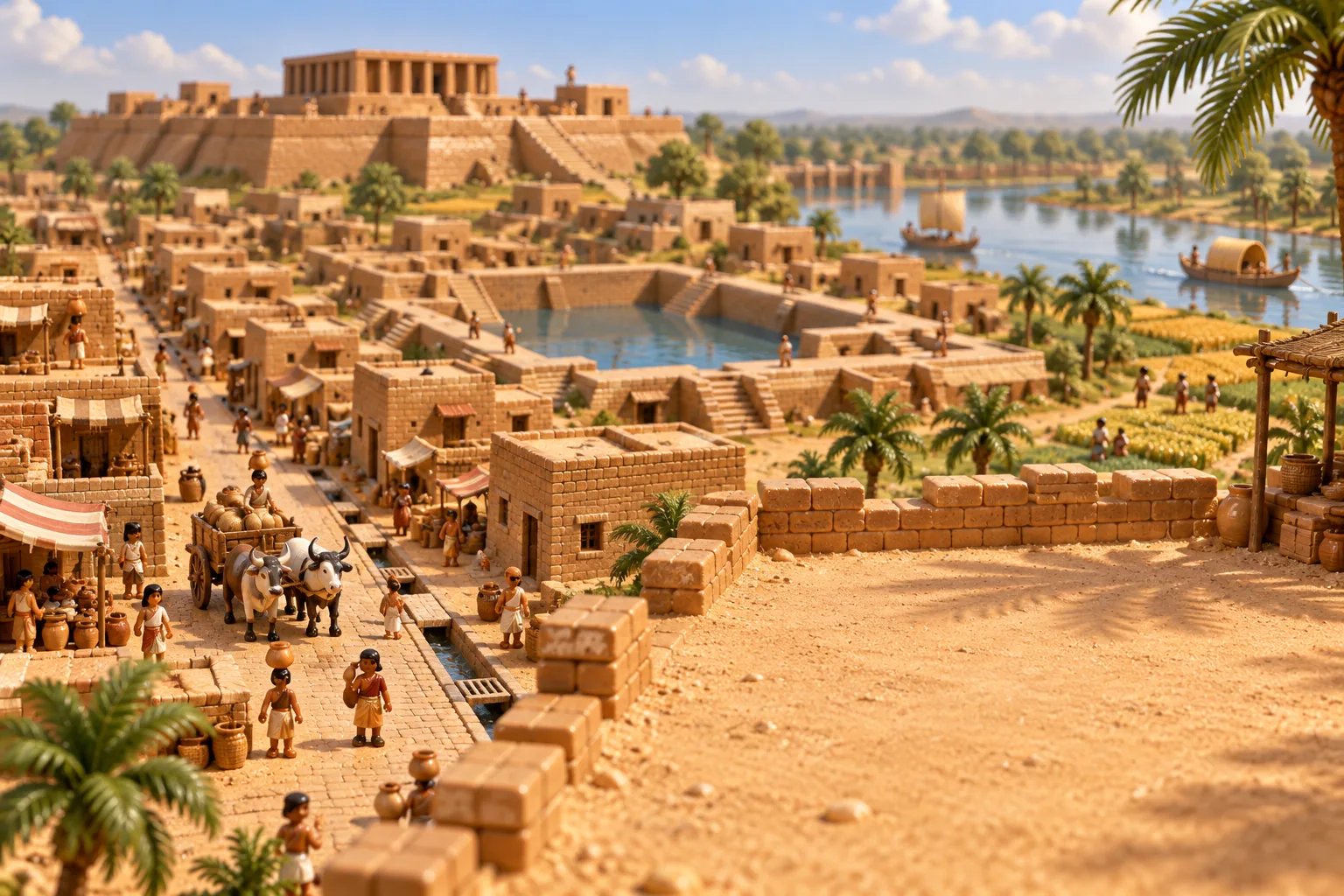
Over a thousand sites are known, but only five were major cities: Mohenjo-daro, Harappa, Ganeriwala, Dholavira and Rakhigarhi. Mohenjo-daro and Harappa probably held 30,000 to 60,000 people each, and the whole civilisation between one and five million. Houses were built of baked brick, and waste water ran from bathing rooms into covered drains along the main streets. Mohenjo-daro had the Great Bath, probably used for ritual purification, and the bronze Dancing Girl was found there. Seals across the region carry a script that has never been deciphered.
A slow drying of the region cut the water supply. Around 1900 BC signs of decline appeared, and by about 1700 BC most cities had been abandoned as people moved east. The civilisation was forgotten until the Archaeological Survey of India dug at Harappa and Mohenjo-daro, and on 24 September 1924 John Marshall announced the discovery in the Illustrated London News.
Read more on Wikipedia