Antiquity · state
Indo-Scythians
Steppe nomads pushed out of Central Asia became kings in India, and an era named after them still runs on India's national calendar.
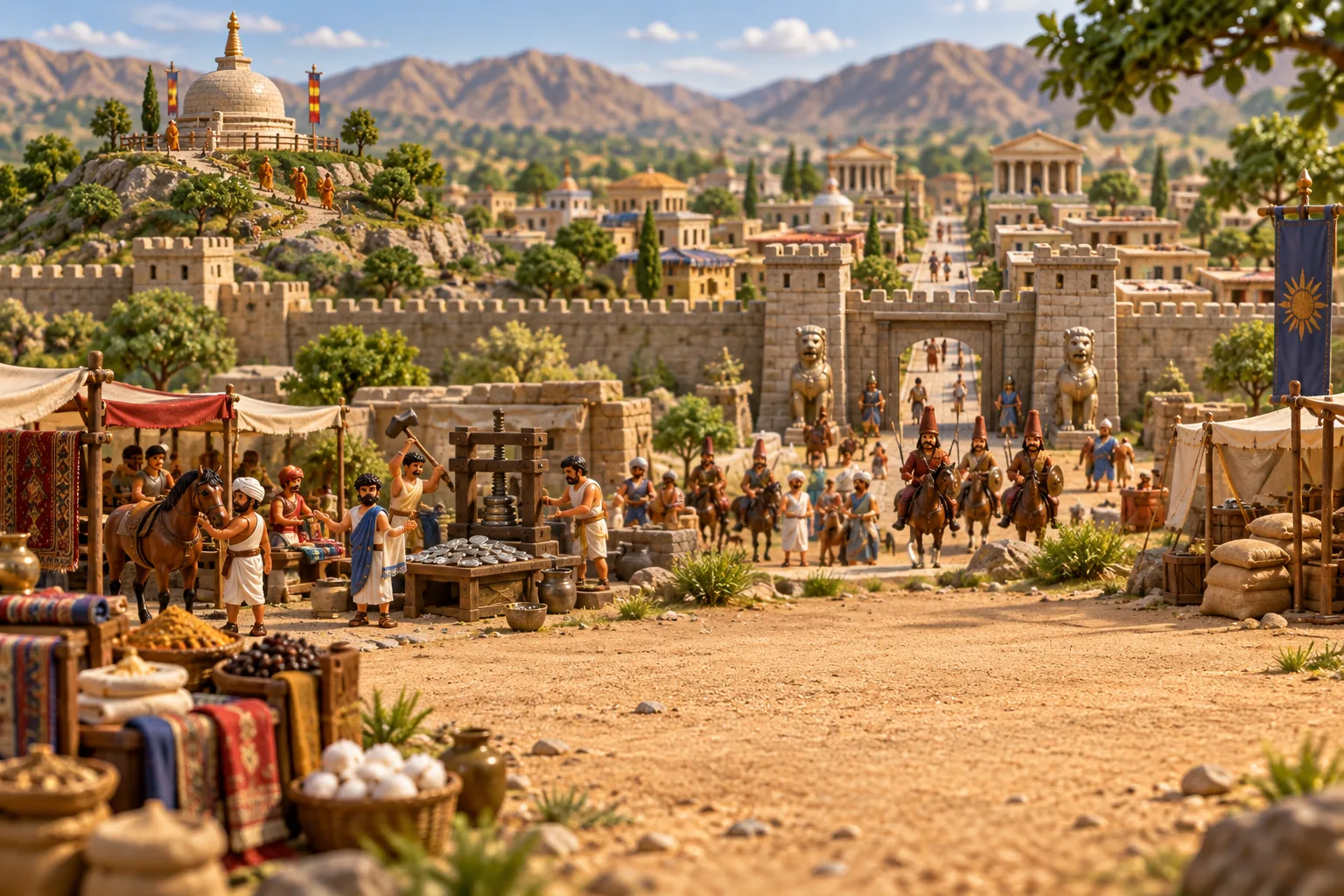
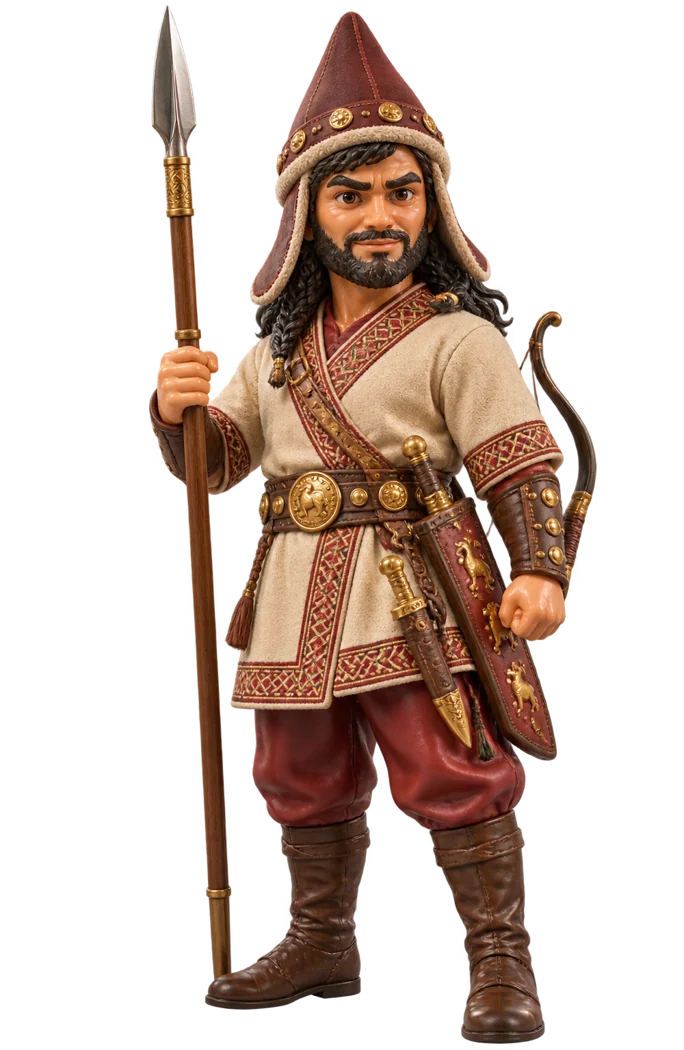
The Indo-Scythians, or Indo-Sakas, were Iranian-speaking nomads of the Saka, the eastern cousins of the Scythians. In the 2nd century BC the Xiongnu drove the Yuezhi from their homeland, and the Yuezhi in turn pushed the Saka south towards Bactria and Afghanistan. Some settled around Lake Hamun in a land later called Sakastan, today's Sistan.
Others crossed the Karakoram. Rock drawings left by Saka soldiers at river crossings in Chilas and Hunza trace the route of Maues, the first Saka king in India, who ruled around 85–60 BC and took Taxila from the Indo-Greek king Apollodotus II. His successors, above all Azes, ruled Gandhara and the Punjab, with satraps at Mathura and in Gujarat. They struck fine coins, probably with the help of Greek coin-makers, and many of them supported Buddhism.
Late in the 1st century BC the Indo-Parthian king Gondophares took the north-west, and later the Kushans became overlords, but Saka satraps kept ruling. The Western Satraps of Gujarat and Malwa, made famous by Rudradaman I's Junagadh rock inscription, lasted until the Gupta emperor Chandragupta II conquered them around 395.
Read more on Wikipedia
Sources: en.wikipedia.org/wiki/Indo-Scythian Kingdom, en.wikipedia.org/wiki/Shaka era