Industrial age · war
Indian Rebellion of 1857
It began with a rumour about rifle cartridges greased with cow and pig fat, and it ended the rule of the East India Company and the last Mughal emperor.
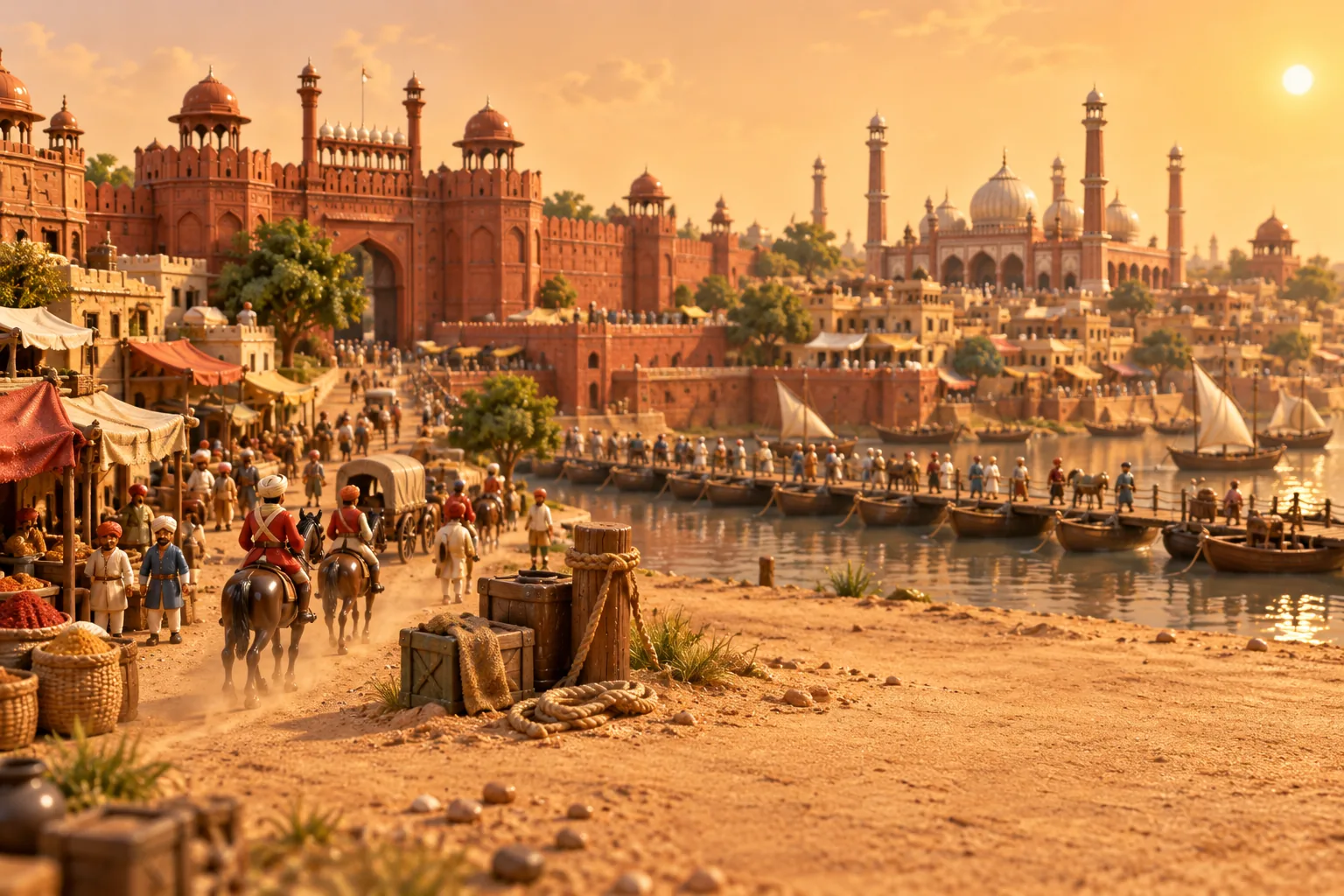
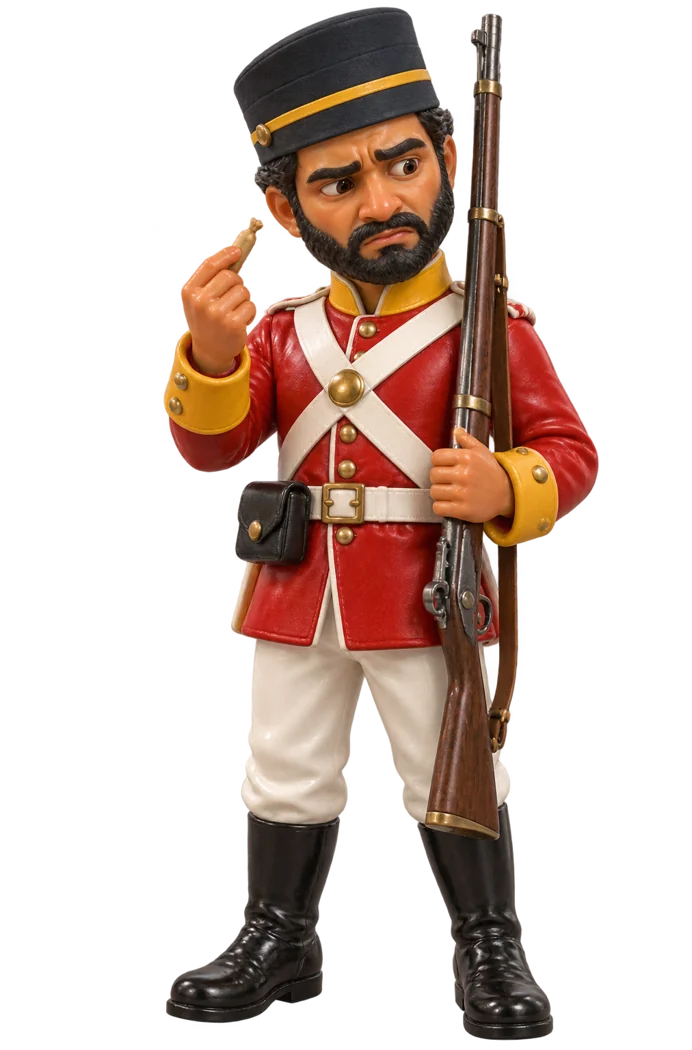
By the 1850s the British East India Company ruled much of India, and resentment had built up over British-style social reforms, harsh land taxes and the way princes were treated. The Rani of Jhansi, for one, lost her kingdom when the Company refused to recognise her adopted son as heir. The spark was the new Enfield rifle. Its paper cartridges were greased and had to be torn open with the teeth, and in early 1857 sepoys, the Company's Indian soldiers, heard that the grease was cow tallow and pig lard, offensive to Hindus and Muslims alike.
On 9 May at Meerut, 85 sepoys who had refused the cartridges were sentenced to ten years' hard labour. The next day their comrades broke them out, killed British officers and civilians and rode through the night to Delhi, where they declared the 81-year-old Mughal ruler Bahadur Shah Zafar Emperor of Hindustan. The revolt spread across the upper Ganges plain and central India. Both sides committed terrible cruelty: rebels killed British women and children at Kanpur, and British reprisals sometimes wiped out whole villages. Many Indians fought for the British, and the Sikh princes of the Punjab sent soldiers.
The British retook Delhi at the end of September 1857, and the rebels were finally beaten at Gwalior on 20 June 1858. Bahadur Shah was exiled to Rangoon, where he died in 1862, and the Mughal dynasty ended with him. Parliament dissolved the Company, and India was ruled directly by the British government as the British Raj.
Read more on Wikipedia


