Industrial age · politics
Indian independence movement
It began with 72 lawyers, teachers and journalists meeting in Bombay to ask politely for fairer treatment, and it ended sixty-two years later with the British leaving India.
In 1885, prompted by a suggestion from the retired Scottish civil servant A. O. Hume, seventy-two Indian delegates met in Bombay and founded the Indian National Congress. Most were western-educated lawyers, teachers and journalists, and at first they asked only for moderate reforms, such as a fairer share of economic rights and the chance for Indians to sit the exams for the Indian Civil Service. The British partition of Bengal in 1905 changed the mood. Leaders such as Bal Gangadhar Tilak, Bipin Chandra Pal and Lala Lajpat Rai called for the Swadeshi movement, a boycott of British goods.
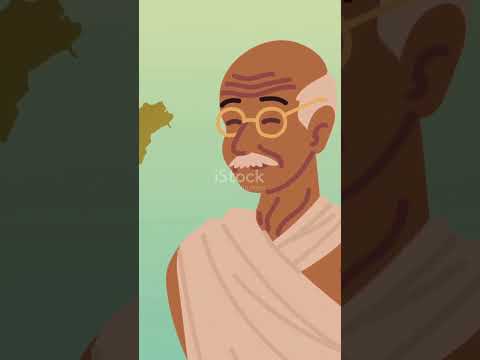
After the First World War the Rowlatt Act allowed detention without trial, and in Punjab protests against it ended in the Jallianwala Bagh massacre of 1919. Under Mahatma Gandhi, Congress turned to non-violent mass campaigns: the Non-cooperation Movement of 1919–1922 and the Civil Disobedience Movement of 1929–1931. At Lahore in December 1929 Congress made complete self-rule, Purna Swaraj, its goal, and 26 January 1930 was marked across India as Independence Day.
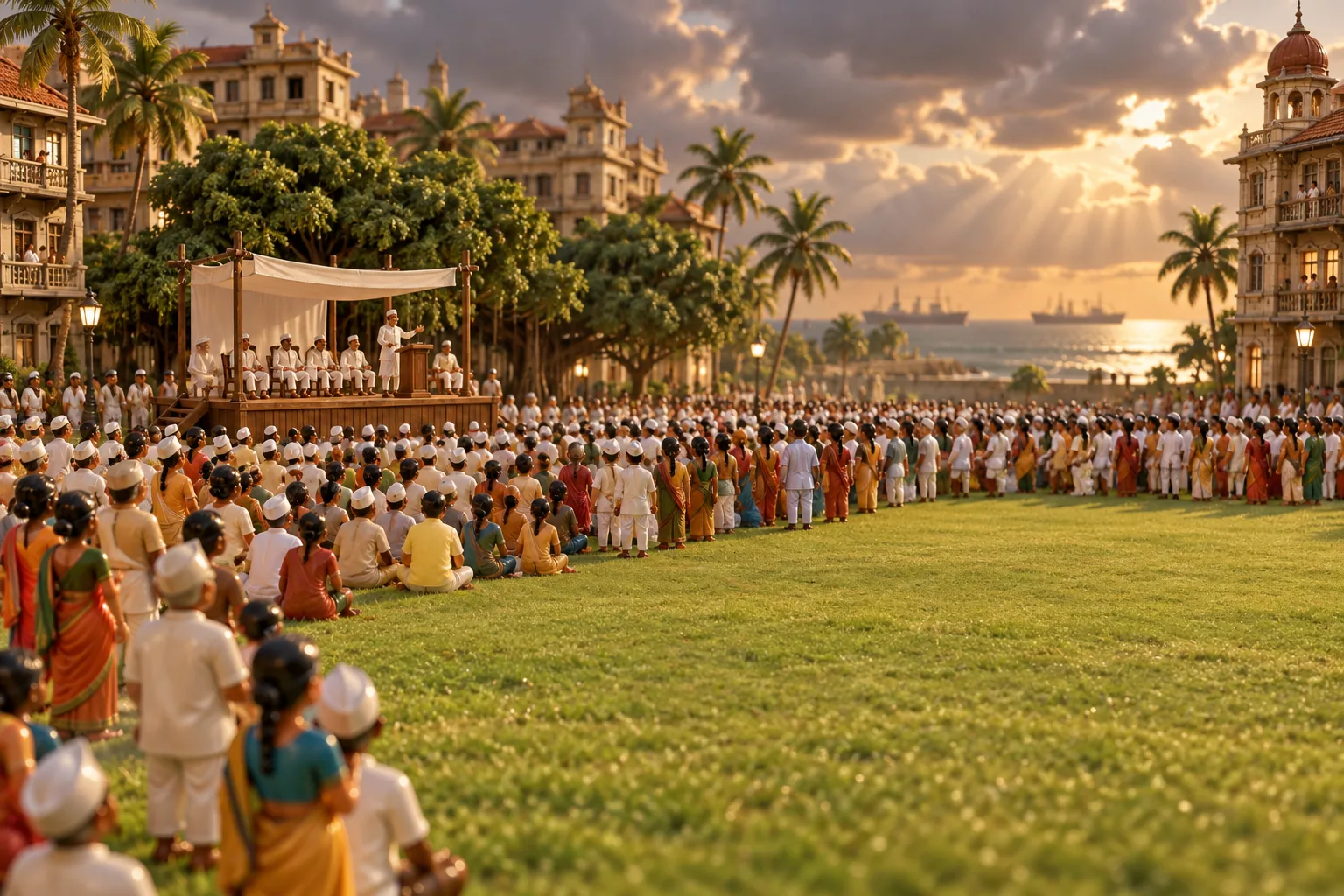
On 8 August 1942, at the Gowalia Tank Maidan in Bombay, Gandhi launched the Quit India Movement with the call 'Do or Die'. Within 24 hours almost the entire Congress leadership was in prison. After the war the trials of Subhas Chandra Bose's Indian National Army and a naval mutiny in Bombay in February 1946 shook British rule. The Indian Independence Act of 1947 ended British rule and split British India into India and Pakistan.
Read more on Wikipedia