Our time · state
India
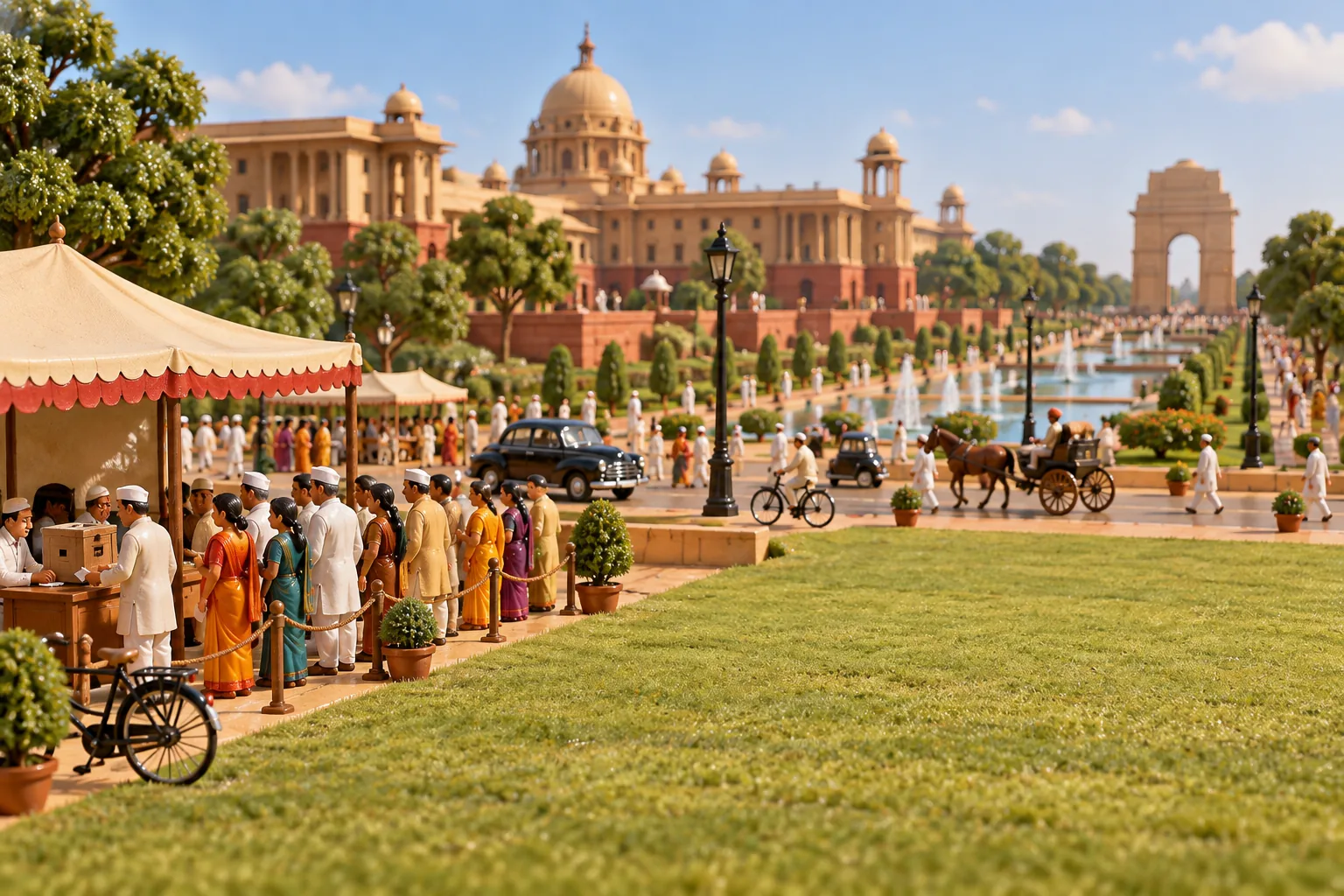
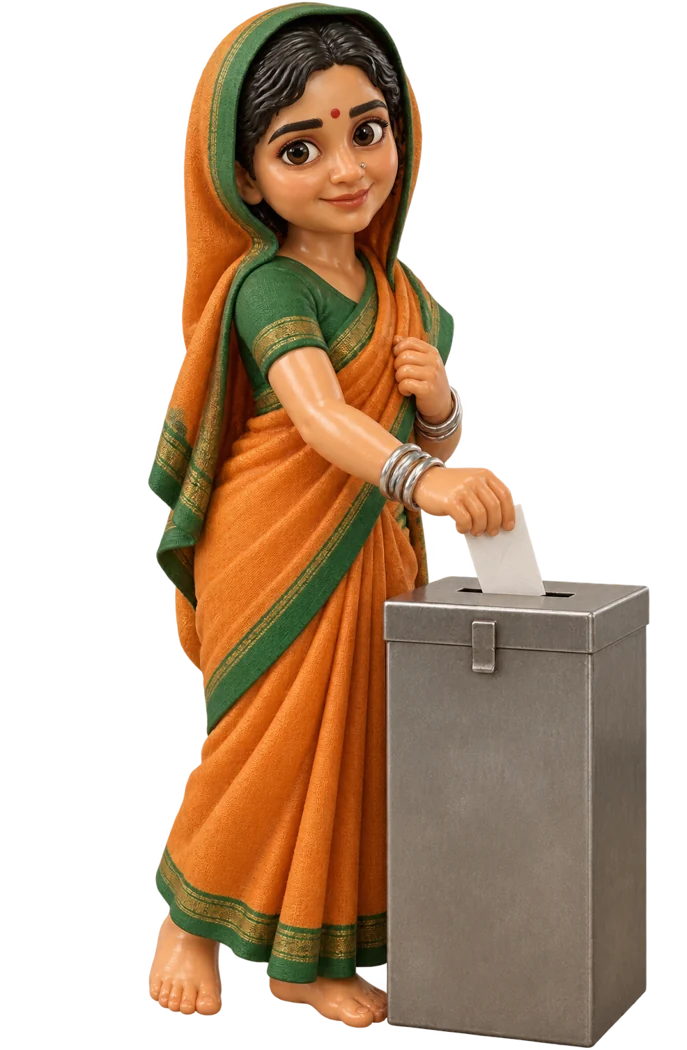
The world's largest democracy held its first general election in 1951 with 173 million voters, most unable to read.
India and Pakistan came into being on 14–15 August 1947, as British India was partitioned amid widespread loss of life and an unprecedented migration. A Constituent Assembly drafted the constitution between 1946 and 1949, arguing among other things over whether Hindi alone should be the national language. On 26 January 1950 it came into force and India became a republic within the Commonwealth.
The first general election ran from late 1951 into 1952, with about 173 million people entitled to vote, most of whom could not read; parties were told apart by picture symbols. Jawaharlal Nehru led the government until his death in 1964. The population was 361 million in 1951. India lost a border war with China in 1962. Under Indira Gandhi the Green Revolution of the 1970s brought national food security, India's support helped create Bangladesh in 1971, and civil liberties were suspended in the Emergency of 1975 to 1977. She was assassinated in 1984.
The collapse of the Soviet bloc in 1991 forced a new course, and service and software exports grew fast. Governments under P. V. Narasimha Rao, Atal Bihari Vajpayee and Manmohan Singh followed. The provisional census of 2011 counted 1,210,193,422 people.
Read more on Wikipedia
Sources: en.wikipedia.org/wiki/India, en.wikipedia.org/wiki/1951–52 Indian general election