Early modern · state
Inca Empire
Without writing, iron or the wheel, the Inca ran an empire four thousand kilometres long along the spine of the Andes.
The Inca called their state Tawantinsuyu, the four parts together. It began as a small kingdom around Cusco. From about 1438 the ruler Pachacuti turned it into an empire, and his son Topa Inca and grandson Huayna Capac pushed it north into today's Ecuador and south into Chile, making it the largest state in the Americas before Columbus.
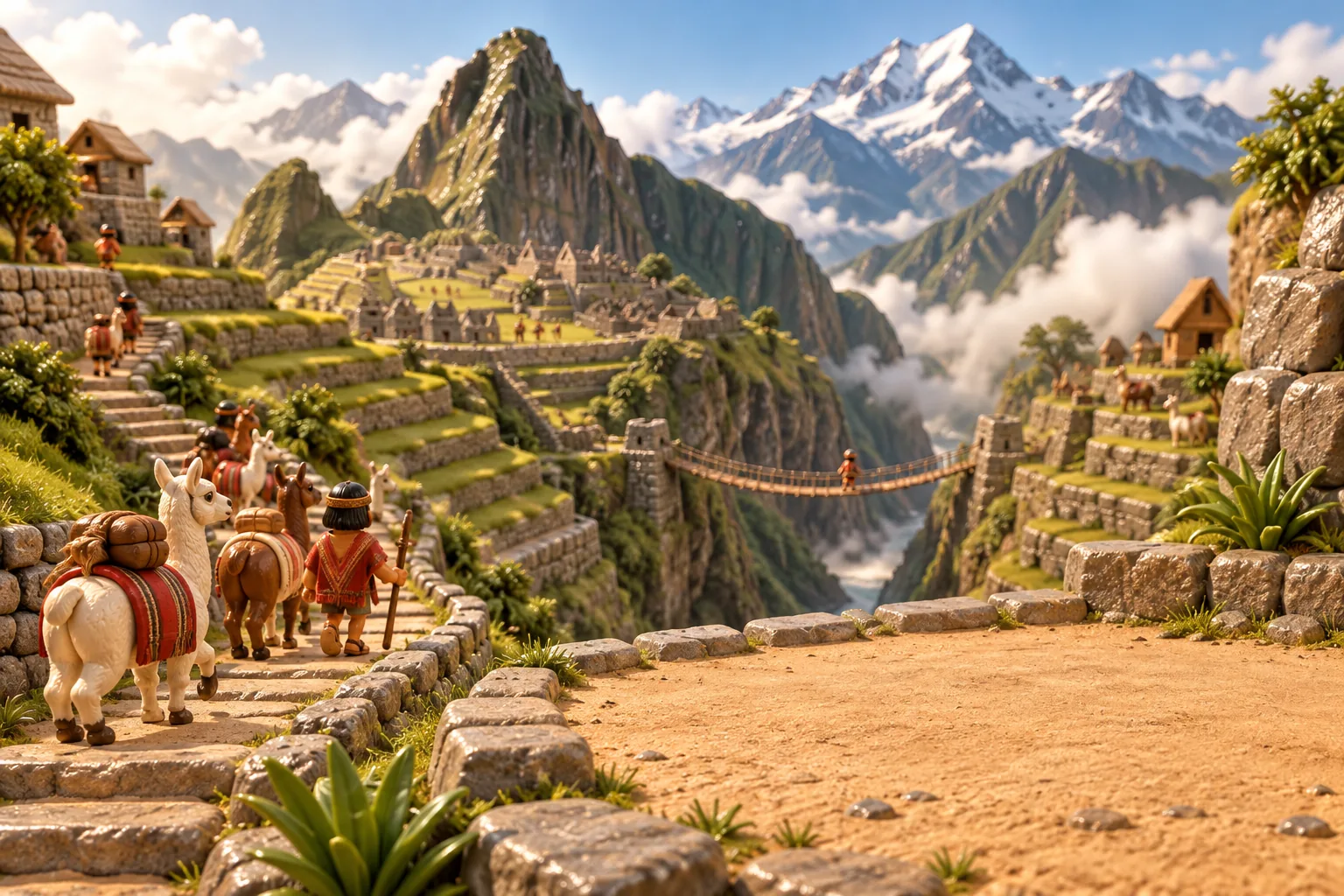
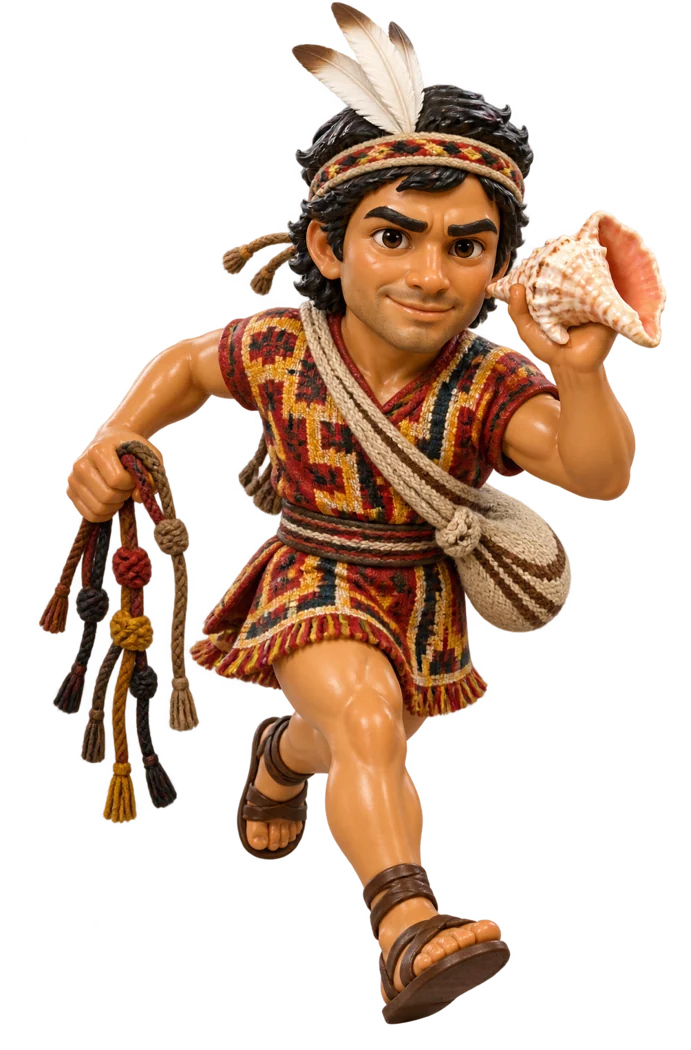
The Inca had no writing, but officials kept accounts on quipus, bundles of knotted cords. Instead of money, people paid the state in labour: they farmed its fields, built its terraces and served in its armies. A road network of tens of thousands of kilometres crossed mountains and deserts, with rope bridges over gorges and storehouses along the way, and relay runners called chasquis carried messages along it. Machu Picchu was built as an estate for Pachacuti around 1450.
Around 1527 smallpox, which arrived from the Spanish colonies before the Spaniards themselves, killed Huayna Capac, and his sons Huáscar and Atahualpa fought a civil war. In November 1532 Francisco Pizarro captured Atahualpa at Cajamarca, took a huge ransom in gold and silver and executed him the next year. Inca rulers held out in the mountains at Vilcabamba until 1572.
Read more on Wikipedia
Sources: en.wikipedia.org/wiki/Inca Empire, en.wikipedia.org/wiki/Chasqui, en.wikipedia.org/wiki/Machu Picchu