Early modern · war
Imjin War
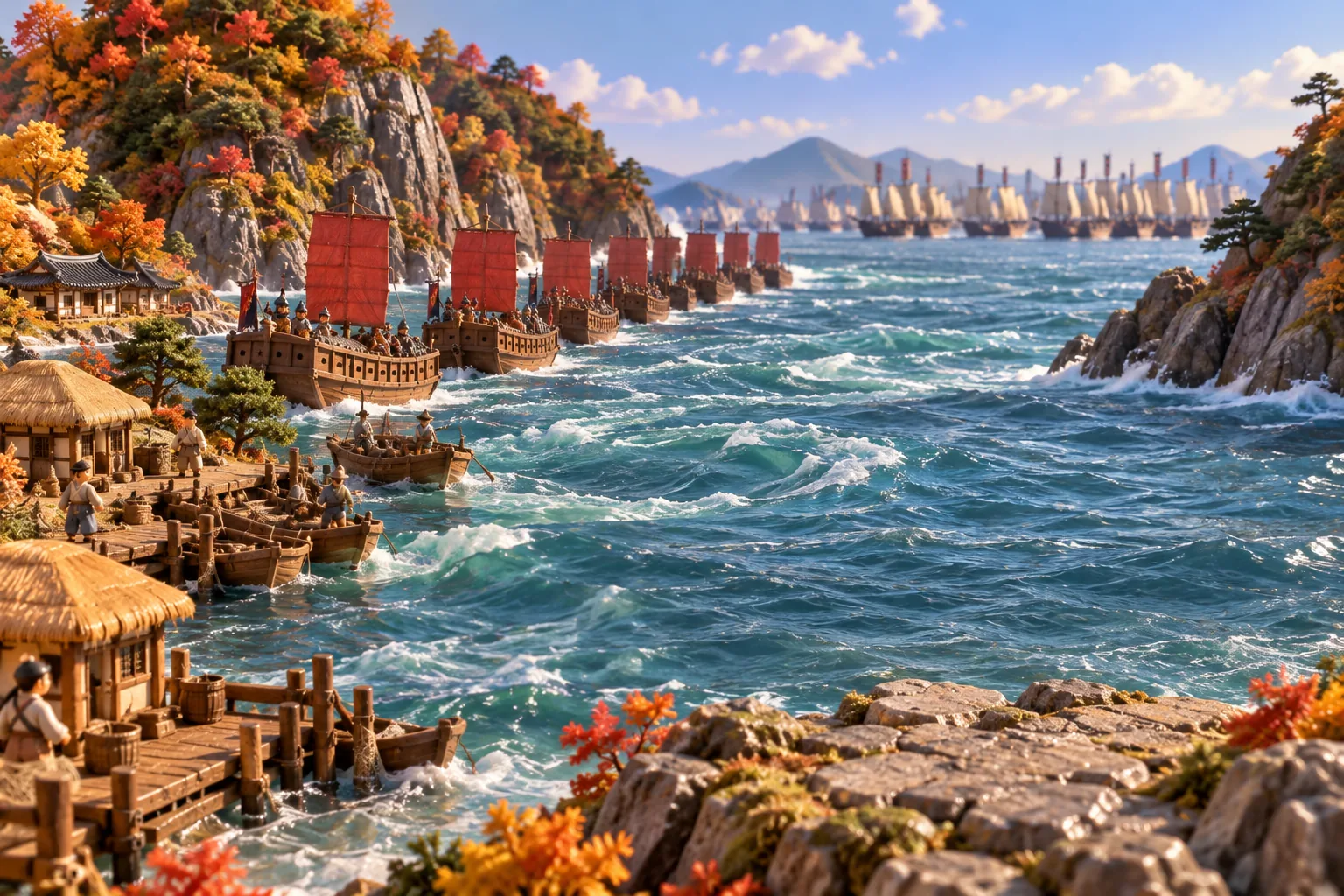
With only thirteen ships left, Admiral Yi Sun-sin waited in a narrow strait for a Japanese fleet of more than a hundred warships, and won.
By the 1590s Toyotomi Hideyoshi had united Japan, and he wanted a war of conquest to strengthen his rule; his armies would march through Korea towards Ming China. On 23 May 1592, 7,000 soldiers of the First Division under Konishi Yukinaga sailed from Tsushima and landed outside Busan. The Japanese swept north, took the capital, Hanseong, which King Seonjo had abandoned the day before, and occupied large parts of the country.
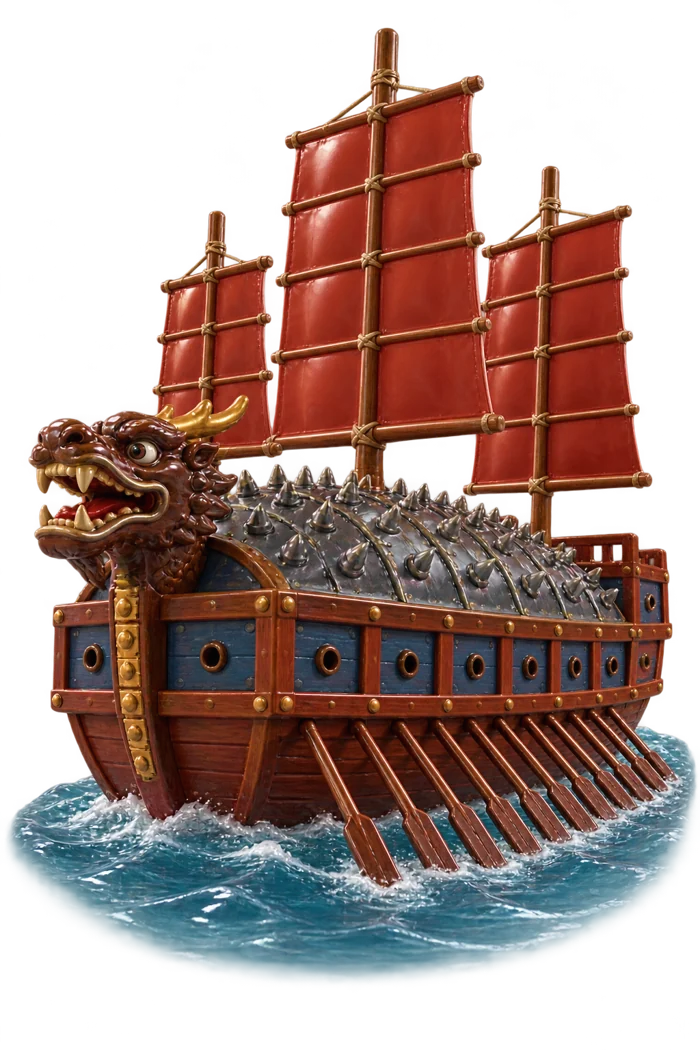
At sea it was different. Admiral Yi Sun-sin's navy, with a few heavily armoured "turtle ships" among its vessels, broke Japanese supply fleets; after the defeat at Hansan Island, Hideyoshi ordered his forces to stop all naval operations. Ming China sent armies to help Joseon, Korean militias and warrior monks fought a guerrilla war, and by 1596 the war had sunk into stalemate and a truce. Japan invaded again in 1597. Yi had been demoted and jailed through a Japanese plot, and his replacement lost most of the fleet at Chilcheollyang. Reinstated, Yi faced about 133 Japanese warships with just 13 ships in the Myeongnyang Strait on 26 October 1597, and won without losing one.
Hideyoshi died, his death kept secret to protect the army's morale, and Japan's new council ordered the troops home. On 16 December 1598 a Ming and Korean fleet attacked the Japanese at Noryang, the last and bloodiest battle of the war. More than half the Japanese fleet was destroyed, and Yi Sun-sin was killed in the pursuit.
Read more on Wikipedia
Sources: en.wikipedia.org/wiki/Imjin War


