Industrial age · person
Ibn Saud
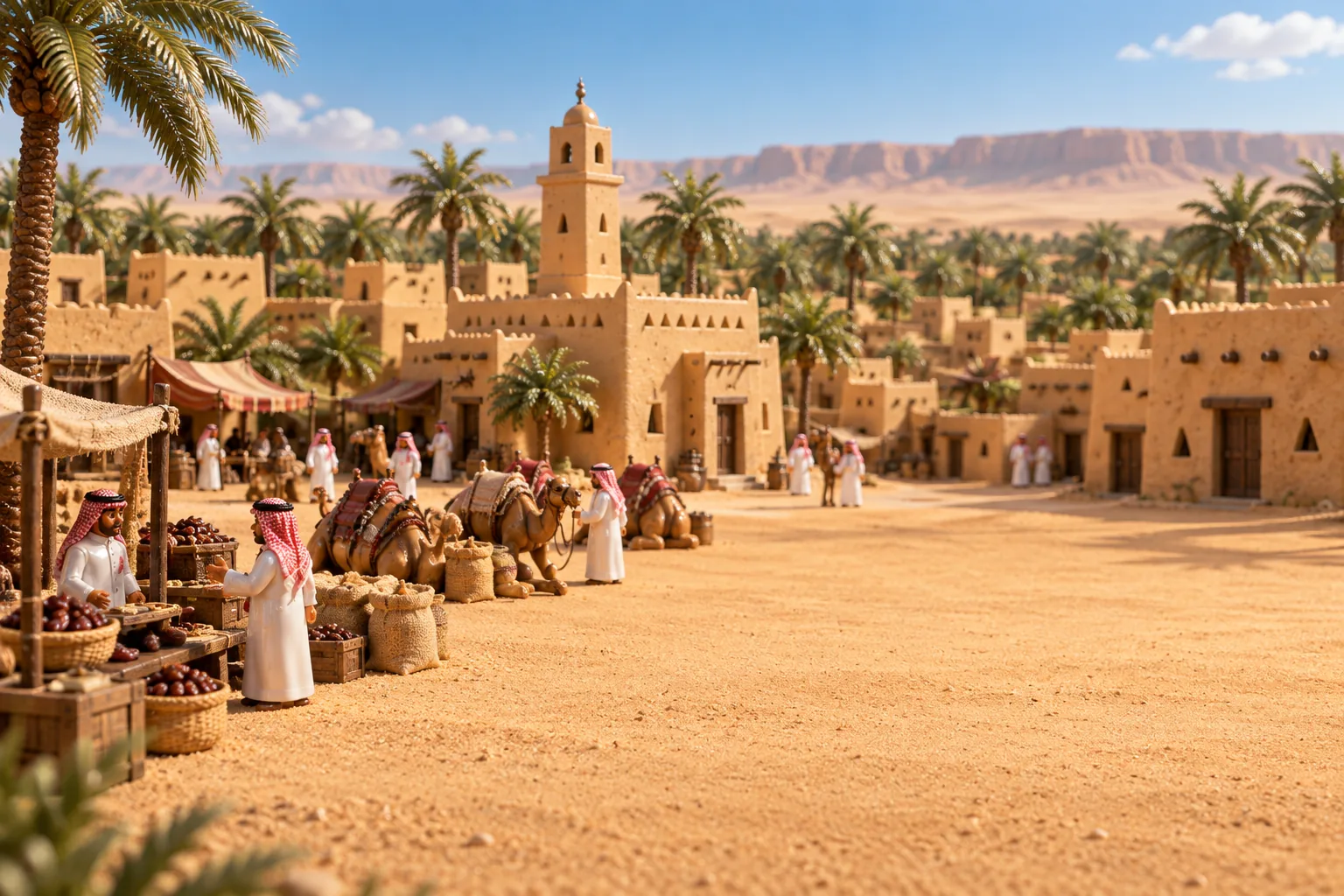
Thirty years after he climbed into Riyadh at night with 40 men, an exiled emir's son united most of Arabia and named the new kingdom after his family.
Abdulaziz bin Abdul Rahman Al Saud, known in the West as Ibn Saud, was born in Riyadh on 15 January 1876, the son of Abdul Rahman bin Faisal, one of the last rulers of the Emirate of Nejd. In 1890 the family was exiled from Riyadh. They stayed briefly in Qatar and Bahrain and then lived for nearly a decade in Kuwait, where the young Abdulaziz often sat in the majlis of its ruler, Mubarak Al Sabah.
On the night of 15 January 1902, his 26th birthday, he led 40 men over the walls of Riyadh on tilted palm trunks and took the city from its Rashidi governor, the beginning of the third Saudi state. By 1912 he held Nejd and the eastern coast, and he founded the Ikhwan, a religious and military brotherhood. In 1925 he conquered the Hejaz with Mecca and Medina, and on 23 September 1932 he formally united his lands as the Kingdom of Saudi Arabia, with himself as king.
He had granted an oil concession in 1933, and in 1938 petroleum was found; large-scale production began after the Second World War. On 14 February 1945 he met President Franklin D. Roosevelt aboard USS Quincy in the Great Bitter Lake. Half blind and ill in his last years, he left most duties to Crown Prince Saud, and he died in his sleep at Shubra Palace in Ta'if on 9 November 1953, aged 77. He fathered 45 sons, and every king who followed him up to 2013 was one of them.
Read more on Wikipedia
Sources: en.wikipedia.org/wiki/Ibn Saud