Antiquity · state
Huns
A people said to live on horseback crossed the Volga, drove the Goths west and made Constantinople pay them in gold every year.
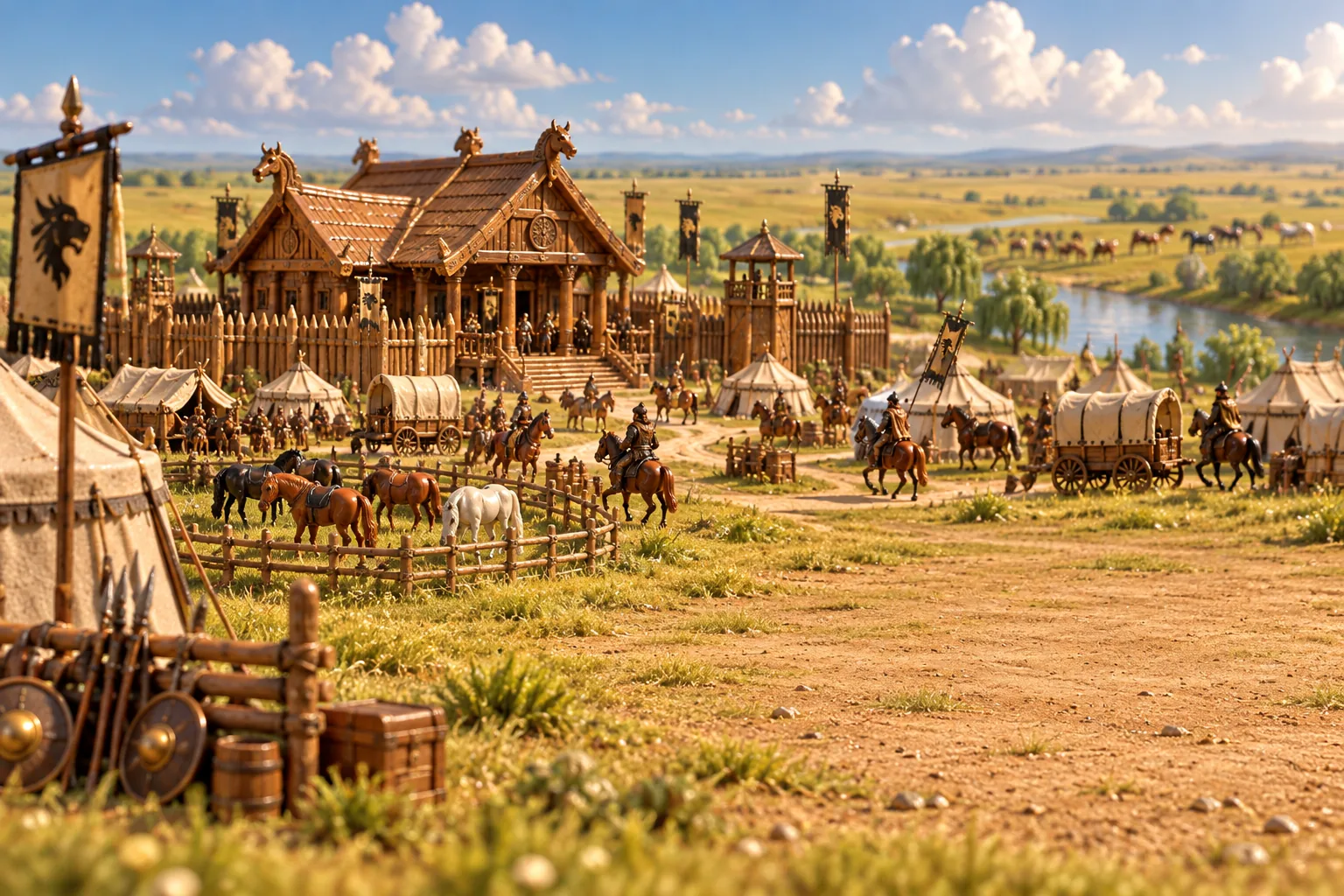
The Huns were nomadic herders first reported east of the Volga. By 370 they had reached the river, driving the Goths and Alans westward, and Roman writers described them as almost glued to their horses. By 430 they had built a vast empire on the Danube frontier, ruling over Goths, Gepids, Heruli and other peoples. In 435 the Treaty of Margus forced the Eastern Roman Empire to grant them trade rights and an annual tribute.
From 434 the brothers Attila and Bleda ruled together, and after Bleda died in 445 Attila ruled alone. His armies sacked Balkan cities, and a peace of 449 set the Eastern Romans' tribute at 2,100 pounds of gold a year. In 451 he invaded Gaul and fought a Roman and Visigothic army on the Catalaunian Plains. In 452 he invaded Italy, but after meeting envoys including Pope Leo I near Mantua he promised to withdraw.
In 453 Attila died of a haemorrhage on his wedding night. The empire then faced a power struggle between its Germanic subjects and the Hunnic rulers, who lost much of their realm at the Battle of Nedao around 454 and were driven out of Pannonia. The Hun leader Dengizich attacked the Romans in 467 and was defeated and killed in Thrace in 469, after which the Huns seem to have merged into other peoples such as the Bulgars.
Read more on Wikipedia
Sources: en.wikipedia.org/wiki/Huns

