
Middle Ages · science
House of Wisdom
A caliph in Baghdad is said to have demanded a Greek astronomy book from the Byzantine emperor as a condition for peace.
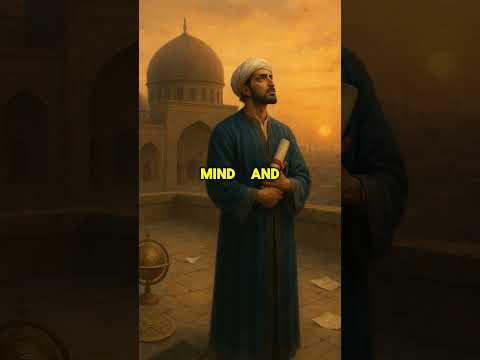
In the 8th and 9th centuries Baghdad, capital of the Abbasid Caliphate, drew scholars from across the Islamic world. Works in Greek, Persian, Syriac and Sanskrit were translated into Arabic, and the House of Wisdom, which began as a royal library of rare books under Harun al-Rashid or al-Mansur, became its best-known home. Under Caliph al-Ma'mun (r. 813–833) it was turned into a public academy and library, and its funding grew sharply. Al-Ma'mun visited the scholars, joined their debates and sent expeditions as far as Constantinople to bring back manuscripts.
Its most productive translator, the Christian physician Hunayn ibn Ishaq, turned the whole collection of Greek medical books, including Galen and Hippocrates, into Arabic. Others translated Euclid. The scholars did not only copy: the mathematician al-Khwarizmi, whose name gave us the word 'algorithm', worked there on algebra, and in 828 al-Ma'mun ordered Baghdad's first astronomical observatory to check Ptolemy's figures. Scholars also served as engineers and architects and kept the official calendar.
In February 1258 the Mongols took Baghdad, and the House of Wisdom was destroyed with the city's other libraries. Books were thrown into the Tigris in such numbers that the river was said to have run black with ink. Some historians now argue that the idea of a grand academy with departments was largely built up by 19th- and 20th-century scholars, and that the original was simpler: a library and storehouse of wisdom.
Read more on Wikipedia