Early modern · state
Hotak dynasty
A mayor of Kandahar killed the Safavid governor in an ambush, and within thirteen years his son sat on the throne of Persia in Isfahan.
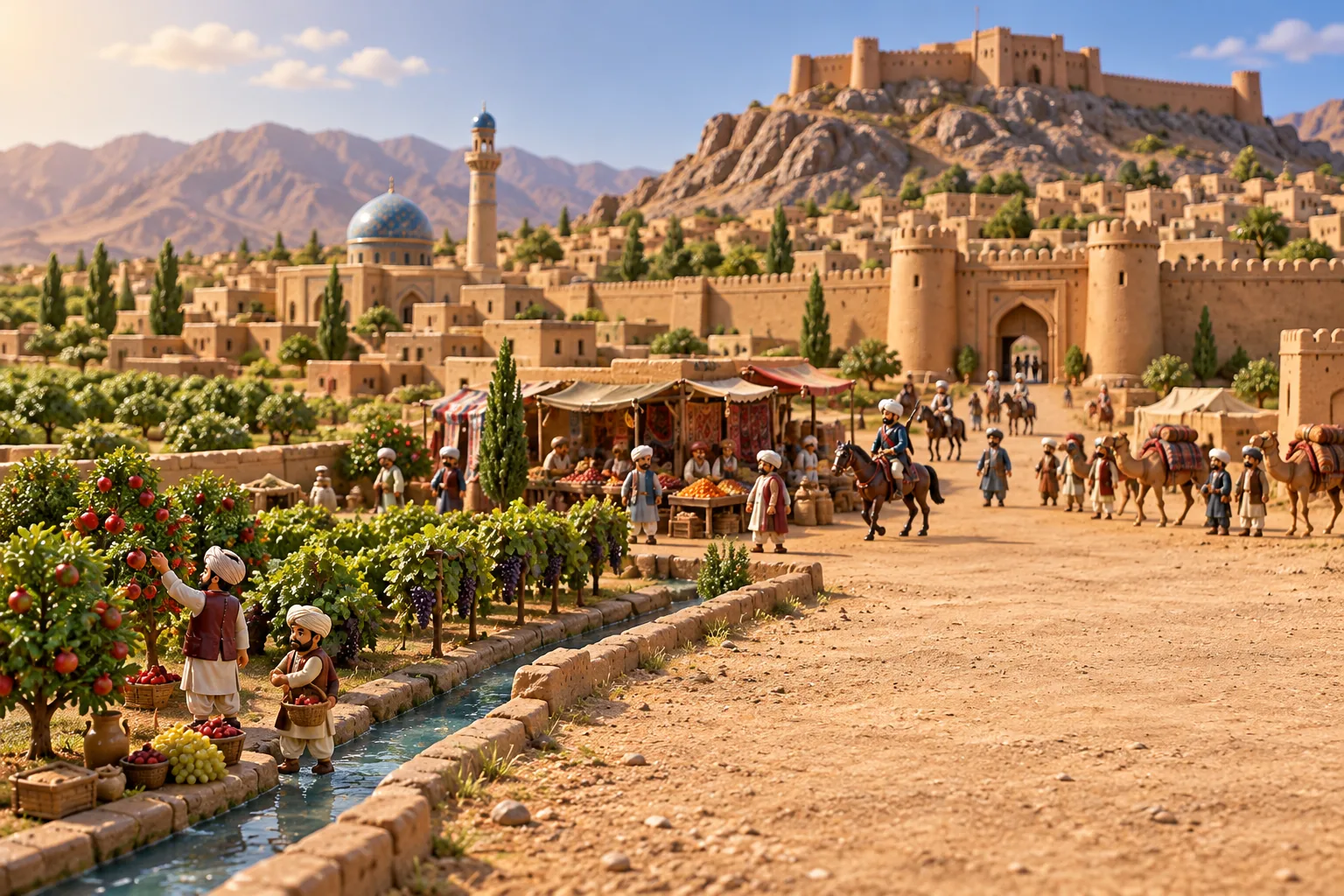
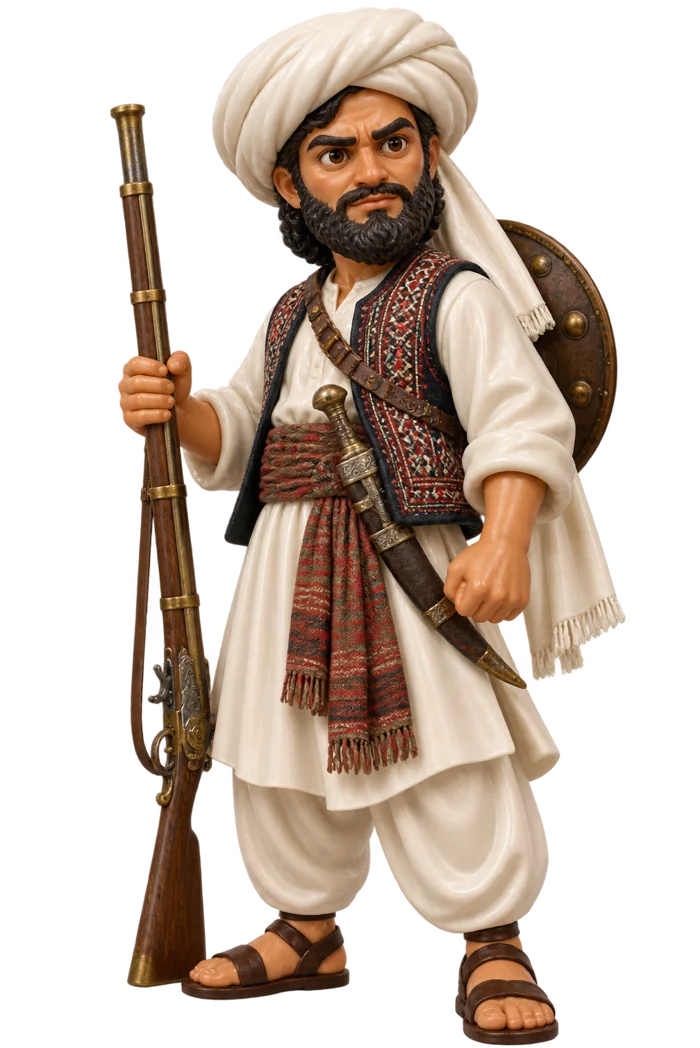
In the early 18th century Kandahar was the eastern edge of the weakening Safavid empire of Persia. Its governor from 1704 was the Georgian king George XI, known as Gurgin Khan. Mirwais Hotak, a rich Ghilji Pashtun chief and the city's mayor, was sent off to Isfahan, saw how weak the court was, and came home by way of Mecca with a fatwa approving revolt. On 21 April 1709 his men ambushed and killed Gurgin Khan, drove out the Georgian garrison and later beat the armies sent to retake the city.
Mirwais died peacefully in 1715. His son Mahmud killed his uncle and successor, crossed the deserts of Sistan in 1720 and took Kerman. On 8 March 1722 he crushed the Safavid army at Gulnabad and besieged Isfahan. On 23 October 1722 Shah Sultan Husayn gave up and acknowledged Mahmud as Shah of Persia.
Afghan rule in Iran did not last. After a palace coup in 1725 Mahmud's cousin Ashraf took over, but the Iranian general Nader, fighting under the Safavid banner, defeated him at Damghan in 1729 and drove the Afghans back east. In 1738, after a long siege of Kandahar, Nader Shah defeated Hussain Hotak and ended the dynasty.
Read more on Wikipedia
Sources: en.wikipedia.org/wiki/Hotak dynasty, en.wikipedia.org/wiki/Mirwais Hotak, en.wikipedia.org/wiki/Battle of Gulnabad