Our time · person
Ho Chi Minh
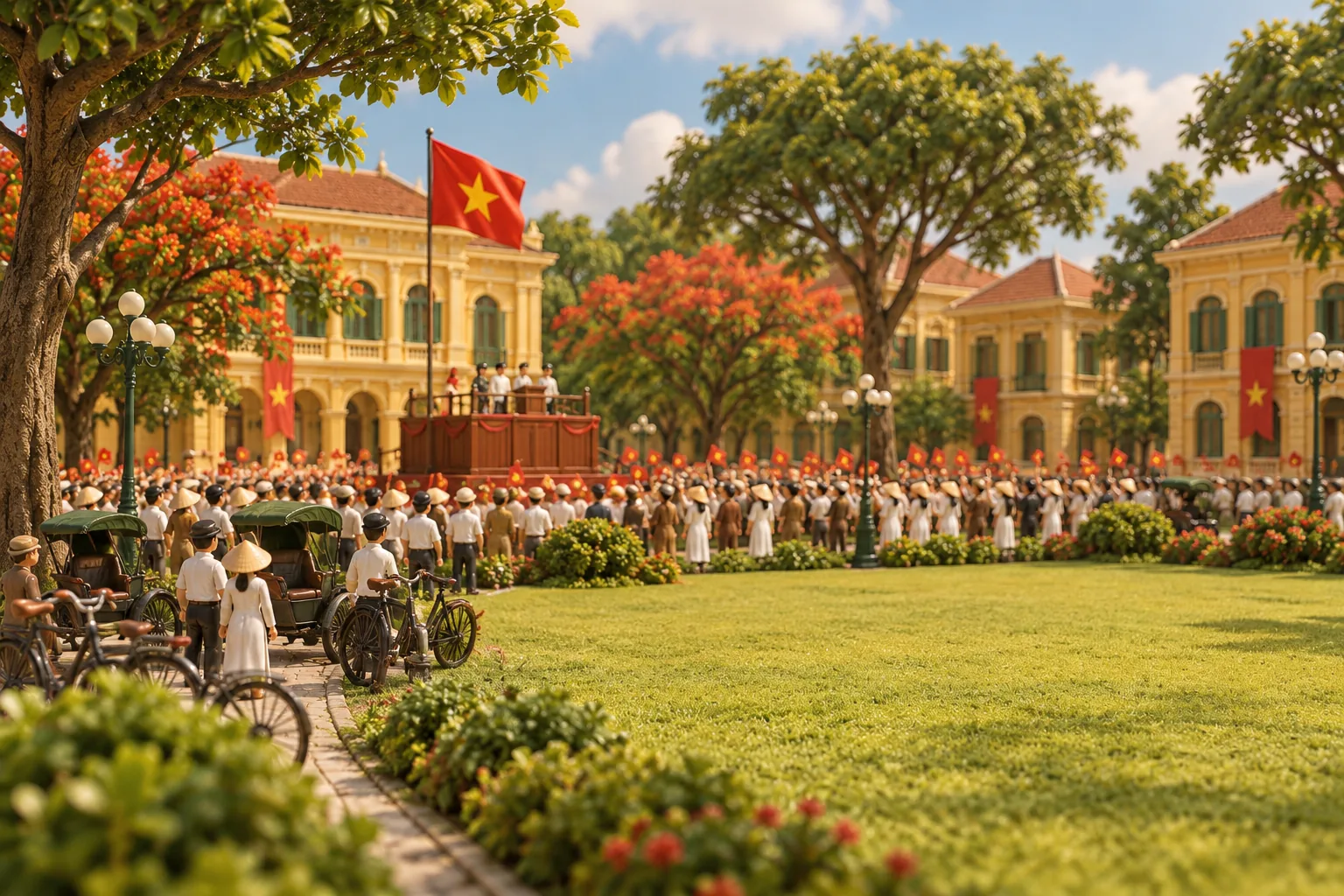
Thirty-four years after leaving Saigon as a kitchen hand on a French steamer, he stood before a crowd in Hanoi and read out Vietnam's declaration of independence.
Ho Chi Minh was born Nguyễn Sinh Cung, by most accounts on 19 May 1890, in the village of Hoàng Trù in Kim Liên, Nghệ An province, then part of French-ruled Annam. He studied in Huế, and in 1911 he signed on as a kitchen helper on the French steamer Amiral de Latouche-Tréville from Saigon to Marseille.
For years he worked on ships and in London and Paris. In 1919, as Nguyễn Ái Quốc, Nguyen the Patriot, he became the public face of a petition to the Versailles peace talks asking for rights for the Vietnamese; it was ignored. In December 1920 he was a founding member of the French Communist Party. In Hong Kong in 1930 he merged rival groups into one Vietnamese communist party. In 1941 he came home and founded the Việt Minh to fight the Japanese occupation. After the August Revolution and the abdication of Emperor Bảo Đại, on 2 September 1945 he read the Declaration of Independence of the Democratic Republic of Vietnam.
War with France ended in 1954 with the Viet Minh victory at Dien Bien Phu, and the country was divided. As president of the North, he led a land reform in which many landlords were executed, and in 1956 he apologised for its errors. He died of heart failure in Hanoi on 2 September 1969, aged 79. Against his wish to be cremated, his body was embalmed and lies in a mausoleum in Ba Đình Square, and Saigon was renamed Ho Chi Minh City.
Read more on Wikipedia
Sources: en.wikipedia.org/wiki/Ho Chi Minh