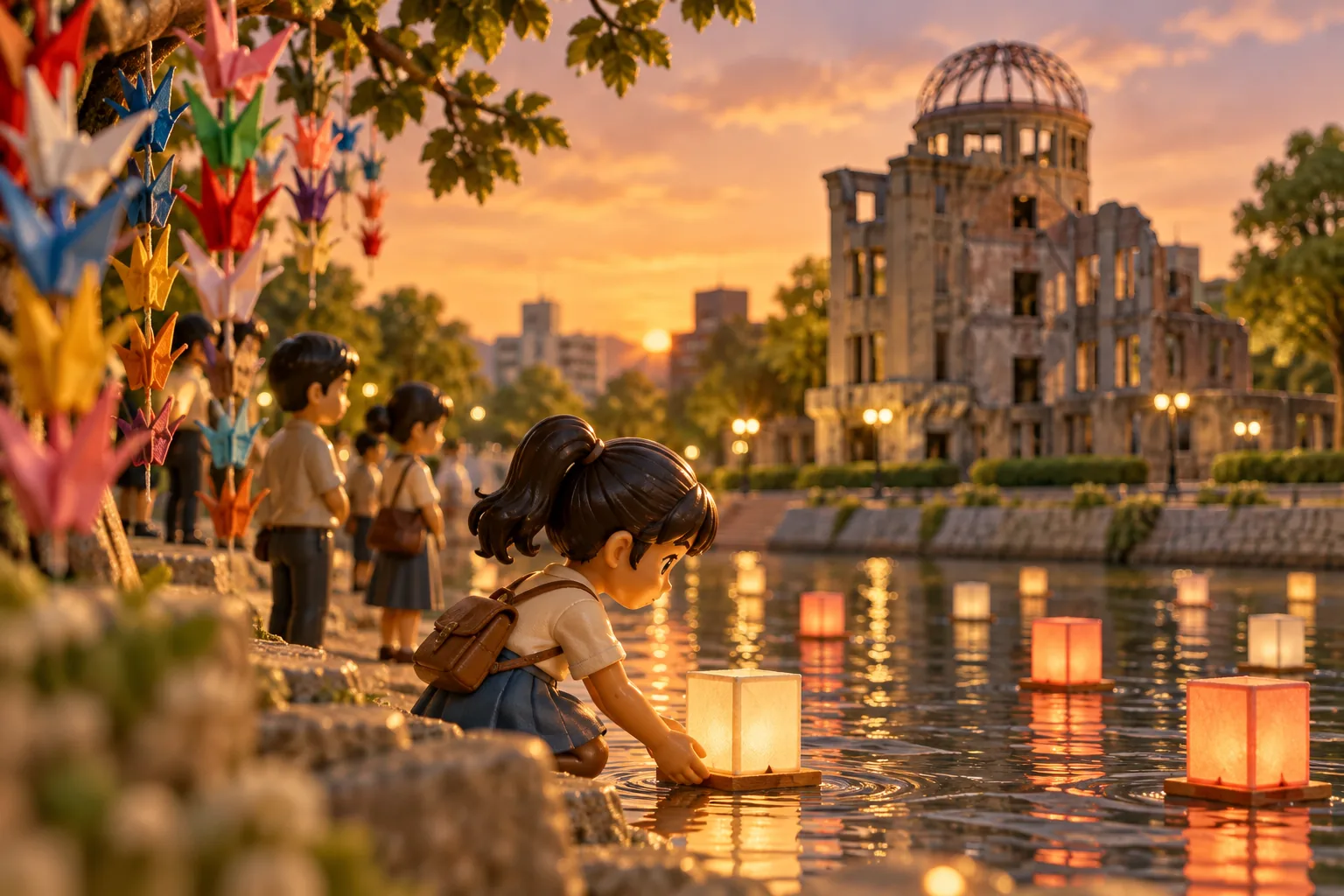
Our time · war
Hiroshima
At 8:15 in the morning a single bomb fell for 44 seconds over Hiroshima, and the world entered the nuclear age.
By the summer of 1945 Germany had surrendered, but the war in the Pacific went on. American bombers had already burned 64 Japanese cities, and the Allies were preparing to invade Japan itself. In secret, the Manhattan Project had built two kinds of atomic bomb: Little Boy, which used enriched uranium, and Fat Man, which used plutonium. On 26 July the Allies demanded Japan's unconditional surrender, warning of "prompt and utter destruction". Japan ignored the ultimatum.
Early on 6 August a B-29 bomber, the Enola Gay, named after the mother of its pilot Colonel Paul Tibbets, took off from the island of Tinian. At 8:15 Hiroshima time it released Little Boy, with about 64 kilograms of uranium inside, from some 9,400 metres up. The bomb exploded about 580 metres above the city with the force of roughly 15 kilotons of TNT. Three days later Fat Man destroyed much of Nagasaki.
Over the following two to four months the bombs killed 90,000 to 166,000 people in Hiroshima and 60,000 to 80,000 in Nagasaki, about half of them on the first day. For months afterward people kept dying from burns, radiation sickness and their injuries. About 90 percent of the dead were civilians. Japan announced its surrender on 15 August, six days after Nagasaki and the Soviet declaration of war. The two cities remain the only places where nuclear weapons have been used in war.
Read more on Wikipedia
Sources: en.wikipedia.org/wiki/Atomic bombings of Hiroshima and Nagasaki