
Middle Ages · person
Hildegard of Bingen
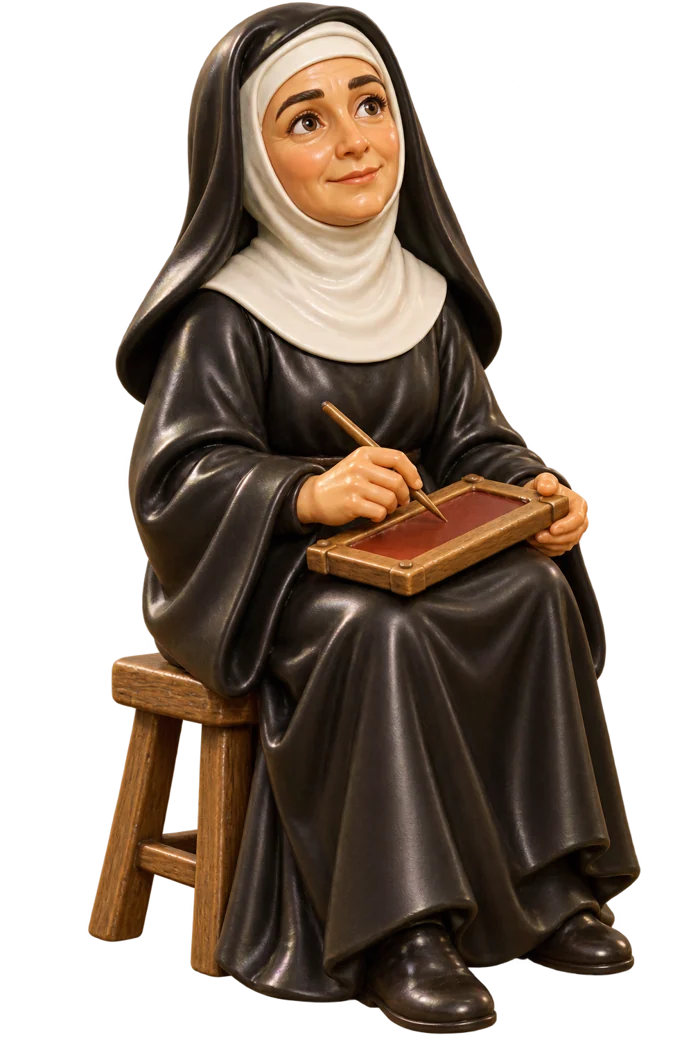
Told by a voice to "write what you see and hear", a Rhineland nun spent ten years putting 26 visions on parchment, then moved her sisters to a new abbey of her own.
Hildegard was born around 1098, the youngest child of Hildebert of Bermersheim and his wife Mechtild, a family of the lower nobility. Sickly from birth, she said she first saw what she called "the Shade of the Living Light" at the age of three. Her parents gave her to the Benedictine monastery of Disibodenberg, where she was enclosed with the young noblewoman Jutta, who taught her to read and write; their vows were received on All Saints' Day 1112.
When Jutta died in 1136, the nuns elected Hildegard as their magistra. Obeying what she felt was a divine command to "write what you see and hear", she began to record her visions in Scivias, "Know the Ways of the Lord": 26 visions in three parts, written between 1141 and 1151. In 1148 a papal commission judged them authentic. Against the will of Abbot Kuno she moved with about 20 nuns to a new monastery at Rupertsberg, by Bingen on the Rhine, in 1150, and in 1165 she founded a second house at Eibingen.
She wrote on plants and healing, composed chants and the Ordo Virtutum, perhaps the oldest surviving morality play, and corresponded with popes and emperors. Shortly before her death she defied the clergy of Mainz, who wanted an excommunicated man's body removed from the abbey's ground, insisting he had been reconciled with the Church. She died on 17 September 1179. In 2012 Pope Benedict XVI extended her veneration to the whole Catholic Church and named her a Doctor of the Church.
Read more on Wikipedia