Early modern · person
Hieronymus Bosch
In a busy Brabant town around 1500, a painter who left no letters and no diary covered three oak panels with Eden, a garden of giant fruit and a frozen hell.
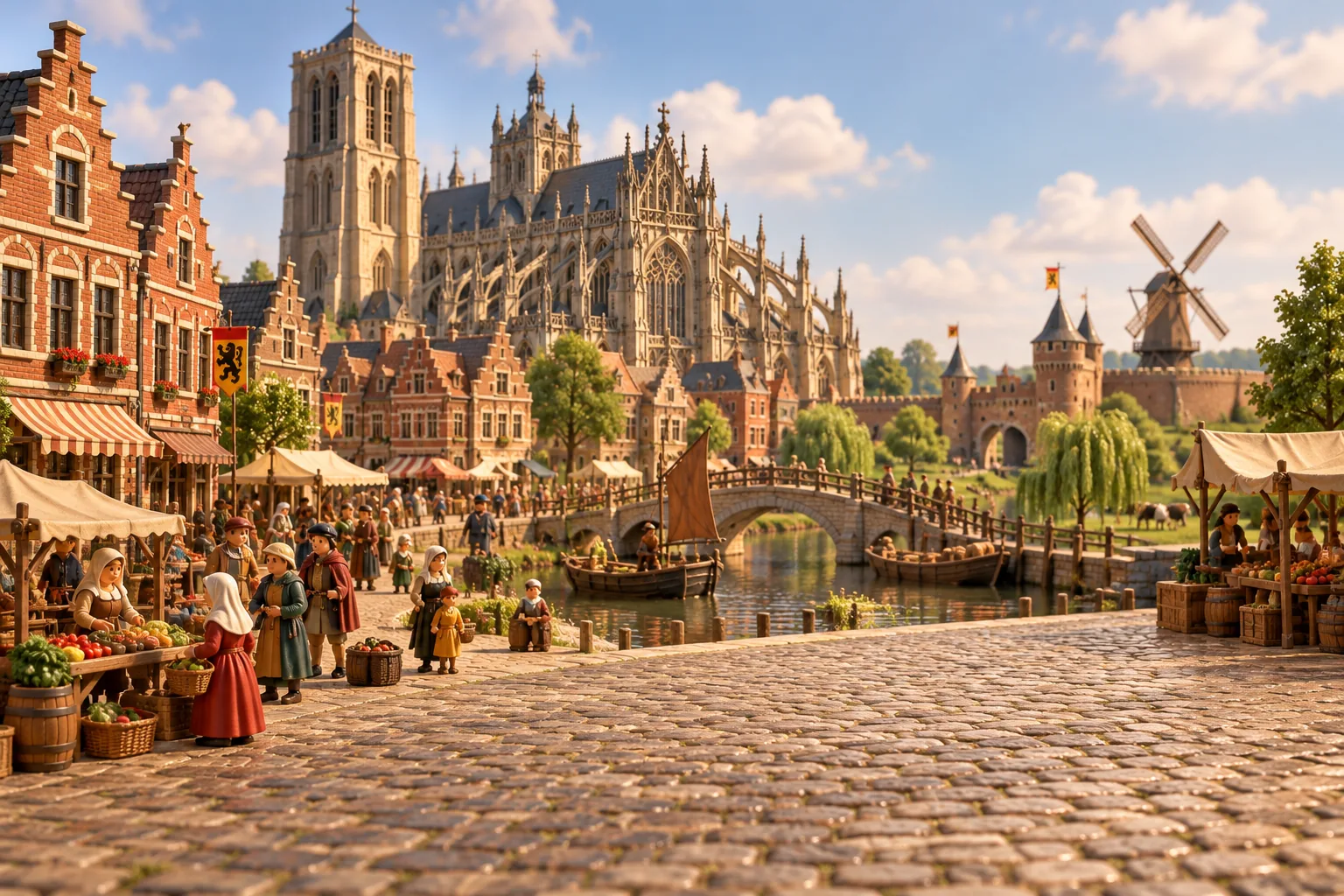
Jheronimus van Aken was born around 1450 in his grandfather's house in 's-Hertogenbosch, a thriving town in the Duchy of Brabant, and later signed his paintings Jheronimus Bosch after it. His grandfather Jan van Aken was a painter, as were four of Jan's five sons, and the boy was probably taught by his father Anthonius or an uncle. In 1463, when he was about 13, a fire destroyed 4,000 houses in the town. He left no letters or diaries; almost all we know comes from town records and the books of a religious brotherhood.
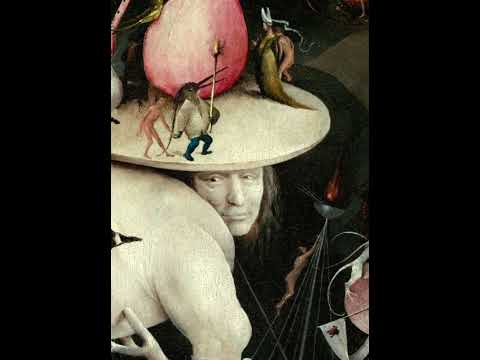
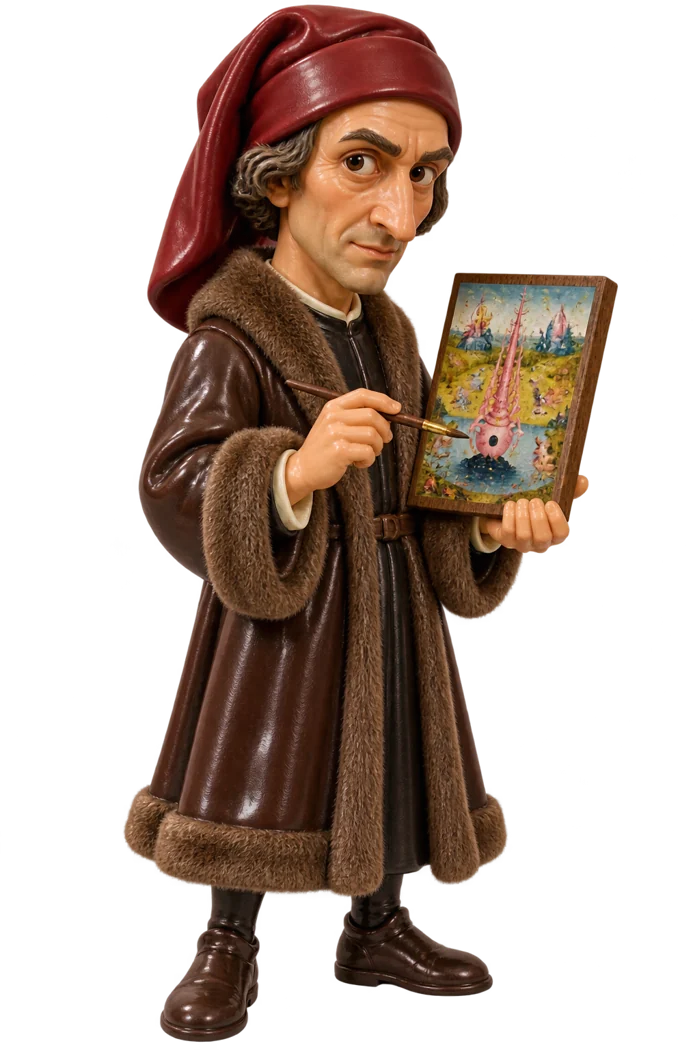
Between 1479 and 1481 he married Aleid Goyaerts van den Meervenne, a few years his senior and from a wealthy family, and in 1486 or 1487 he joined the Brotherhood of Our Blessed Lady, a confraternity of some 40 leading citizens. He painted mostly in oil on oak panels and won commissions from abroad. Around 1495 to 1505 he made his most famous triptych, The Garden of Earthly Delights: Eden on the left, a crowded garden of naked figures, fantastic animals and oversized fruit in the centre, and a frozen hell lit by fire on the right.
The Brotherhood's accounts record his death in 1516, and a memorial mass was held in the church of Saint John on 9 August. Only about 25 paintings and eight drawings are now confidently his. In the late 16th century Philip II of Spain collected many of them, which is why the Prado in Madrid holds The Garden of Earthly Delights. Pieter Bruegel the Elder was his best-known follower.
Read more on Wikipedia