Middle Ages · state
Heian period
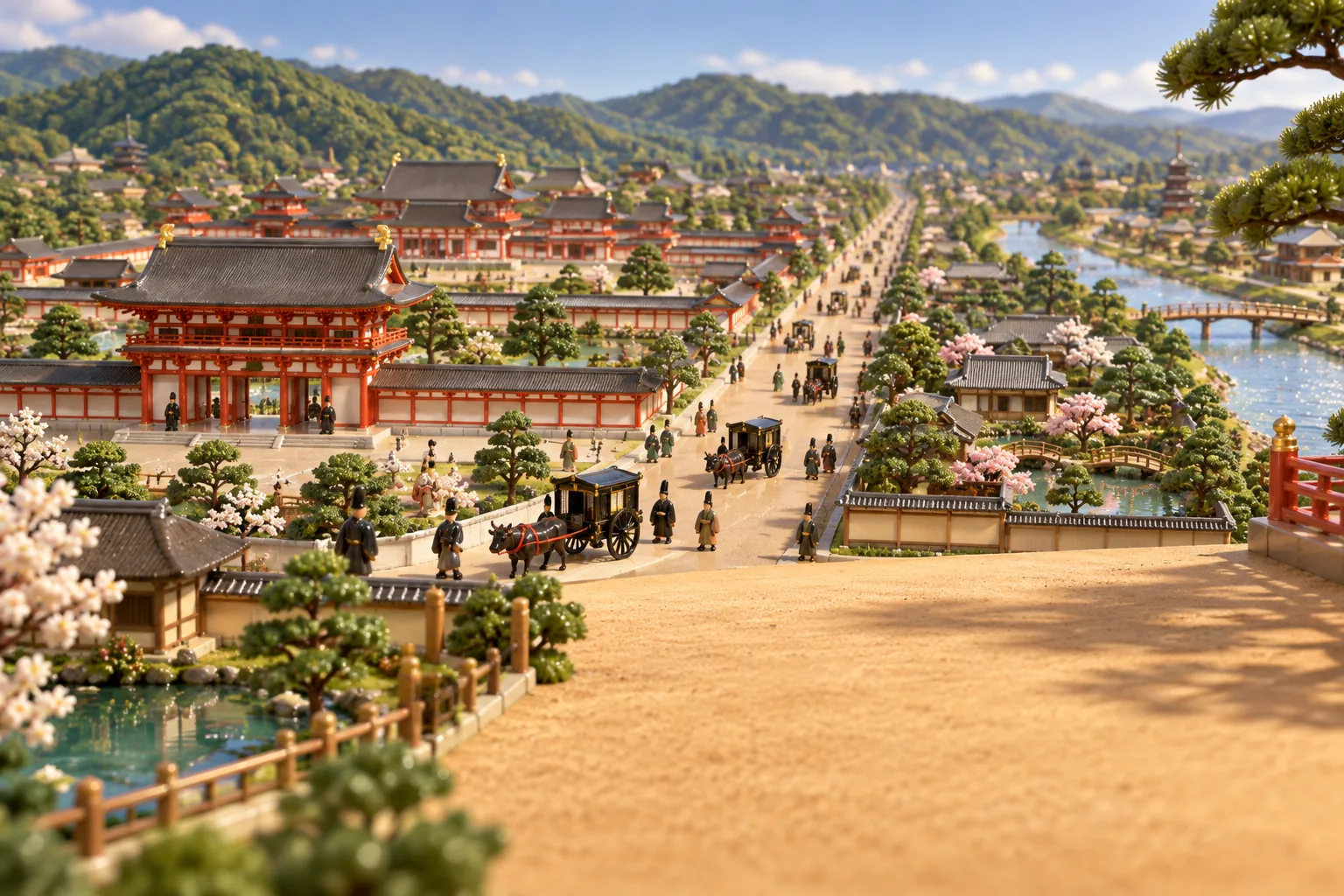
Japan's court at Heian-kyō, today's Kyoto, produced The Tale of Genji, one of the first novels ever written, by a court lady.
In 794 Emperor Kanmu, the 50th emperor, moved the capital of Japan to Heian-kyō, today's Kyoto. He sent armies north against the Emishi and in 797 gave his commander Sakanoue no Tamuramaro the title Seii Taishōgun, 'barbarian-subduing generalissimo', which the later shoguns would carry.
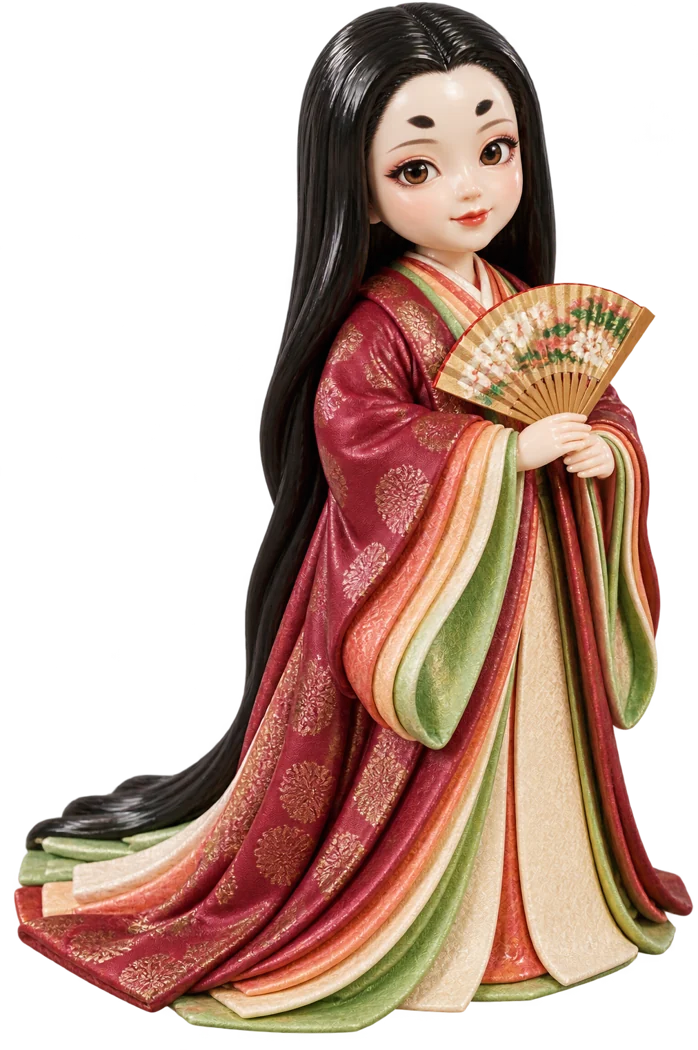
From 858 the Fujiwara clan ruled through the emperors, serving as regents, Sesshō for child emperors and Kampaku for adults. By the year 1000 Fujiwara no Michinaga could enthrone and dethrone emperors at will. In 895 Sugawara no Michizane halted the imperial embassies to China, and a more Japanese court culture flowered. Two syllabaries, katakana and hiragana, emerged, and court women, who had not been trained in Chinese as men were, wrote in the spoken language: Sei Shōnagon's Pillow Book in the 990s and Murasaki Shikibu's Tale of Genji between about 1000 and 1008.
Meanwhile provincial warriors, the samurai, put down rebellions on the emperor's behalf and grew into a new military elite. The Taira and Minamoto clans fought for control of the court, and Taira no Kiyomori put his grandson on the throne and ruled as regent. The Genpei War ended in a Minamoto victory, and in 1185 Minamoto no Yoritomo's family seized power and set up a shogunate at Kamakura.
Read more on Wikipedia
Sources: en.wikipedia.org/wiki/Heian period


