Industrial age · person
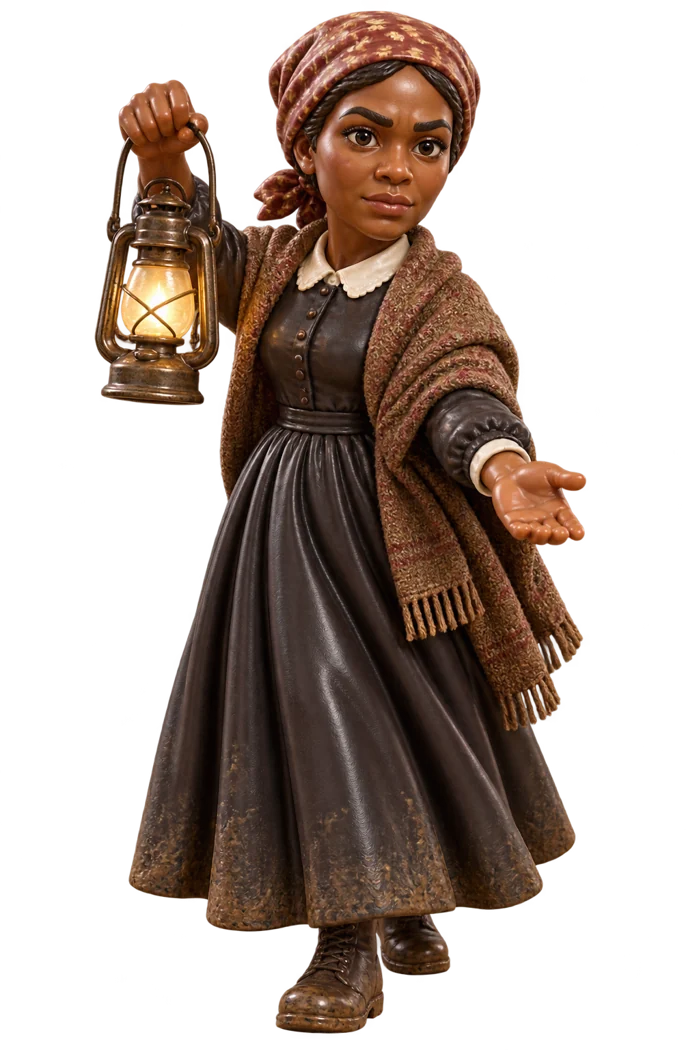
Harriet Tubman
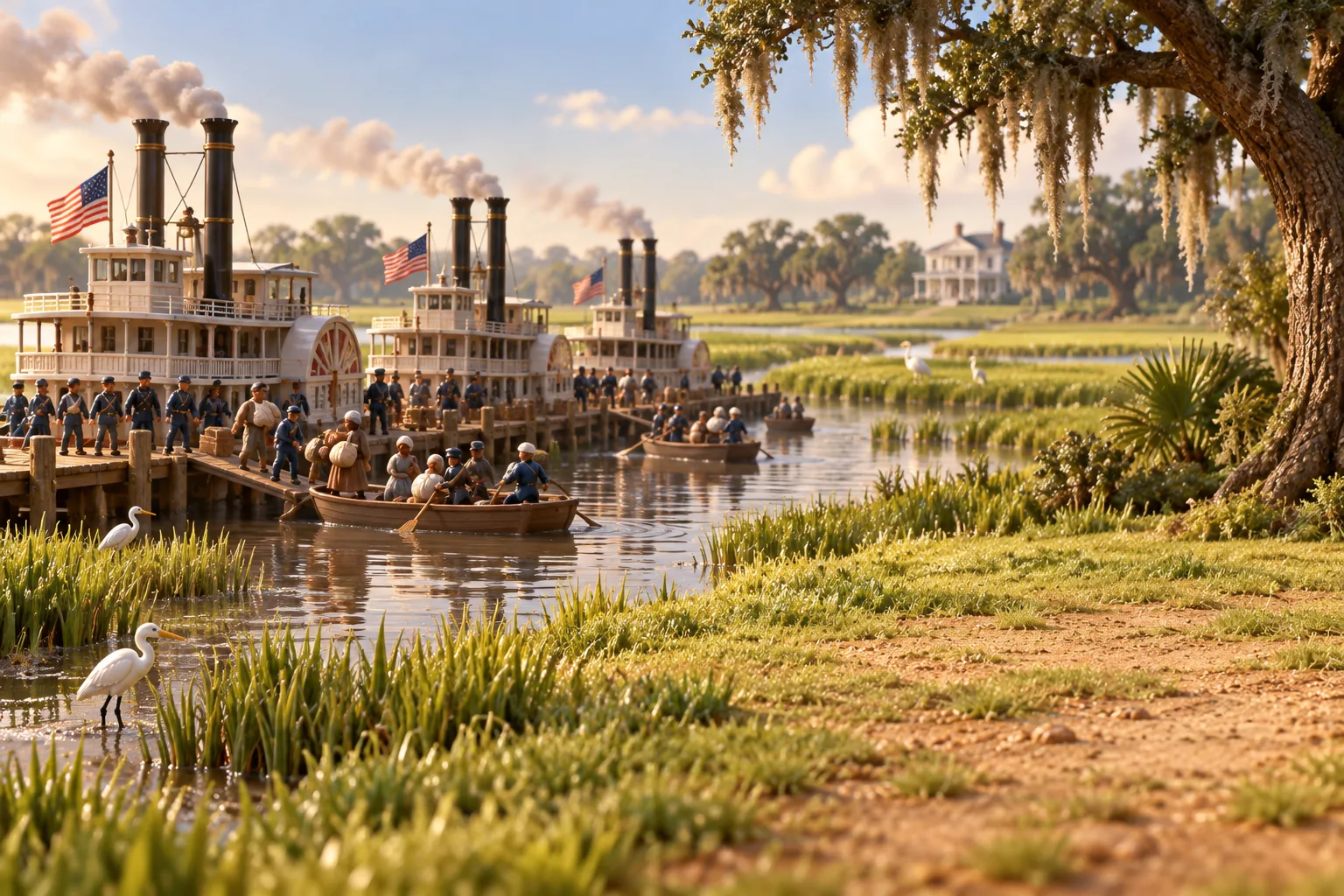
When the steamboat whistles sounded on the Combahee River in June 1863, the enslaved people on the rice plantations knew, thanks to her spies, that freedom had come.
Harriet Tubman was born Araminta "Minty" Ross, most likely in March 1822, to enslaved parents in Dorchester County, Maryland, and was beaten and whipped as a child. As a teenager she tried to shield a man from an overseer, who threw a heavy metal weight that hit her instead; she said it "broke my skull", and the injury troubled her all her life. She took the name Harriet around the time of her marriage to John Tubman.
On 17 September 1849 she escaped, and soon reached Philadelphia. She went back again and again: in some 13 trips she guided about 70 people to freedom, among them her parents and brothers, travelling by night along the network known as the Underground Railroad. After the Fugitive Slave Act of 1850 she took them on to Canada. People called her Moses, and she said she "never lost a passenger". In 1858 she met John Brown and helped him plan his raid on Harpers Ferry.
In the Civil War she worked for the Union in South Carolina as a cook and nurse and then as an armed scout and spy. In June 1863 she guided three steamboats carrying Black soldiers under Colonel James Montgomery past mines on the Combahee River, and more than 750 people were carried to freedom. She later settled in Auburn, New York, campaigned for women's suffrage and died there on 10 March 1913.
Read more on Wikipedia
Sources: en.wikipedia.org/wiki/Harriet Tubman


