Antiquity · person
Hannibal
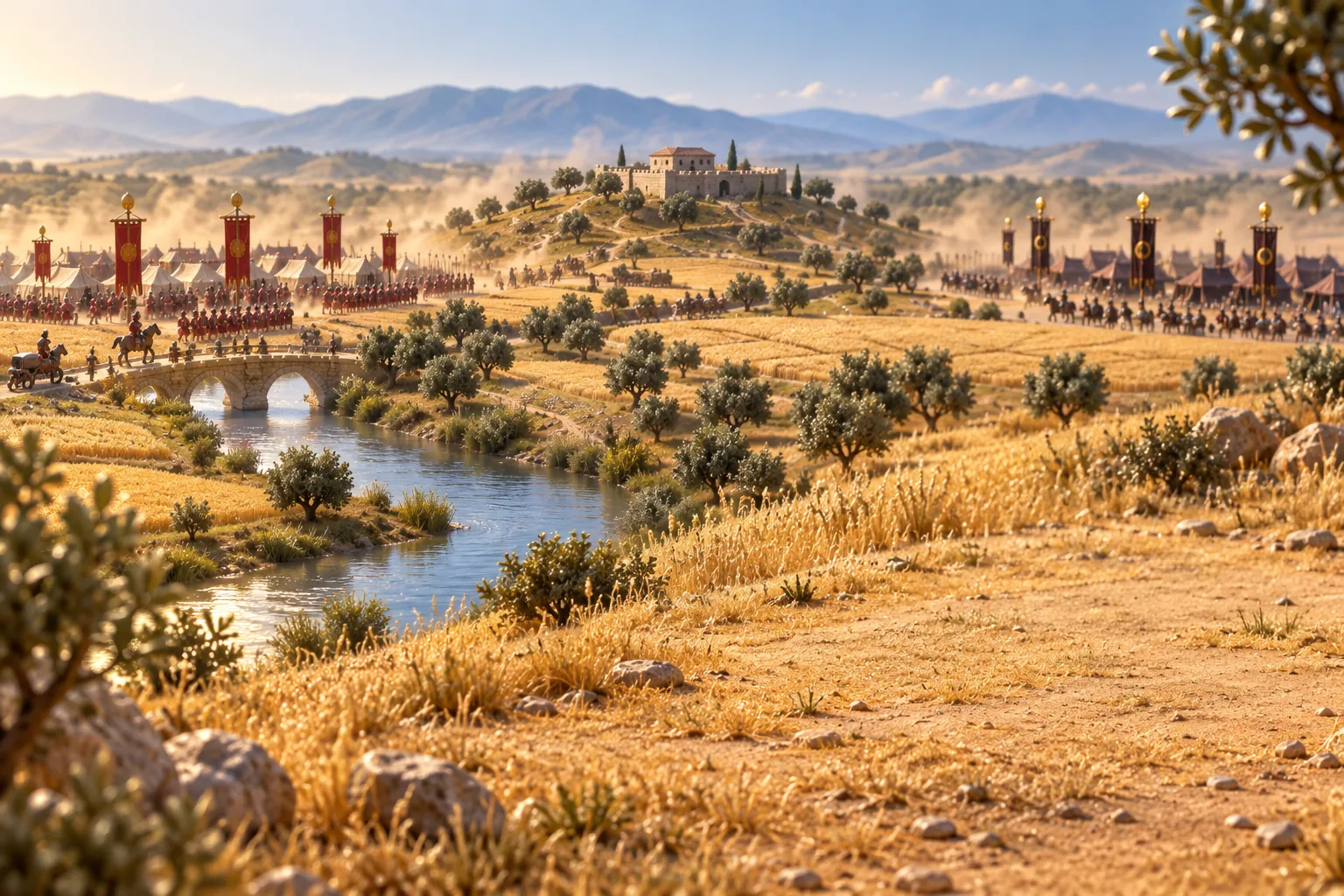
On an Apulian plain in 216 BC he let the Roman legions push into his centre, then closed his wings around them, a manoeuvre generals have studied ever since.
Hannibal was born in 247 BC, a son of the Carthaginian general Hamilcar Barca, whose surname means lightning. After Carthage lost the First Punic War, Hamilcar took his army to conquer Spain. Polybius says that when the boy begged to go with him, Hamilcar made him swear he would never be a friend of Rome. After Hamilcar drowned, Hannibal served under his brother-in-law Hasdrubal, and when Hasdrubal was assassinated in 221 BC, Hannibal, then about 26, took command.
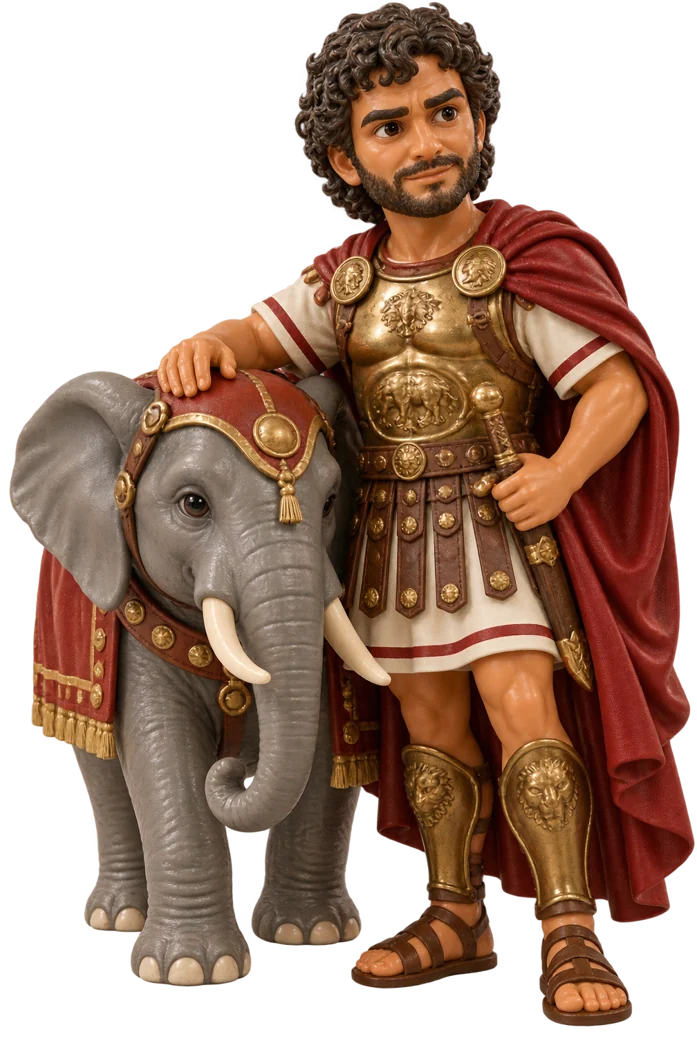
In 218 BC he attacked Saguntum, Rome's ally in Spain, and started the Second Punic War. He marched from New Carthage over the Pyrenees and across the Alps with 38,000 infantry, 8,000 cavalry and 38 elephants, and reached Italy with far fewer. He won at the Ticinus, the Trebia and Lake Trasimene, losing an eye to infection in the Arno marshes. In 216 BC Rome sent an army of perhaps 50,000 to 80,000 under the consuls Varro and Paullus. At Cannae he set his weakest troops in a curved centre that gave way, while his Libyan troops and Maharbal's cavalry closed round the Romans from the flanks and rear; 50,000 to 70,000 Romans were killed or captured.
Rome refused to make peace. Hannibal stayed in Italy for years until Scipio invaded Africa, and he lost to Scipio at Zama in 202 BC. He then served Carthage as sufet, its chief magistrate, before fleeing to the Seleucid king Antiochus III and finally to Bithynia. When the Romans demanded his surrender, he took poison at Libyssa, around 183 BC.
Read more on Wikipedia
Sources: en.wikipedia.org/wiki/Hannibal


