Industrial age · state
Hamburg
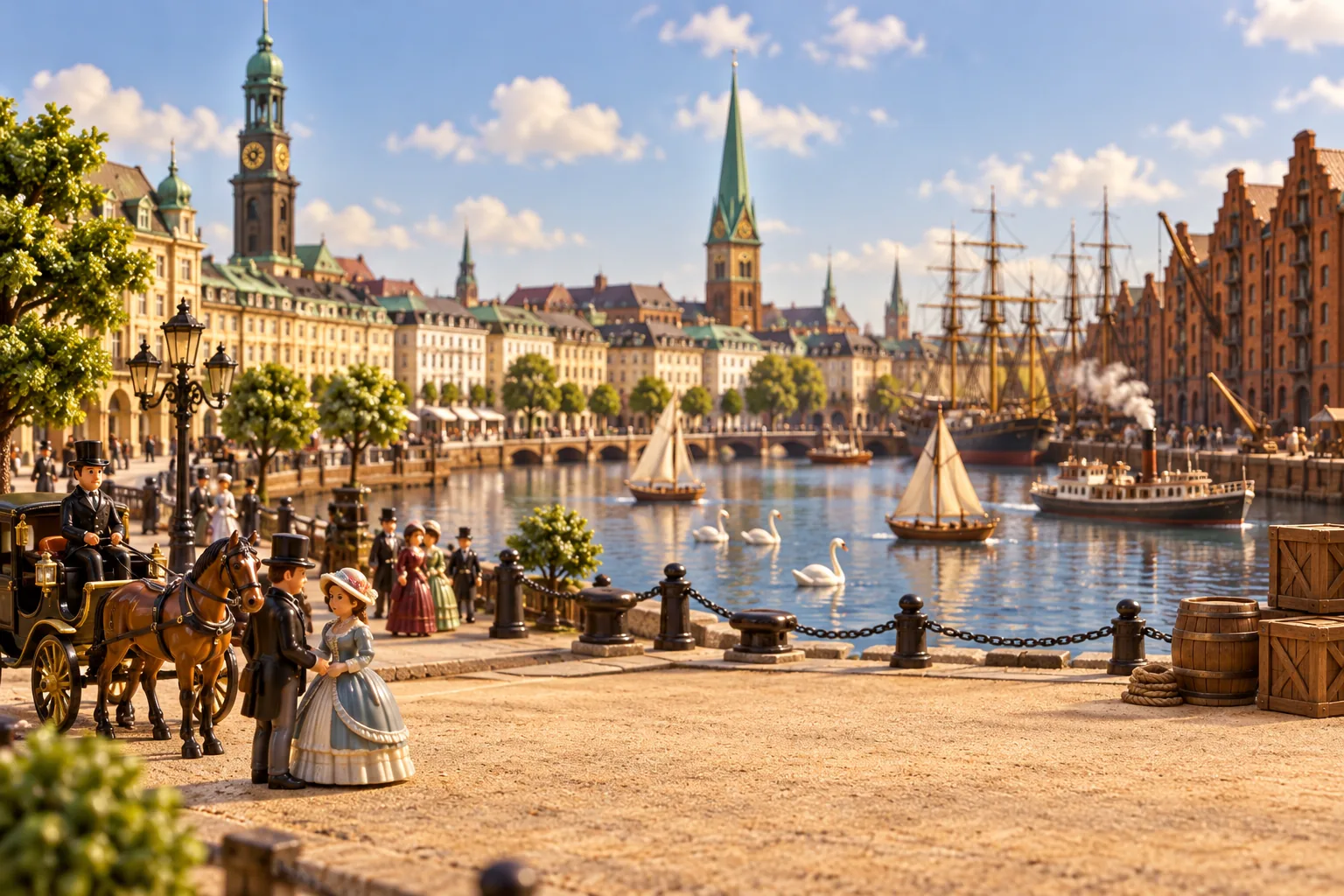
For centuries a city of merchants on the Elbe answered to no prince, governed itself through its own Senate and was a sovereign state until 1871.
In 1189 the emperor Frederick Barbarossa made Hamburg a Free Imperial City, with tax-free passage down the Lower Elbe to the North Sea. Lying between the North Sea and Baltic trade routes, it grew into a great port. Its alliance with Lübeck in 1241 is seen as the founding moment of the Hanseatic League, and in 1270 the city's lawyer Jordan von Boitzenburg wrote the first German-language law book of any German city.
When the Holy Roman Empire ended in 1806, Hamburg became a sovereign state, the Free and Hanseatic City of Hamburg. Napoleon annexed it to France, but Russian troops freed it in 1814, and the Congress of Vienna made it one of the 39 states of the German Confederation. From 4 to 8 May 1842 the Great Fire burned about a quarter of the inner city, killing 51 people and leaving some 20,000 homeless, and rebuilding took more than 40 years. In 1860 a new constitution had the Senate elected by tax-paying men and brought freedom of the press and assembly.
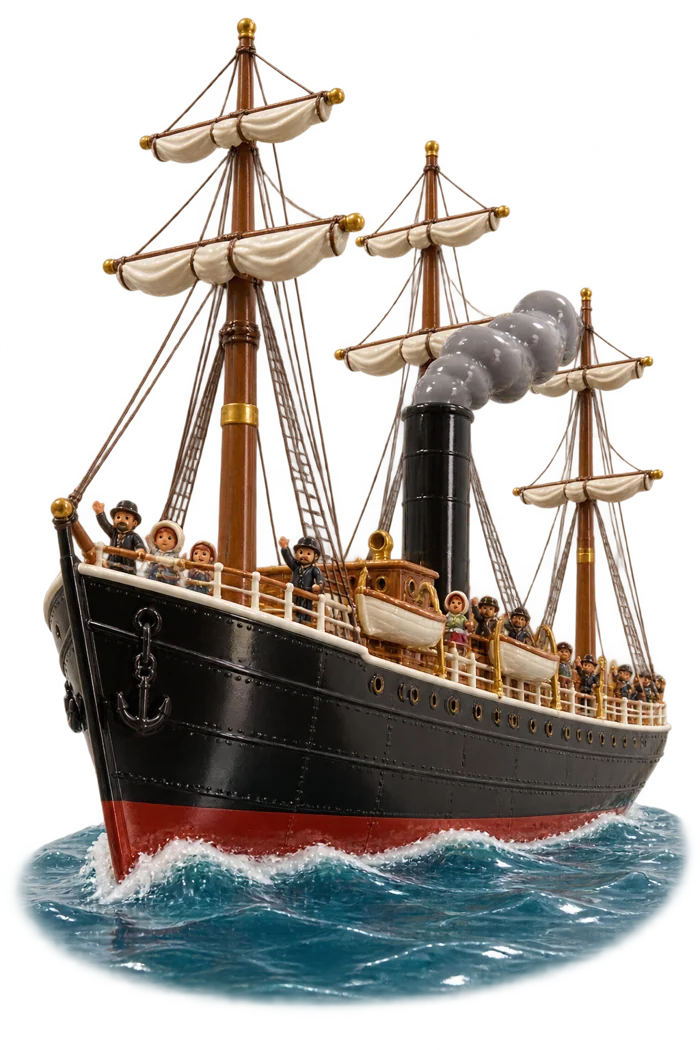
Hamburg joined the North German Confederation in 1866 and the German Empire in 1871, but kept its self-government. Its Atlantic trade boomed, its population quadrupled to 800,000, and it became the second-largest port in Europe, the harbour from which millions of emigrants left for the Americas.
Read more on Wikipedia
Sources: en.wikipedia.org/wiki/Hamburg