Middle Ages · state
Hafsid dynasty
A French king died outside its capital on a crusade in 1270, and for a while even the Sharif of Mecca hailed its ruler as caliph.
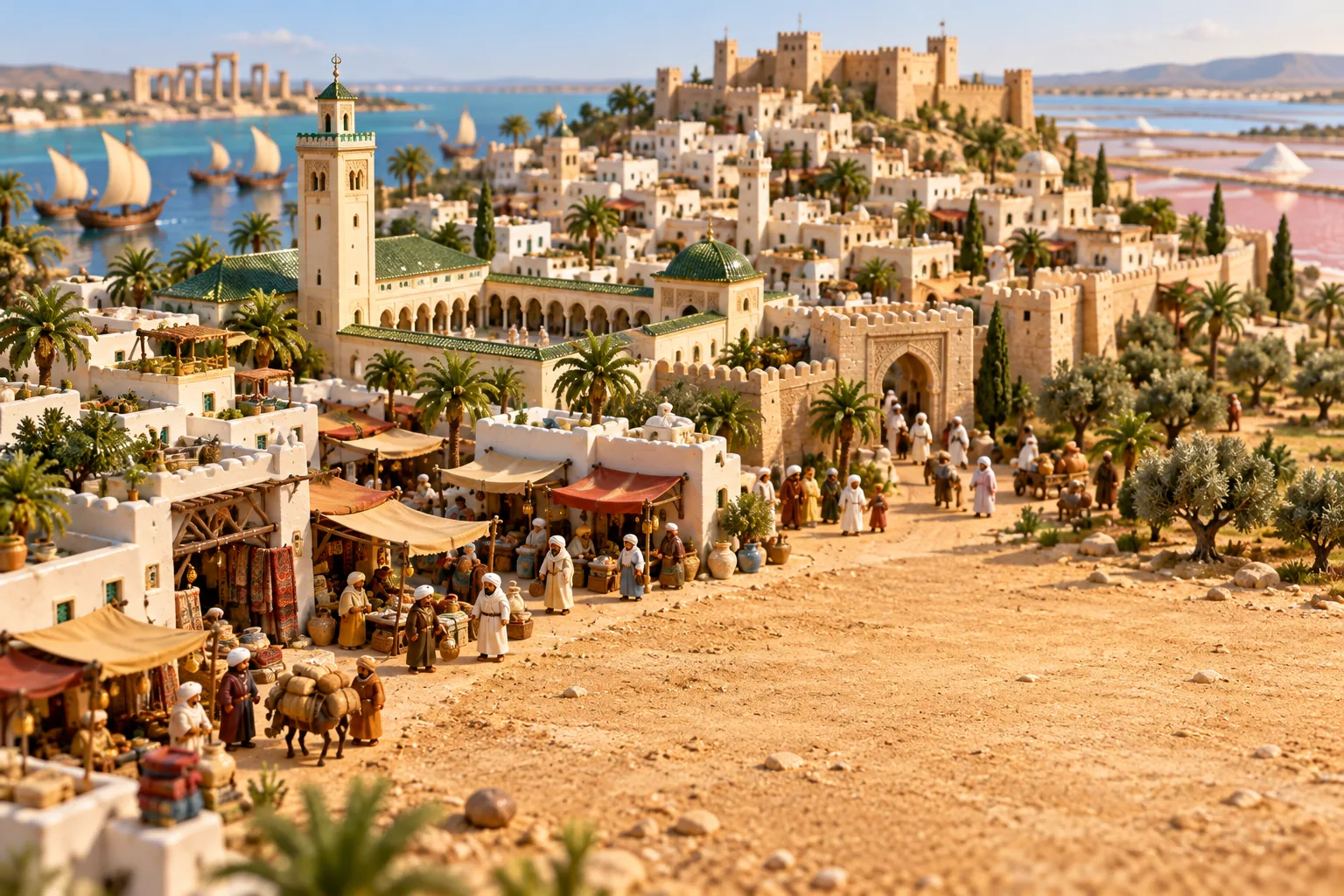
The Hafsids descended from Abu Hafs, a companion of Ibn Tumart, founder of the Almohad movement. Members of the family governed Ifriqiya, today's Tunisia, eastern Algeria and western Libya, for the Almohad caliphs from Tunis. In 1229, when the Almohad ruler renounced the movement's doctrine, the governor Abu Zakariya Yahya declared himself independent, and in 1236 or 1237 he took the caliph's title, Commander of the Faithful. He annexed Constantine and Béjaïa, welcomed migrants and soldiers from al-Andalus and built the Kasbah Mosque in Tunis.
His son al-Mustansir, who ruled from 1249 to 1277, was briefly recognised as caliph by the Sharif of Mecca in 1259. In July 1270 King Louis IX of France landed at Carthage on the Eighth Crusade, but disease swept his camp and he died there on 25 August. Later the dynasty split between Tunis and Béjaïa, and in the 1340s and 1350s the Marinids of Morocco twice seized Tunis.
Abu al-Abbas reunited the state from 1370, and contemporaries saw the reign of Abu Faris, from 1394 to 1434, as its height. In the 16th century the Ottomans took Tunis in 1534, Emperor Charles V retook it in 1535, and the last Hafsids ruled as Spanish vassals until the Ottomans conquered Tunis for good in 1574.
Read more on Wikipedia
Sources: en.wikipedia.org/wiki/Hafsid dynasty, en.wikipedia.org/wiki/Eighth Crusade